
Bank market analysis must deliver timely interest-rate and liquidity intelligence, repeatable stress tests, and audit-ready reporting, and AI-enabled workflows now make that achievable at scale. Grounded in guidance from the OCC and NCUA, platforms like RiskInMind help risk, portfolio, credit, and compliance managers turn raw balance-sheet data into board-ready decisions faster than manual processes allow.
TL;DR:
- Use gap reports for directional repricing checks, but pair one to two year EAR simulations with option aware EVE models to capture prepayment risk.
- Run interest rate risk measurements at least quarterly, increasing frequency during rate volatility, rapid loan growth, or material shifts in funding mix.
- Instrument details, including cash flows, rate indices, and repricing terms, are needed for EAR simulations; log transformations and reconcile model inputs against general ledger balances.
- Test parallel and curve shape shocks alongside deposit run behavior and combined credit scenarios, then tie each result to a specific response trigger.
- Tailor model validation frequency to institutional size and complexity, while documenting AI training data lineage, testing explainability, monitoring drift, and reviewing vendors.
Automate Regulatory Model Risk Governance
Examine models against 32 qualitative criteria and resolve risk Tiers with pre-deployment checklists per OCC 2011-12 guidelines.
Table of Contents
- Core Components and Outputs of Bank Market Analysis
- Data and Model Foundations: Inputs, Granularity, and Model Choices
- Stress Testing and Scenario Analysis: Design, Cadence, and Outputs
- Model Governance and AI-Specific Controls
- Practical Implementation Checklist and KPIs for Risk Teams
- How AI Platforms Accelerate and Operationalize Bank Market Analysis
- What Practitioners Should Prioritize Going Into 2026
- Evaluating RiskInMind for Automated Market Analysis
- FAQ
- Sources
Core Components and Outputs of Bank Market Analysis
A complete market analysis program rests on three measurement systems, each answering a different question for the board. Earnings at risk (EAR) models show how net interest income reacts to rate moves over the next one to two years, while economic value of equity (EVE) and net present value models capture long-horizon repricing and option risk that short-term earnings measures miss. Gap reports remain useful for a quick view of repricing mismatches by time bucket, but they cannot substitute for simulation when portfolios carry embedded options like prepayment risk or callable structures.
On the liquidity side, the output set looks different but serves the same governance purpose:
- Rolling cash-flow projections that reflect both contractual and behavioral assumptions.
- Liquidity gap reports showing funding mismatches across time horizons.
- Contingency funding plan inputs, including available sources and trigger levels.
Board and ALCO packages should combine scenario impact on projected earnings, NEV sensitivity under rate shocks, concentration heat maps by sector or collateral type, and early-warning indicators that flag deterioration before it shows up in delinquency data.
Data and Model Foundations: Inputs, Granularity, and Model Choices
The quality of any market analysis output depends entirely on the granularity of the inputs feeding it. Aggregated, bucketed balance-sheet data might satisfy a basic gap report, but it will not hold up under an EAR simulation that needs instrument-level cash flows, rate indices, and repricing terms. Examiners increasingly expect institutions to trace every modeled output back to a documented source system, which means data lineage is no longer a back-office concern but a front-line audit requirement.
Three model types cover most institutions' needs, and they work best in combination rather than isolation:
- Static gap reports for a fast, directional read on repricing mismatches.
- EAR simulations for near-term earnings sensitivity under multiple rate paths.
- Option-aware economic value models for long-horizon risk tied to prepayments and embedded options.
The Comptroller's Handbook on Interest Rate Risk recommends exactly this layered approach, paired with IRR measurement at least quarterly and more often when volatility warrants it. The most common failure point we see is not model selection but input integrity: stale instrument data, mismatched day-count conventions, or manual spreadsheet transfers that break the chain between source system and model output. Reconciling model inputs against general ledger balances on a defined schedule closes most of that gap.
Pro Tip: Log every data transformation between source system and model input, not just the final output, so an examiner can trace a single loan's cash flow from origination record to EAR result.
Stress Testing and Scenario Analysis: Design, Cadence, and Outputs
Stress testing earns its value only when cadence and scenario design match the institution's actual risk profile, not a generic template. A quarterly baseline works for most community banks and credit unions, with frequency increasing during periods of rate volatility, rapid loan growth, or material shifts in funding mix. The interagency liquidity guidance expects contingency funding plans to be tested periodically and sized to complexity, and NCUA guidance sets a similar floor of at least quarterly reporting against board-approved IRR limits.
A practical scenario suite typically includes:
- Parallel rate shocks (up and down) across a defined range of basis points.
- Non-parallel curve shape changes, including steepening and flattening.
- Deposit-run and non-maturity deposit behavioral stress.
- Combined macroeconomic and idiosyncratic scenarios that pair rate moves with credit deterioration or concentrated loss events.
The OCC's Semiannual Risk Perspective reinforces the need for robust sensitivity testing alongside scenario analysis, since a single rate-shock test rarely captures the full risk picture.
Results matter only if they drive decisions. Every scenario run should map to a trigger threshold that activates a specific response: tightening lending standards, executing a hedge, or pulling a lever in the contingency funding plan. Our guide to portfolio stress testing walks through how these trigger-to-action mappings work in practice for community banks and credit unions.

Model Governance and AI-Specific Controls
Governance determines whether a market analysis program survives an exam, and the OCC's October 2025 bulletin gives smaller institutions real flexibility here: model risk management should be tailored to size and complexity, and examiners will not judge a bank solely on a fixed annual validation cadence. A community bank with simple gap reports and a straightforward loan portfolio can justify a lighter validation schedule than an institution running option-aware economic value models across a diversified balance sheet.
A sound governance framework includes:
- A complete model inventory with risk tiering based on complexity and materiality.
- Backtesting against actual results to confirm model assumptions still hold.
- Formal change control whenever assumptions, parameters, or data sources shift.
- Independent review separate from the team that builds and runs the models.
AI tools add a layer of controls on top of traditional model governance. Training-data lineage needs the same documentation rigor as any other input, explainability checks confirm outputs can be traced to defensible logic, and drift monitoring catches when a model's behavior shifts away from its validated baseline. Vendor due diligence matters just as much as internal controls, a point the NCUA's AI resources address directly for institutions evaluating third-party tools.
Pro Tip: Treat every AI-generated scenario output the way you'd treat a junior analyst's work: reviewed, documented, and traceable to its inputs before it reaches ALCO.
Our practical guide to model risk management breaks down validation scheduling in more detail for institutions building this framework from scratch.
Practical Implementation Checklist and KPIs for Risk Teams
Standing up or improving a market analysis program works best as a sequence, not a simultaneous overhaul.
- Inventory and validate every data feed feeding IRR and liquidity models, confirming source-system accuracy.
- Select complementary measurement systems: gap reports, EAR simulation, and economic value modeling.
- Build a scenario suite covering rate shocks, curve changes, and deposit behavior stress.
- Set reporting cadence to at least quarterly, increasing frequency during volatile periods.
- Document governance: model inventory, validation schedule, and change control procedures.
Track a short list of KPIs against board-approved limits: EAR percentage change under adverse scenarios, NEV sensitivity percentage, liquidity cushion measured in days of coverage, and concentration ratios by sector or collateral type.
Ownership should be explicit. The board sets risk appetite and reviews results quarterly at minimum. The CRO owns the overall framework. ALCO reviews scenario outputs and approves trigger actions. The model risk function runs validation on its own tailored schedule. IT maintains data pipeline integrity year-round. Our step-by-step risk assessment guide lays out this workflow in more operational detail.
How AI Platforms Accelerate and Operationalize Bank Market Analysis
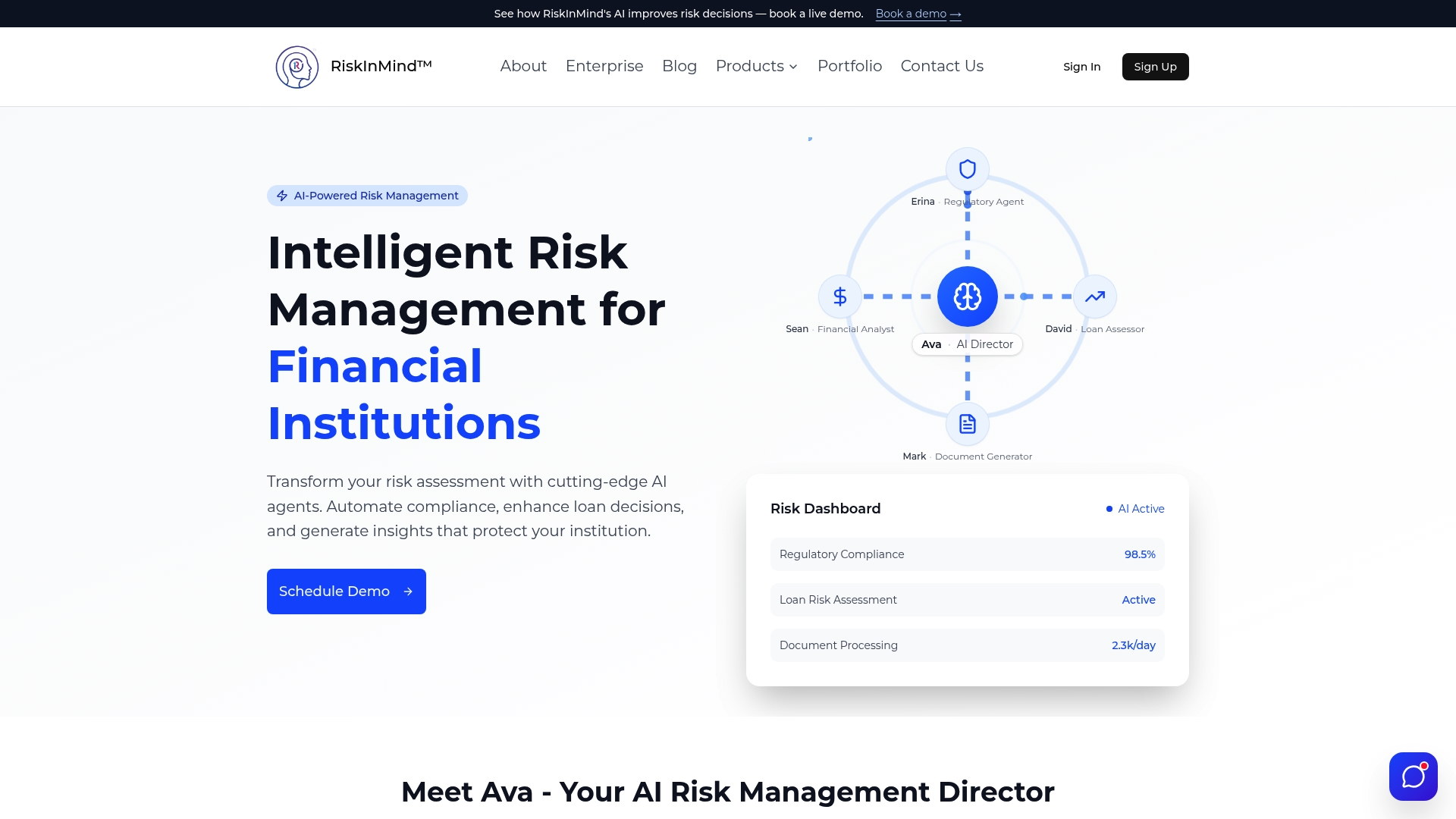
Every step above still needs to happen. What changes with an AI-enabled platform is how fast and how consistently it happens. Specialized AI agents managed by a central AI director handle data ingestion, scenario runs, and peer benchmarking as coordinated workflows rather than manual handoffs between spreadsheets and teams. The platform emphasizes SOC 2 aligned controls and real-time processing designed for sub-second response, which matters when a rate move or deposit outflow needs a same-day scenario rerun rather than a week-long batch cycle.
None of this replaces the governance work outlined above. Automated ingestion still needs documented data lineage, and faster scenario runs still need independent validation on a schedule matched to complexity. What automation changes is the cost of running that discipline consistently, which is where our guide to enterprise-grade risk platforms picks up the thread.
What Practitioners Should Prioritize Going Into 2026
The biggest shift we see for 2026 is not new modeling technique but matching automation speed to governance rigor. Regulators have signaled they expect controls commensurate with how a model is used, not a blanket standard. The practical priority is simple: invest in analytics that compress the time between data and decision, without skipping the validation step that makes the decision defensible.
— Raj
Evaluating RiskInMind for Automated Market Analysis
A platform that centralizes balance-sheet data, runs scheduled or ad hoc stress tests on demand, and generates board-ready reports turns market analysis from a quarterly scramble into a continuous discipline.
This article is general information, not a substitute for advice from a qualified financial advisor. Consult a qualified financial professional about your own circumstances before acting on anything here.
FAQ
What is the difference between EAR and economic value of equity models?
EAR models measure how net interest income changes over a one to two year horizon under rate scenarios, while economic value of equity models capture the long-term impact on the present value of assets and liabilities. The Comptroller's Handbook recommends using both since each captures risks the other misses.
How often should banks run interest rate risk stress tests?
Most institutions run IRR measurement at least quarterly, with more frequent testing during volatile rate environments or periods of material balance-sheet change. Both the Comptroller's Handbook and NCUA guidance set this quarterly floor.
Does model validation have to happen every year?
No. The OCC's 2025 bulletin clarifies that validation frequency should be tailored to an institution's size and model complexity rather than following a fixed annual schedule. A smaller institution with simpler models can justify a less frequent cycle.
What should a contingency funding plan include?
A contingency funding plan should identify diversified funding sources, define trigger levels tied to liquidity stress indicators, and undergo periodic testing scaled to the institution's complexity. The interagency liquidity guidance sets this expectation for all insured institutions.
What AI governance controls matter most for market analysis tools?
Training-data lineage, explainability of outputs, drift monitoring against validated baselines, and vendor due diligence are the core controls regulators look for. The NCUA's AI resources outline these expectations directly for credit unions evaluating AI tools.
Sources
- Model Risk Management: Clarification for Community Banks | OCC
- Interagency policy statement on funding and liquidity risk management
- Policies and Processes (NCUA guidance on IRR)