
Loan-portfolio stress testing gives credit unions and community banks a forward-looking, regulator-defensible estimate of credit losses, allowance (ACL) needs, and capital exposure under adverse scenarios — satisfying OCC Bulletin 2012-33 supervisory expectations, supporting CECL/ACL calibration, and giving your board concrete numbers instead of narrative risk language.
TL;DR — top benefits at a glance:
- Exam readiness: documented scenarios and results that satisfy OCC and FDIC examiner expectations
- CECL/ACL inputs: scenario-driven PD and LGD shifts that feed defensible allowance estimates
- Capital planning: quantified break-even thresholds and stressed capital ratios for board decisions
- Early-warning signals: concentration hotspots by geography, collateral type, and vintage
- Strategic clarity: data-supported adjustments to underwriting, pricing, and risk appetite
Automate Regulatory Model Risk Governance
Examine models against 32 qualitative criteria and resolve risk Tiers with pre-deployment checklists per OCC 2011-12 guidelines.
Table of Contents
- How the benefits of portfolio stress testing change real decisions
- How stress testing feeds your CECL methodology and satisfies examiners
- A practical roadmap for running your first loan-portfolio stress test
- Governance, validation, and exam-readiness documentation
- How Riskinmind converts stress testing into continuous, audit-ready workflows
- Key Takeaways
- The case for treating stress testing as strategy, not compliance
- Riskinmind gives you a stress-testing program that runs year-round
- Useful sources for exam prep and deeper reading
How the benefits of portfolio stress testing change real decisions
The advantages of stress testing go well beyond passing an exam. Each benefit maps to a specific management outcome.
Regulatory and examiner readiness. The OCC expects community banks to run at least annual portfolio stress tests with a two-year projection horizon. Examiners do not just want to see a model — they want evidence that results influenced underwriting parameters, concentration limits, and contingency plans. A documented stress-testing program gives you that evidence before the exam begins.
CECL and ACL calibration. Stress scenarios translate directly into probability-of-default (PD) and loss-given-default (LGD) shifts that feed lifetime expected-loss calculations. Without scenario-based inputs, allowance estimates rest on historical charge-off averages that look backward when regulators and auditors are asking you to look forward.
Capital planning and break-even analysis. Quantifying how a 200-basis-point rate shock or a regional unemployment spike affects your capital ratio converts a vague concern into a board-ready number. OCC guidance specifically highlights break-even profitability analysis as a way to present data-supported resilience measures to directors and regulators.

Portfolio segmentation and early-warning indicators. Aggregate charge-off history cannot tell you that your coastal commercial real estate (CRE) book is three times more sensitive to a local downturn than your owner-occupied portfolio. Loan-level PD/LGD modeling surfaces exposures by collateral, geography, borrower characteristics, and vintage — the granularity needed to act before a concentration becomes a loss event.
Strategic decision support. Banks that incorporate stress testing into credit and capital planning tend to adjust underwriting and capital strategies more effectively when market conditions deteriorate. The output is not just a number — it is a trigger for pricing changes, concentration-limit adjustments, and contingency funding plans.
Pro Tip: Link your stress-test outputs directly to your risk appetite statement. When a scenario breaches a capital or ACL threshold defined in that statement, the management action is pre-authorized — which shortens the board approval cycle during a real stress event.
How stress testing feeds your CECL methodology and satisfies examiners
The technical linkage between scenario outputs and CECL inputs is where many community lenders leave value on the table. Supervisory modules recommend mapping scenario results to PD, LGD, and exposure-at-default (EAD), then integrating those shifts into lifetime expected-loss calculations and business plans.
Examiners expect to see at least a baseline, an adverse, and a severe scenario — each with a two-year horizon at minimum. The adverse scenario typically reflects a moderate regional recession; the severe scenario might layer in a collateral value decline, a significant unemployment increase, and tightened refinancing conditions simultaneously.
The table below illustrates a generic scenario-to-ACL mapping framework:
| Scenario | PD Shift (relative to baseline) | LGD Assumption | Implied ACL Direction |
|---|---|---|---|
| Baseline | No change | Current collateral values | Stable |
| Adverse | Moderate increase | Modest collateral haircut | Moderate increase |
| Severe | Significant increase | Material collateral decline | Substantial increase |
Critically, integration with financial systems is not optional for a comprehensive annual test. Without that linkage, scenario projections do not flow reliably through to income statements or capital ratio calculations — the exact outputs examiners review. See Riskinmind's CECL preparation guidance for how automated platforms handle this integration.
A practical roadmap for running your first loan-portfolio stress test
Getting a program off the ground requires the right data, clear role assignments, and a realistic timeline.
Required inputs at the loan level:
- Balance, origination date, maturity, and product type
- FICO or internal risk score, LTV, and collateral type/location
- Vintage, covenant flags, and current delinquency status
- Historical performance data (charge-offs, migrations) for model calibration
- Macro variables: unemployment rate, property price indices, interest rate paths
Roles and governance:
- Program owner (CRO or Chief Credit Officer): accountable for scope and results
- Modeler (internal analyst or vendor): builds and runs scenarios
- Independent validator: reviews assumptions, back-testing, and documentation
- Board/ALCO: receives results and approves management actions
Timeline and cadence. A top-down sensitivity analysis can be completed in a few weeks using portfolio-level data. A hybrid pilot adding loan-level modeling for high-risk segments typically takes 6–12 weeks. A fully integrated annual cycle, aligned with your CECL process and financial planning calendar, is the target state. Practitioners recommend running ad hoc targeted tests whenever exposures change materially or macro indicators shift, in addition to the annual comprehensive cycle.
Execution checklist:
- Define the scope: which portfolios, which scenarios, which horizon
- Assemble and clean loan-level data; document lineage
- Select methodology: top-down, loan-level, or hybrid
- Build and document scenario assumptions (baseline, adverse, severe)
- Run models; capture PD/LGD shifts and ACL/capital impacts
- Validate results: back-test, sensitivity check, independent review
- Prepare board and examiner documentation
- Integrate outputs into CECL process and business plan
- Schedule next cycle and assign ongoing ownership
Pro Tip: Apply rigorous loan-level analysis only to high-exposure buckets — CRE concentrations, large-balance commercial loans, or rapidly growing segments. Use top-down sensitivity for lower-risk pools. This hybrid approach, endorsed by ICBA practitioners, reduces validation burden without sacrificing signal detection where it matters most.
Governance, validation, and exam-readiness documentation
A stress test that cannot be defended is a liability, not an asset. Examiners review whether results were incorporated into business plans and management actions — not just whether a model was run.
Minimum documentation package:
- Scenario definitions: narrative rationale, macro assumptions, and data sources
- Data lineage: how loan-level inputs were extracted, cleaned, and validated
- Model logic: methodology description, formula documentation, and assumption rationale
- Validation results: back-testing outcomes, sensitivity analyses, and independent reviewer sign-off
- Management actions: documented decisions triggered by results (underwriting changes, concentration limits, contingency plans)
When presenting results to your board, lead with an executive summary covering expected loss under each scenario, the stressed capital ratio, and the top three portfolio contributors to loss. Detailed scenario tables and model documentation belong in appendices — boards need the headline numbers; examiners need the full file.
Model validation should include back-testing against actual loss experience, an annual assumptions review, independent validation (internal audit or a qualified third party), and version control so any model change is traceable. For a deeper look at validation frameworks, Riskinmind's model risk management guide covers the governance structure community lenders typically need.
Pro Tip: One artifact that consistently impresses examiners is a documented mapping from each scenario driver — say, a 10% unemployment increase — to the specific CECL lifetime-loss assumption it produces. This single page demonstrates that your stress test and your allowance methodology are genuinely connected, not parallel exercises.
How Riskinmind converts stress testing into continuous, audit-ready workflows
Manual stress testing — spreadsheets, disconnected data pulls, annual scrambles — produces results that are hard to defend and harder to repeat. An AI-enabled platform changes the economics of the process.
Riskinmind automates data ingestion, loan-level PD/LGD estimation, scenario execution, and CECL linkage in a single workflow. The platform's SOC 2® certification addresses the bank-grade security requirements that compliance teams require before connecting loan-level data to any external system. Real-time processing and audit-ready reporting mean that when an examiner asks for documentation, the output is already formatted and traceable.
Continuous monitoring — rather than a once-a-year exercise — means your capital and ACL positions reflect current portfolio conditions, not conditions as they existed eleven months ago. That gap is exactly where examiners find surprises.
A community bank that previously ran stress tests as a standalone annual project can move to a model where scenario outputs update as the portfolio changes, CECL inputs refresh automatically, and board dashboards reflect current stressed capital ratios. The shift reduces analyst hours, shortens the documentation cycle, and eliminates the version-control problems that plague spreadsheet-based programs.
For portfolio managers evaluating platforms, Riskinmind's AI solutions for portfolio managers page outlines the specific capabilities relevant to this workflow, including the CRE loan risk predictor for institutions with significant commercial real estate exposure.
Key Takeaways
Loan-portfolio stress testing delivers its greatest value when outputs are integrated directly into CECL allowance estimates, capital planning, and board-approved management actions — not treated as a standalone compliance exercise.
| Point | Details |
|---|---|
| Regulatory baseline | OCC Bulletin 2012-33 requires at least annual stress testing with a two-year projection horizon for community banks. |
| CECL linkage | Scenario-driven PD and LGD shifts must connect to lifetime expected-loss calculations to satisfy examiner and auditor expectations. |
| Capital planning | Break-even analysis under adverse and severe scenarios converts narrative risk into board-ready capital ratio projections. |
| Hybrid methodology | Top-down tests cover the full portfolio quickly; loan-level models target high-risk segments where concentration risk hides. |
| Riskinmind | Riskinmind automates the full stress-test workflow, from loan-level data ingestion to CECL-linked outputs and SOC 2-secured audit trails. |
The case for treating stress testing as strategy, not compliance
The most common mistake community lenders make is scoping their stress-testing program around what the examiner will ask for, then stopping there. The result is a model that runs once a year, produces a number that goes into a binder, and influences nothing.
The OCC's own guidance frames stress testing as a strategic management tool — one that should tie outputs to risk appetite, underwriting decisions, and capital allocation. That framing matters because it changes who owns the process. When stress testing is a compliance exercise, it belongs to the model team. When it is a strategic tool, it belongs to the CRO, the credit committee, and ultimately the board.
The practical implication: start with a hybrid approach. A top-down sensitivity analysis gives you portfolio-wide coverage in weeks and is defensible for a first examination. Then add loan-level modeling for your highest-exposure segments — CRE concentrations, large commercial relationships, or any segment growing faster than your underwriting history can support. That targeted depth is where the real early-warning value lives.
Frequency matters too. Annual comprehensive tests are the minimum; ad hoc tests after material portfolio changes or macro shifts are what separate proactive institutions from reactive ones. The goal is not a perfect model — it is a repeatable, documented process that your team can run, defend, and act on.
Riskinmind gives you a stress-testing program that runs year-round
Stress testing that only happens once a year, in a spreadsheet, before an exam is not a risk management program. Riskinmind delivers continuous, loan-level stress testing with automated CECL linkage, SOC 2® security, and board-ready reporting — so your capital and allowance positions reflect today's portfolio, not last year's.
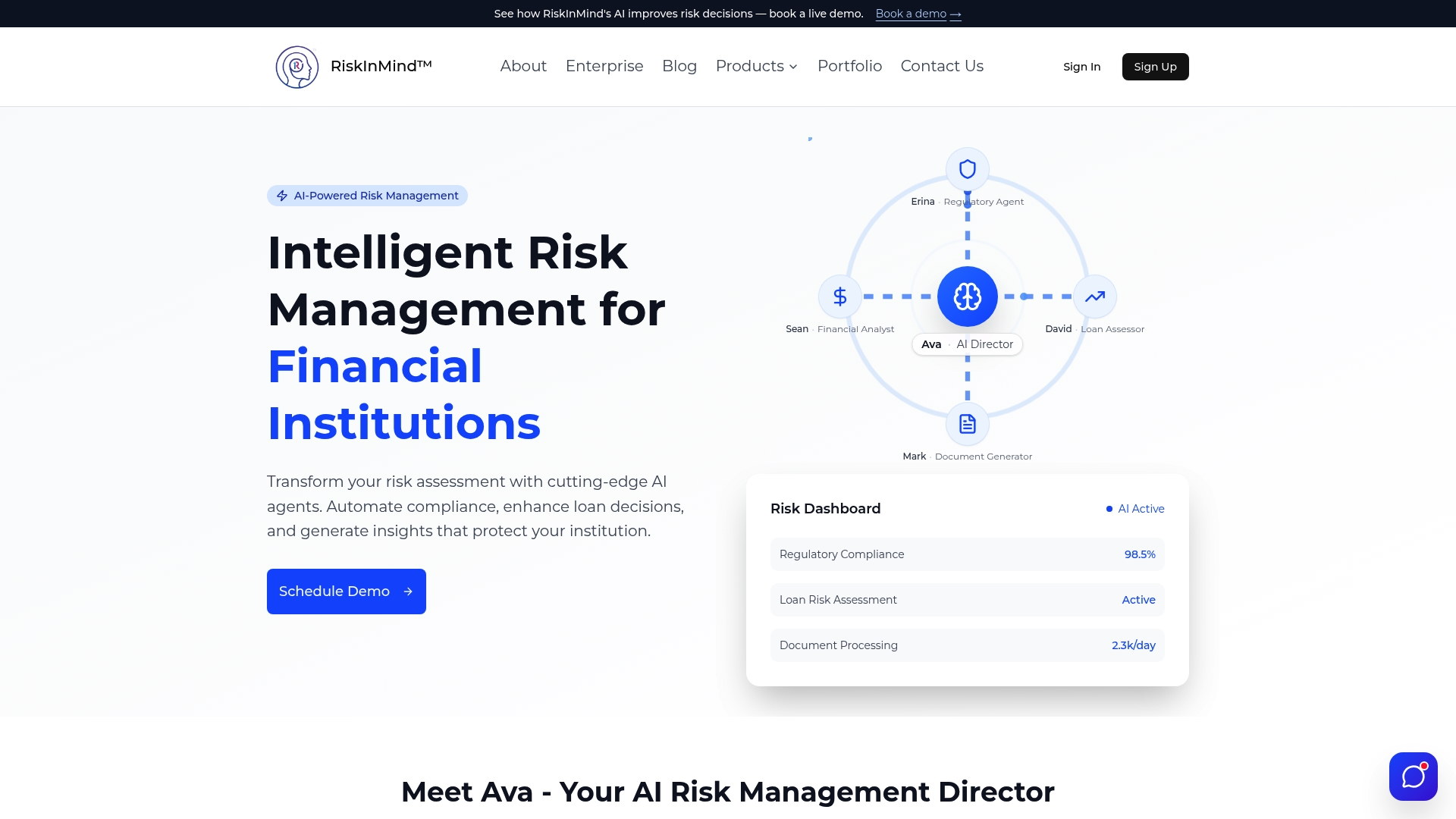
The platform's AI agents handle data ingestion, PD/LGD estimation, and scenario execution automatically, cutting the analyst hours required for each cycle and producing audit-ready documentation as a byproduct of the process, not an afterthought. For institutions with CRE exposure, the CRE loan risk predictor adds loan-level commercial real estate stress analysis to the workflow. Before requesting a demo, use Riskinmind's risk platform demo evaluation checklist to define exactly what your institution needs from an automated stress-testing solution.
Useful sources for exam prep and deeper reading
- OCC Bulletin 2012-33: Community Bank Stress Testing Supervisory Guidance — primary regulatory reference for community bank stress-testing expectations, scenario design, and documentation requirements
- Comptroller's Handbook: Lending and Loan Portfolio Risk Management — OCC's detailed guidance on loan-level credit risk, concentration analysis, and portfolio management
- FCA Loan Portfolio Management Module: Stress Testing — examiner-facing module covering scenario design, CECL linkage, and integration with financial systems
- ICBA: Portfolio and Loan-Level Stress Testing — Be Proactive and Examiner-Ready — practitioner guidance on hybrid methodologies and validation resource allocation for community lenders
- Federal Reserve: Interagency Supervisory Guidance on Stress Testing — interagency framework applicable to larger community and regional banks
- Stress Testing Loan Portfolios: Practical Guide — practitioner overview of top-down vs. loan-level approaches, cadence recommendations, and hybrid methodology trade-offs
- Riskinmind: How to Optimize Risk Reporting for Financial Institutions — practical guidance on converting stress-test outputs into board and regulator reports
This article provides general information on loan-portfolio stress testing and does not constitute legal, accounting, or regulatory advice. Confirm current supervisory expectations with your primary federal regulator or a qualified advisor.