
Bias testing in lending is the statistical and procedural process of examining underwriting, pricing, and servicing decisions to detect disparate treatment (intentional discrimination) or disparate impact (a neutral policy that disproportionately harms a protected class). If you run compliance or credit risk at a bank, credit union, or lender, you can start this week. Three steps get you moving: pull twelve months of decision data and check it for completeness on protected-class proxies, run an adverse impact ratio (AIR) screen by race, ethnicity, and sex across your top three focal points, and schedule a regression or matched-pair pilot on whichever focal point shows the widest AIR gap.
Do this before anything else, because examiners will ask for it regardless of your model's sophistication. The Comptroller's Handbook on Fair Lending recognizes three ways discrimination gets proven: overt disparate treatment, comparative evidence, and disparate impact. Your testing program needs to be built to catch all three, not just the one that's easiest to measure.
Immediate documentation matters as much as the test itself. Before you run a single regression, write down:
Maintain 100% NCUA & OCC Audit Readiness
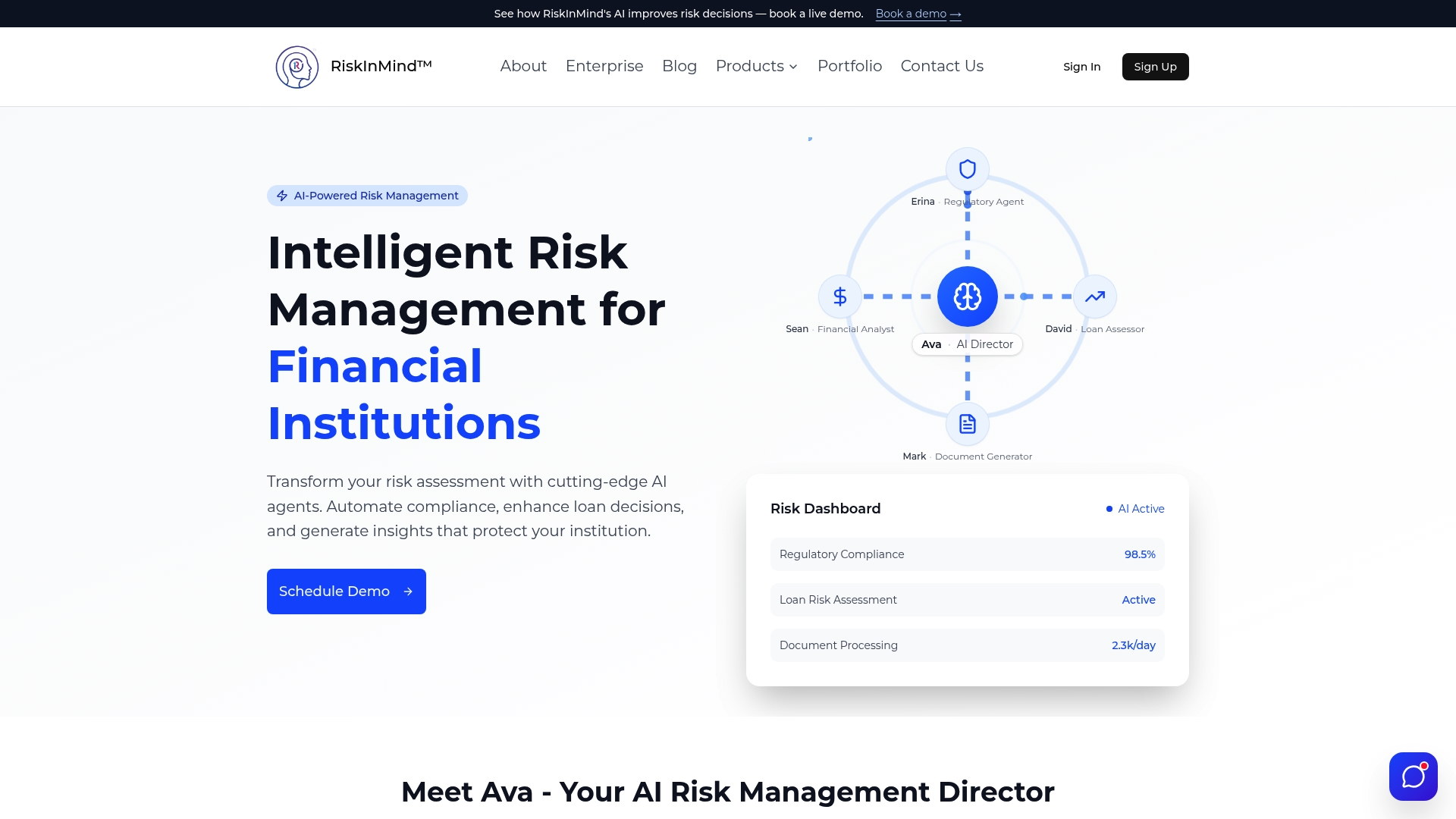
Monitor regulatory updates 24/7, check internal credit policies, and generate compliance trails with Erina (AI Regulatory Agent).
- The sample period and why you chose it (a full underwriting cycle, not a cherry-picked quarter)
- The decision points under review (approval, pricing, terms, steering to a particular product)
- The threshold you'll use to flag a finding (commonly an AIR below 0.80, though that number is a screening trigger, not a legal verdict)
Your starter checklist, in order:
- Confirm your data captures protected-class information (directly for HMDA-reportable mortgage data, or through Bayesian surname/geography proxies for non-mortgage products).
- Run an AIR screen segmented by race, ethnicity, sex, and age across underwriting, pricing, and any steering-adjacent decision points.
- Where AIR flags a gap, schedule a regression model or matched-pair test within 30 days, and log the decision to test (or not) in your governance file.
Key Takeaways
A defensible bias testing lending program combines layered statistical methods, documented sample design, genuine LDA searches, and continuous retesting rather than a single annual check.
| Point | Details |
|---|---|
| Prep your data first | Confirm protected-class capture or proxy methodology before running any statistical test. |
| Screen with AIR, then dig deeper | Use the four-fifths rule as a triage flag, not a legal determination, then follow up with regression or matched-pair testing. |
| Document every LDA search | Log alternatives considered and rejected, with quantified trade-offs, since examiners weigh this heavily. |
| Retest after remediation | Confirm a fix actually closed the gap instead of assuming it worked. |
| Automate the cycle with Riskinmind | Riskinmind's AI agents run AIR dashboards, regression modeling, and audit-ready reporting continuously, reducing manual test scrambles before exams. |
Table of Contents
- What Bias Testing Lending Programs Actually Measure
- Which Testing Method Fits Your Focal Point?
- How Do You Design a Defensible Fair Lending Test?
- What Do the Results Actually Mean?
- Fixing Bias Without Breaking Your Model
- Building an Audit-Ready Testing Playbook
- What Have Regulatory Responses to Bias Testing Actually Looked Like?
- What Tools Do Lenders Actually Use for This Work?
- How Should You Document Testing for Audit Readiness?
- A Compliance Practitioner's Take on What Actually Works
- How Riskinmind Automates the Bias Testing Playbook
- Frequently Asked Questions
- Sources
What Bias Testing Lending Programs Actually Measure
Lending discrimination takes two distinct legal forms, and conflating them is the single most common mistake compliance teams make when they build a testing program. Disparate treatment is intentional. It happens when a lender, loan officer, or a coded rule explicitly or effectively treats applicants differently because of a protected characteristic, whether that's an underwriter's stated bias or a proxy variable quietly doing the same work. Disparate impact is different. It occurs when a facially neutral policy, applied evenly to everyone, produces a statistically significant and unjustified gap in outcomes for a protected group. Neither intent nor awareness is required for disparate impact to exist.
A proxy variable is the mechanism that connects the two. ZIP code, certain vocational categories, and even some alternative credit data points can correlate closely enough with race or national origin that a model using them produces disparate treatment in effect, even if no one coded it that way. This is why proxy analysis has become its own testing discipline rather than a footnote inside regression work.
The legal backbone for all of this sits in a small number of statutes and supervisory frameworks:
- The Equal Credit Opportunity Act (ECOA) prohibits discrimination based on race, color, religion, national origin, sex, marital status, age (with contractual capacity), or receipt of public assistance income, according to the Department of Justice.
- The Fair Housing Act (FHA) extends similar protections specifically to residential real estate transactions, covering mortgage lending, appraisals, and housing-related credit.
- The FDIC's Consumer Compliance Examination Manual lays out how examiners apply ECOA in practice, including the four-fifths rule, an adverse impact ratio below 0.80, as a commonly used screening metric borrowed originally from EEOC employment guidelines.
- OCC and interagency examination procedures direct examiners toward statistical modeling when application volume is high enough that manual file comparison would miss patterns a regression would catch.
Statistical imbalance alone does not establish liability. Courts require a demonstrated causal link between a specific policy and a disproportionate, unjustified effect, and they apply a burden-shifting framework: once a plaintiff shows a statistically significant disparity, the lender must show the policy serves a legitimate business necessity, and the plaintiff can still prevail by identifying a less discriminatory alternative that serves the same purpose, as explained by Cornell Law School.
Examiners reviewing your program will look for a specific set of signals: a defensible sample selection methodology, documented control variables, a genuine search for less discriminatory alternatives when a finding surfaces, and accurate adverse action notices that reflect the real reasons behind a denial. The CFPB has made clear that model complexity is not an excuse. If your underwriting model can't produce a specific, accurate reason for a denial, that's a compliance gap regardless of how sophisticated the model is.
Which Testing Method Fits Your Focal Point?
No single method covers every risk. A mature lending discrimination analysis program layers several techniques and picks the right tool based on decision volume, data availability, and the type of bias suspected.
Matched-pair testing sends closely matched loan applicants, identical on every credit-relevant dimension except the protected characteristic under review, through the same process to see whether treatment diverges. It's the gold standard for catching disparate treatment in live, human-mediated interactions like loan officer counseling or small business lending conversations. A CFPB and DOJ matched-pair study covering fifty paired visits found statistically significant less favorable treatment toward Black testers, including differences in encouragement and in which loan products got discussed at all. That's not a hypothetical risk. It's a documented pattern in the actual small business lending market.
Comparative file review is the lower-cost cousin: instead of sending live testers, you pull actual approved and denied files for similarly situated applicants and compare the reasoning an underwriter documented. It works well for smaller lenders without the volume to support statistical modeling, but it depends heavily on how thoroughly underwriters document their reasoning in the first place.
Statistical regression modeling isolates a protected-class coefficient while holding legitimate credit factors constant, and it's what regulators expect once your application volume makes manual review statistically unreliable. The OCC's guidance specifically recommends regression when focal points involve high-volume decisioning.
Proxy analysis hunts for variables that quietly stand in for protected characteristics, geography, alternative data sources, even certain employer categories, and tests whether removing or adjusting them changes outcomes.
AIR screening, the four-fifths rule, is fast and cheap but crude. It's a first-pass filter, not a determination of guilt.
Choosing the right method:
- Start with AIR screening across all focal points to prioritize where deeper testing is warranted.
- Move to regression modeling for high-volume decision points (mortgage underwriting, auto lending, consumer credit lines).
- Use matched-pair or comparative file review for lower-volume, high-touch products like small business or commercial lending, where human judgment plays a bigger role.
- Layer proxy analysis wherever you use alternative data or geographic variables in scoring.
The most common pitfall is treating one method as sufficient. A regression can miss what a matched-pair test catches in live interactions, and a matched-pair test can't scale to a portfolio of 50,000 mortgage applications a year. Small sample sizes also undermine statistical power. If your protected-class subgroup has fewer than a few hundred observations in a given focal point, a regression result may be statistically noisy rather than meaningful, and that's a limitation worth documenting rather than ignoring.
Pro Tip: Run comparative file review and regression modeling in parallel on the same focal point at least once a year, even if regression is your primary method. The two approaches catch different failure modes, and the overlap gives you a stronger defense file if an examiner questions your methodology.
How Do You Design a Defensible Fair Lending Test?
A test that can't survive examiner scrutiny isn't a test, it's a liability. Design starts with picking focal points deliberately rather than testing whatever data happens to be easy to pull.
Step-by-step framework:
- Select focal points. Underwriting (approve/deny), pricing (rate and fee spreads), steering (which product an applicant gets directed toward), and servicing (loss mitigation, forbearance offers) each carry distinct bias risks and need separate tests.
- Build your sample. Use HMDA data for mortgage products since race, ethnicity, and sex are already reported. For non-HMDA products, use Bayesian Improved Surname Geocoding (BISG) or similar proxy methods, and document the methodology explicitly since examiners will ask how you inferred protected-class status.
- Choose control variables. Credit score, debt-to-income ratio, loan-to-value ratio, income, and loan purpose are the standard set. Leave one out and your regression risks attributing a legitimate credit factor's effect to a protected-class coefficient instead, which produces a false positive.
- Run the model and set thresholds. A statistically significant coefficient on the protected-class variable, after controlling for legitimate factors, is your primary signal. Treat AIR below 0.80 as a screening flag that triggers deeper analysis, not as a finding in itself.
- Document everything before you see the results. Pre-register your sample design, variable selection, and model specification. This single habit does more for audit readiness than almost anything else, because it proves you didn't reverse-engineer a methodology to reach a preferred conclusion.
Sample selection deserves particular care. A sample that's too narrow (one branch, one quarter) won't hold up, and a sample that mixes fundamentally different loan products (a jumbo mortgage cohort blended with FHA loans) will produce misleading coefficients because the underlying risk profiles differ. The FDIC's fair lending resources for bankers include sample-size guidance and scope checklists that examiners themselves reference.
Version everything. Model specifications change, control variables get added or dropped, and if you can't show which version produced which result six months from now, you've created a documentation gap that looks worse under examination than the original finding would have.
What Do the Results Actually Mean?
An AIR below 0.80 or a statistically significant regression coefficient on a protected-class variable is a preliminary finding, not a confirmed violation. The distinction matters enormously for how you respond, and conflating the two either triggers unnecessary panic or, worse, complacency when a real finding gets dismissed as "just a screening flag."
Here's how to read your outputs:
- Adverse impact ratio (AIR): Compares the approval or favorable-outcome rate for a protected group against the highest-performing group. Below 0.80 warrants deeper investigation but isn't dispositive on its own.
- Regression coefficients: A statistically significant coefficient on a protected-class variable, after controlling for credit score, DTI, LTV, income, and loan purpose, indicates a gap the legitimate factors don't explain. Check the marginal effect size too. Statistical significance with a trivial real-world effect (a fraction of a percentage point in approval odds) reads differently than a large, significant gap.
- Matched-pair outcomes: Look at both the rate of differential treatment across paired visits and whether the pattern is consistent across testers, not just a single anomalous encounter.
Once you have a preliminary finding, the burden-shifting framework kicks in. You need to identify whether the underlying policy or model factor serves a genuine business necessity, and, even if it does, whether a less discriminatory alternative (LDA) exists that serves the same underwriting purpose with a smaller disparity. Regulators expect a documented LDA search, not a claim that no alternative exists.
A remediation and examiner-ready file should include:
- The original test methodology and sample design, dated and version-controlled.
- Full regression output or matched-pair results, including effect sizes and confidence intervals.
- A written business necessity justification for any factor driving the disparity.
- Documentation of every LDA considered, why each was accepted or rejected, and the quantified impact of any change adopted.
- A post-remediation retest showing whether the fix actually closed the gap.
Skipping that last step is common and costly. A lender that swaps a variable, declares victory, and never retests has no evidence the fix worked, which leaves them exposed to the exact same finding resurfacing at the next exam.
Fixing Bias Without Breaking Your Model
Mitigation happens at two levels: the variable level, inside the model itself, and the operational level, in how you govern the model over time.
At the variable level, your options include removing a proxy variable entirely, replacing it with a less correlated but similarly predictive factor, or applying formal debiasing techniques during model training. Each carries a trade-off. Remove too aggressive a set of variables and you lose predictive power, which can push more marginal-risk applicants into approval and increase delinquency. The Brookings Institution's research on algorithmic bias mitigation recommends a layered approach combining AIR screening, regression, and routine LDA documentation rather than relying on any single mitigation technique in isolation.
Operationally, governance is what keeps a one-time fix from becoming next year's finding again. That means:
- Model-change management: any update to a scoring model, new data source, or threshold change triggers a fresh bias test before deployment, not after.
- Retraining triggers: define specific conditions (a data drift metric crossing a threshold, a new regulatory guidance release, a consumer complaint pattern) that force an off-cycle retest.
- Versioned audit trails: every model version, along with its associated bias test results, needs to be retrievable years later. An examiner asking about a decision from eighteen months ago shouldn't send your team scrambling through email threads.
A reasonable continuous monitoring cadence runs quarterly AIR screens across all focal points, an annual full regression refresh, and complaint-triggered ad hoc tests whenever a pattern of consumer complaints touches a specific product or branch. The four-fifths rule's origin in EEOC employment guidance means it was never designed as a precision instrument for credit decisioning, which is exactly why quarterly screening paired with periodic deeper regression work outperforms relying on AIR alone.
Pro Tip: Set your drift-monitoring threshold before you need it, not after a complaint arrives. A model that was clean at deployment can drift into disparate impact territory purely through changes in your applicant pool composition, with no code change at all.
Model governance frameworks that treat AI oversight as an ongoing discipline rather than a one-time certification tend to catch drift earlier. Reviewing your approach to AI risk management alongside your bias testing calendar helps make sure the two programs reinforce each other instead of running on separate tracks.
Building an Audit-Ready Testing Playbook
A compliance program that only exists in someone's head doesn't survive staff turnover or an examiner's document request. The following structure turns bias testing lending practice into something reproducible.
Pre-deployment, post-deployment, and periodic testing checklist:
- Before launch: run AIR screening and a regression pilot on historical data resembling the model's intended population.
- At launch: capture a baseline snapshot of approval rates, pricing spreads, and AIR across every protected class the model touches.
- Quarterly: refresh AIR screens across all active focal points.
- Annually, or after any material model change: rerun full regression and, where volume is low, comparative file review.
- Trigger-based: retest immediately after a new data source is added, a scoring threshold changes, a regulatory guidance update lands, or a complaint pattern emerges, a cadence consistent with the trigger list many compliance checklists for AI lending models recommend.
Examiner memo template outline:
- Scope and focal points tested, with rationale for selection
- Sample construction methodology, including proxy inference method if applicable
- Model specification or matched-pair design, with control variables listed
- Full statistical output, including AIR, coefficients, and confidence intervals
- LDA search log: alternatives considered, quantified trade-offs, and final decision
- Remediation actions taken and post-fix retest results
Sample model-spec excerpt should map each input variable to its business justification and, critically, tie every adverse action reason code back to a specific model feature. If your model denies an applicant partly on a debt-to-income calculation, your adverse action notice needs to say so in terms the applicant can act on, not a generic "insufficient creditworthiness" code that obscures the actual driver.
Pro Tip: Document every LDA search you run, even the ones that go nowhere. Practitioners who've been through an examination consistently say the LDA log itself, showing genuine effort rather than just a favorable outcome, carries more weight with examiners than a clean test result alone.
Teams building this kind of documentation from scratch often find a structured compliance checklist speeds up the process considerably compared to building templates section by section.
What Have Regulatory Responses to Bias Testing Actually Looked Like?
The CFPB and DOJ's matched-pair small business lending study is the clearest recent example of what a rigorous field test uncovers and how regulators respond to it. Rather than relying on retrospective portfolio data alone, investigators sent matched testers, differing only in race, into live small business lending conversations and found statistically significant gaps in encouragement and in which credit products got discussed. That finding shaped subsequent supervisory guidance emphasizing that steering, not just outright denial, is a discrimination risk examiners actively test for.
Enforcement activity hasn't slowed even where individual agencies have shifted emphasis on disparate impact theory. A CFPB enforcement lookback shows continued action where clear disparate treatment or unambiguous adverse impact patterns surface, regardless of which specific legal theory an agency emphasizes in a given period. That's a useful corrective for compliance teams tempted to relax testing rigor when one regulator's priorities shift. As the CFPB's own fair lending resources note, other regulators and courts can still apply an effects-based test even when one agency de-emphasizes it, which is exactly why continuous monitoring outlasts any single administration's enforcement posture.
The pattern across these cases is consistent: institutions that had documented testing histories, even imperfect ones, fared better in supervisory conversations than those that had never formalized a program at all. A finding isn't the worst outcome. An undocumented, ad hoc response to a finding is.
What Tools Do Lenders Actually Use for This Work?
Most bias testing programs run on a combination of statistical software, specialized fair lending platforms, and internal data infrastructure rather than any single tool.
Statistical regression work commonly runs on SAS, R, or Python (with libraries like statsmodels or scikit-learn), the same environments credit risk teams already use for scorecard development. Larger institutions layer dedicated fair lending software on top, tools that automate AIR calculation across multiple focal points simultaneously and flag which segments warrant deeper regression work. For BISG-style proxy inference on non-HMDA data, specialized geocoding and surname-matching modules handle the estimation, since building that methodology from scratch is both technically demanding and easy to get wrong in ways an examiner will notice.
Matched-pair testing, by contrast, is inherently more manual. It depends on trained testers and structured protocols rather than software, though case management platforms help track and standardize the paired-visit documentation.
The common failure point across all of these tools isn't the software itself, it's data infrastructure. A regression model is only as good as the completeness of its inputs, and many lenders discover mid-project that credit score, DTI, or loan purpose fields are inconsistently populated across older loan vintages. Platforms that centralize automated underwriting decisioning with built-in explainability mappings reduce this gap because they force consistent capture of the same variables a bias test needs, rather than treating compliance data as an afterthought bolted onto an underwriting system built for a different purpose.

How Should You Document Testing for Audit Readiness?
Documentation is the difference between a testing program and a testing event. Examiners don't just want to see a clean result, they want to reconstruct exactly how you got there.
At minimum, your documentation file for each test cycle needs:
- Pre-test assumptions, written and dated before you see any output: sample period, focal points, hypothesized risk areas.
- Sample construction methodology, including any proxy inference approach and its known error rate or limitations.
- Model specification, with every control variable listed and a rationale for inclusion or exclusion.
- Full statistical output, not just a summary conclusion, since examiners may want to independently verify a coefficient or an AIR calculation.
- Version history, showing what changed between test cycles and why.
- LDA search logs, even for alternatives that were rejected, with the quantified trade-off that led to rejection.
- Retest results following any remediation, proving the fix had the intended effect.
The single biggest documentation gap compliance teams run into is treating the test as the deliverable rather than the file. A regression output with no accompanying record of why that sample or those variables were chosen looks, to an examiner, indistinguishable from a result that was reverse-engineered. Building this discipline into your regulatory compliance workflow from the start, rather than retrofitting it after an exam request, saves considerable scrambling later.
A Compliance Practitioner's Take on What Actually Works
The gap between a bias testing program on paper and one that survives an exam usually comes down to sequencing, not sophistication. Teams that try to build a perfect statistical model before running any AIR screening at all tend to spend months in data cleanup while regulatory exposure sits unaddressed. The teams that get regulatory cover fastest run the crude screen first, accept its imprecision, and use it purely to triage where the real analytical work needs to happen.
Legacy data infrastructure is the constraint nobody budgets enough time for. Older loan vintages routinely have inconsistent field population, a DTI value calculated one way in 2019 and a different way in 2023, a loan purpose code that means something slightly different across two merged origination systems. No regression model fixes that. The fix is a data governance conversation that has to happen before the statistics do, and skipping it produces results that look precise but rest on a shaky foundation.
What surprised me most in working through this material is how much weight examiners place on the LDA search log relative to the underlying test result itself. A finding paired with a thorough, honest search for alternatives, including the ones that got rejected and why, reads as a good-faith compliance posture. A clean result with no LDA documentation at all reads as untested, not exonerated. If your program has limited time, spend it on building that search-and-document habit before you spend it perfecting your regression specification.
How Riskinmind Automates the Bias Testing Playbook
Everything covered above, AIR screening, regression modeling, LDA search documentation, versioned audit trails, is exactly the workflow Riskinmind was built to run continuously rather than as a once-a-year scramble. Instead of pulling data manually for each test cycle, Riskinmind's AI agents run automated AIR dashboards across your active focal points on a standing schedule, flag statistically significant gaps, and generate the documentation trail examiners actually ask for.
The platform's regression engine isolates protected-class effects while controlling for credit score, DTI, LTV, income, and loan purpose automatically, and its matched-pair simulation tools let you model outcomes across synthetic applicant pairs before a real finding ever reaches an examiner's desk. Every test generates an audit-ready report with sample methodology, model specification, and LDA search logs baked into the output rather than assembled after the fact. Riskinmind is built on SOC 2 certified, bank-grade security infrastructure with sub-half-second processing, so testing at scale doesn't mean waiting days for results. If your team is comparing this against a legacy loan origination system stitched together with manual compliance spreadsheets, see how Riskinmind stacks up against manual underwriting and legacy LOS platforms and request a demo to see your own focal points run through a live AIR screen.
Frequently Asked Questions
What is the difference between disparate treatment and disparate impact in lending?
Disparate treatment is intentional differential treatment based on a protected characteristic. Disparate impact occurs when a neutral policy produces a statistically significant, unjustified disparity in outcomes, regardless of intent, and requires a business necessity defense once a disparity is shown.
How often should lenders run bias testing on their models?
A reasonable baseline is quarterly AIR screening across all focal points, an annual full regression refresh, and immediate retesting whenever a model changes, a new data source gets added, or a complaint pattern emerges around a specific product or branch.
Is the four-fifths rule a legal requirement?
No. The AIR threshold of 0.80 is a widely used screening metric borrowed from EEOC employment guidance, not a statutory bright line. It flags where deeper regression or matched-pair analysis is warranted, but a ratio above 0.80 doesn't guarantee compliance, and a ratio below it doesn't automatically prove a violation.
What counts as a less discriminatory alternative?
An LDA is a policy or model change that achieves the same legitimate business purpose, such as accurate credit risk prediction, with a smaller disparate impact on a protected group. Regulators expect a documented, genuine search for LDAs whenever testing surfaces a significant finding, not just a claim that none exist.
This article provides general compliance information and does not constitute legal advice. Confirm current regulatory requirements with your legal counsel or the relevant federal regulator before implementing a bias testing program.
This article is general information, not a substitute for advice from a qualified financial advisor. Consult a qualified financial professional about your own circumstances before acting on anything here.
Sources
- FDIC Consumer Compliance Examination Manual — Equal Credit Opportunity Act (ECOA)
- Comptroller's Handbook — Fair Lending
- CFPB & DOJ matched-pair testing report (matched-pair testing in small business lending)
- Consumer Financial Protection Bureau — CFPB issues guidance on credit denials by lenders using artificial intelligence
- Cornell Law School — Disparate impact