
Guarantor analysis is the formal evaluation of a guarantor's financial capacity, liquidity, and collectability as a secondary source of repayment, conducted before a credit decision is made and documented in an audit-ready memo. Three things determine whether that analysis holds up under examiner review: a minimum three-year lookback on financial statements and tax returns, a focus on liquidity and sustainable cash flow over GAAP balance-sheet values, and a credit memo that explains global financial condition and contingent liabilities so any approver can assess collectability without asking follow-up questions. As of the most recent guidance in 2026, AHIC requires analyzing at least three fiscal years of financial statements and tax returns and reviewing REO schedules and contingent liabilities.
The sections that follow cover the full methodology: guarantee types and their enforcement realities, required documents, a numbered workflow with ratio formulas, AHIC-style thresholds and decision rules, a worked numeric example, and a memo checklist you can attach to any approval package.
- Minimum lookback: At least three fiscal years of financial statements and tax returns, per AHIC guidance.
- Primary metrics: Liquidity (verified, unencumbered), adjusted net worth, and sustainable cash flow.
- Documentation standard: An audit-ready credit memo that stands alone in an exam review.
Maintain 100% NCUA & OCC Audit Readiness
Monitor regulatory updates 24/7, check internal credit policies, and generate compliance trails with Erina (AI Regulatory Agent).
Table of Contents
- What is guarantor analysis in lending, and what types of guarantees exist?
- What documents do you need before starting guarantor analysis?
- How does the guarantor analysis workflow actually work?
- How do you document guarantor findings in a credit memo?
- What red flags should you watch for, and how do you mitigate them?
- A worked example: calculating liquidity, net worth, and construction liquidity
- Key Takeaways
- The part of guarantor analysis most analysts underweight
- Riskinmind cuts guarantor review time without cutting depth
- Useful sources for guarantor analysis
What is guarantor analysis in lending, and what types of guarantees exist?
A guarantor is an individual or entity that pledges to meet a borrower's obligations if the borrower defaults. That definition sounds simple, but the practical distinction between a guarantor and a co-signer matters for underwriting: a co-signer is jointly liable from day one, while a guarantor's obligation is typically contingent on the borrower's default and may require the lender to exhaust remedies first. Collateral secures a specific asset; a guarantee secures the lender's access to the guarantor's broader financial resources.
The type of guarantee determines both the scope of that access and the enforcement path.
| Guarantee Type | Structure | Enforcement Reality | Underwriting Implication |
|---|---|---|---|
| Personal (unlimited) | Individual liable for full debt | Strongest recourse; reaches personal assets | Requires full personal financial analysis |
| Personal (limited/capped) | Individual liable up to a dollar cap or percentage | Recourse capped; shortfall risk above cap | Analyze whether cap covers realistic loss scenario |
| Corporate/parent | Entity guarantees affiliate's debt | Depends on parent's solvency and jurisdiction | Requires consolidated or parent-level financials |
| SPE guarantee | Special purpose entity backs obligation | Often thin; limited asset base | Treat as weak without parent support |
| Joint and several | Multiple guarantors each fully liable | Lender can pursue any one guarantor for full amount | Analyze each guarantor independently; strongest combined position governs |
| Good-guy guaranty | Burns off when tenant vacates and surrenders | Liability ends at surrender; no future rent obligation | Confirm surrender conditions; assess pre-surrender exposure |
| Performance/burn-off | Reduces as milestones are met | Partial release; residual exposure remains | Track milestone schedule; covenant for reporting |
Corporate versus personal guarantees carry meaningfully different enforcement realities. A corporate guarantee is only as strong as the guarantor entity's balance sheet, which may be encumbered, thinly capitalized, or subject to upstream dividend restrictions. Personal guarantees reach a broader asset base but require careful analysis of exemptions under state law, particularly homestead exemptions in states like Texas and Florida, which can shield substantial equity from collection.
Pro Tip: Before assigning value to any guarantee, confirm jurisdictional collectability. A guarantee signed in a state with broad homestead exemptions or favorable fraudulent-transfer statutes may be worth materially less than its face amount suggests. Document your collectability assessment in the memo.
What documents do you need before starting guarantor analysis?
Collecting the right documents before analysis begins is not administrative housekeeping. Missing a K-1 or an LOC agreement can cause you to overstate liquidity by hundreds of thousands of dollars. The AHIC Guarantor Analysis Guidelines specify a minimum three-year lookback, and that standard applies to both financial statements and tax returns.
Document checklist:
- Minimum three fiscal years of financial statements (audited where available; compiled or reviewed otherwise)
- Three years of personal and business tax returns, including all schedules and K-1s
- Current Personal Financial Statement (PFS), dated within 90 days
- Real estate owned (REO) schedule with property-level debt, equity, and cash flow
- LOC agreements and most recent utilization statements
- Credit bureau reports (personal and business)
- Background check and litigation search
- Ownership and organizational chart showing all entities in which the guarantor holds an interest
- Draft guaranty agreement (to confirm scope, cap, and any carve-outs)
- Bank statements for the most recent two to three months (to verify liquidity)
- Any existing guaranty obligations on other loans
When to require audited statements:
- Loan exposure exceeds your institution's materiality threshold (commonly $5 million or more).
- The guarantor's financial statements show significant related-party transactions or intercompany balances.
- Prior-year statements contain material restatements or unexplained asset movements.
- The guarantor is a corporate entity rather than an individual.
For LOC verification, contact the issuing bank directly or require a bank confirmation letter. A guarantor who lists a $2 million line of credit on a PFS but has drawn 90% of it presents a very different liquidity picture than the face amount suggests. Verify access to cash, not just the existence of a facility. A thorough loan underwriting checklist will help you track document receipt and flag gaps before analysis begins.
How does the guarantor analysis workflow actually work?
The guarantor analysis workflow follows a structured sequence: identify the guarantee structure, normalize the balance sheet, verify liquidity, measure cash flow, catalog contingent liabilities, calculate core metrics, run stress tests, and apply decision rules. Each step builds on the prior one, and skipping normalization before calculating net worth is the most common error analysts make.
-
Identify guarantor structure and scope. Confirm whether the guarantee is personal or corporate, limited or unlimited, joint and several or several only. Note any burn-off provisions or carve-outs. The scope of the guarantee determines which assets and cash flows are actually reachable.
-
Normalize the balance sheet. Remove or haircut related-party receivables that lack third-party support. Exclude assets held in entities where the guarantor has a minority interest or where transfer restrictions apply. Consolidate entities where the guarantor controls the cash flows. Document every adjustment with a source document.
-
Verify liquidity and cash equivalents. Count only cash, money market funds, publicly traded securities, and confirmed available LOC capacity held in the guarantor's name. Exclude retirement accounts where early withdrawal penalties apply, illiquid real estate equity, and receivables from related parties. Bank statement verification is required.
-
Measure sustainable cash flow. Calculate combined business and personal cash flow from tax returns, not from PFS representations. Average the three-year lookback to smooth one-time income events. Subtract personal living expenses, existing debt service, and any guaranteed obligations already drawing on cash flow.
-
Catalog and classify contingent liabilities. List every guarantee, co-signature, and contingent obligation the guarantor carries. Classify each as realizable, potentially realizable, potentially unrealizable, or unrealizable, following the framework in construction loan underwriting practice. Quantify potentially realizable exposures and compare them to verified liquidity.
-
Calculate core metrics. The three ratios that matter most:
- Adjusted Net Worth = Total Assets (normalized) minus Total Liabilities (including contingent)
- Guarantor Liquidity Ratio = Verified Liquid Assets / Loan Shortfall Scenario
- Guarantor Coverage Ratio = Guarantor EBITDA (or sustainable cash flow) / Guaranteed Annual Debt Service
-
Run sensitivity and stress tests. Apply a 20–30% haircut to liquid assets to simulate a market dislocation. Stress revenue assumptions by reducing guarantor business income 15–20%. Assess whether adjusted liquidity still covers the shortfall scenario and whether cash flow still covers guaranteed debt service.
-
Apply decision rules and mitigants. Compare results to your institution's thresholds (see Section 6). Where thresholds are not met, identify specific mitigants: LOC, fee holdback, additional guarantors, or reduced loan sizing.
Pro Tip: When netting related-party items, document the basis for every adjustment. An examiner who sees a $3 million receivable removed from the balance sheet needs to find the intercompany agreement, the aging schedule, and your written rationale in the same file. Without that paper trail, the adjustment looks arbitrary.
For a broader view of how guarantor review fits within institutional risk frameworks, the step-by-step risk assessment guide from Riskinmind provides useful context on sequencing and prioritization.
How do you document guarantor findings in a credit memo?
An audit-ready guarantor credit memo must stand alone. An examiner or approver who has never met the borrower should be able to read the memo, understand the guarantor's financial condition, and evaluate the credit decision without asking for additional context. The NCUA examiner guidance and loan policy best practices both emphasize that insufficient guarantor documentation is a common exam criticism.
Memo outline:
- BLUF conclusion: One paragraph stating whether the guarantor meets thresholds, what mitigants are required, and the analyst's recommendation.
- Guarantor identification and structure: Legal name, entity type, ownership percentage in the borrowing entity, and guarantee type (scope, cap, joint and several status).
- Documents obtained: List every document received, its date, and whether it was audited, reviewed, or compiled.
- Normalized financials: Three-year summary table showing assets, liabilities, net worth, liquidity, and cash flow after adjustments. Footnote every normalization with its basis.
- Contingent liabilities schedule: Full list of guarantees and contingent obligations, classified by collectability, with dollar amounts and maturity dates.
- Stress-test results: Summary of the 20–30% liquidity haircut and revenue stress, with the resulting adjusted metrics.
- Decision rules applied: Which thresholds were tested, which passed, which failed, and why.
- Recommended covenants and mitigants: Specific language for annual reporting, LOC requirements, fee holdback mechanics, and any guarantor waiver provisions.
- Reviewer conclusion and conditions: Analyst signature, supervisor sign-off, and a list of conditions precedent to closing.
Checklist of attachments:
- Copies of all source financial statements and tax returns
- PFS with date of signature
- REO schedule
- LOC confirmation letter
- Contingent liabilities schedule with supporting documents
- Background check results
- Organizational chart
Covenant language should require annual audited financial statements (or reviewed statements at minimum), delivery within 120 days of fiscal year-end, and immediate notification of any material change in financial condition, litigation, or new guarantee obligations. For construction loans, quarterly liquidity certifications are appropriate. The credit union risk-based lending policy template from Riskinmind provides sample covenant language that can be adapted for guarantor reporting requirements.
What red flags should you watch for, and how do you mitigate them?
Red flags in guarantor analysis rarely announce themselves. They appear as patterns: receivables that grow faster than revenue, LOC balances that never return to zero, or asset transfers that coincide with new loan applications.
Red flags to identify:
- Heavy related-party receivables with no third-party support or aging schedule
- LOC utilization consistently above 70–80%, suggesting the line functions as permanent capital
- Concentration of guarantees across multiple projects simultaneously, where a single project failure could trigger cascading calls
- Encumbered or restricted assets listed at full value on the PFS
- Active litigation or unresolved judgments that could become senior claims
- Contingent liabilities that exceed verified liquidity
- Frequent balance-sheet transfers to SPEs or newly formed entities
- Audited statements that differ materially from compiled statements in prior years
| Red Flag | Recommended Mitigant |
|---|---|
| Overstated related-party receivables | Require third-party valuation or exclude from adjusted net worth entirely |
| Insufficient verified liquidity | Require LOC equal to shortfall or fee holdback in escrow |
| Concentration of guarantees | Require global guarantee schedule; reduce loan sizing or add co-guarantor |
| Encumbered assets at full value | Obtain lien search; haircut or exclude encumbered portion |
| Active litigation | Require legal opinion on exposure; hold reserve or exclude from net worth |
| Weak audit history | Require audited statements as condition of approval; increase reporting frequency |
| Rising LOC utilization | Require LOC paydown certification; treat available capacity at stressed level |
Any single red flag warrants a note in the memo. Two or more red flags in the same file, particularly when they involve liquidity and contingent liabilities together, should trigger credit committee review rather than analyst-level approval. The borrower creditworthiness evaluation process guide covers escalation frameworks that apply equally to guarantor review.
A worked example: calculating liquidity, net worth, and construction liquidity
Assumptions for this example:
- Loan amount: $10 million
- Total Development Cost (TDC): $12 million
- Hard costs: $8 million
- Expected exit value: $13.5 million
- Guarantor reported liquid assets (PFS): $1.8 million
- Contingent liabilities (potentially realizable): $600,000
- Related-party receivables (excluded after normalization): $400,000
- Held-back development fee: $300,000
- Hard-cost contingency: $400,000
- Guarantor reported net worth (PFS): $7.2 million
Step-by-step calculation:
-
Normalize net worth. Remove the $400,000 related-party receivable (no third-party support). Adjusted net worth = $7.2M minus $0.4M = $6.8 million.
-
Verify adjusted net worth against threshold. AHIC minimum = greater of $5M or 25% of TDC ($12M × 25% = $3M). Threshold = $5 million. Result: Pass ($6.8M exceeds $5M).
-
Calculate verified liquidity. Reported liquidity = $1.8M. Subtract potentially realizable contingent liabilities = $600,000. Adjusted liquidity = $1.2 million.
-
Verify adjusted liquidity against threshold. AHIC minimum = greater of $1M or 5% of TDC ($12M × 5% = $600,000). Threshold = $1 million. Result: Pass ($1.2M exceeds $1M, but only marginally).
-
Calculate construction liquidity. Formula: (Held-back development fee + Hard-cost contingency + Guarantor liquid assets) / Hard costs = ($300,000 + $400,000 + $1,200,000) / $8,000,000 = $1,900,000 / $8,000,000 = 23.75%.
-
Compare to construction liquidity threshold. AHIC new construction minimum = 15%. Result: Pass (23.75% exceeds 15%).
| Metric | Calculated Value | AHIC Threshold | Result |
|---|---|---|---|
| Adjusted net worth | $6.8 million | $5 million | Pass |
| Verified liquidity | $1.2 million | $1 million | Pass (marginal) |
| Construction liquidity | 23.75% | 15% (new construction) | Pass |
Interpretation: The guarantor clears all three thresholds, but the liquidity pass is marginal. A 20% stress haircut on liquid assets ($1.2M × 0.80 = $960,000) would push verified liquidity below the $1 million minimum. The recommended mitigant is a $200,000 LOC or fee holdback to provide a buffer against that stress scenario, documented as a condition of approval rather than as a post-closing covenant.
Key Takeaways
Guarantor analysis is only as reliable as the normalization behind it: three years of records, verified liquidity, and a memo that explains every adjustment.
| Point | Details |
|---|---|
| Three-year lookback is the minimum | Collect three fiscal years of financial statements and tax returns before any ratio calculation begins. |
| Liquidity beats stated net worth | Verify liquid assets directly from bank statements; exclude encumbered, restricted, or related-party items. |
| Classify contingent liabilities | Rate each obligation as realizable or unrealizable and net potentially realizable amounts against verified liquidity. |
| Stress test before deciding | Apply a 20–30% haircut to liquidity; if adjusted figures breach thresholds, require a specific mitigant before approval. |
| Riskinmind automates the workflow | Riskinmind's platform ingests guarantor documents, normalizes financials, and generates audit-ready memos to reduce manual review time. |
The part of guarantor analysis most analysts underweight
Most guarantor analysis failures are not calculation errors. They are documentation failures: an analyst who ran the right numbers but did not attach the LOC confirmation, or who noted a contingent liability in passing without classifying it or comparing it to liquidity. Examiners do not criticize the math. They criticize the file.
The second underweighted factor is portfolio concentration. A guarantor who clears every threshold on a single deal may be simultaneously guaranteeing three other loans at your institution and two more at a correspondent bank. No individual deal analysis will surface that exposure unless you run a global guarantee schedule across your entire portfolio. Materiality and concentration together should govern how much analyst time a guarantor review receives, not just the size of the loan in front of you.
Automation changes this calculus. When document ingestion, normalization rules, and ratio calculations run in minutes rather than hours, analysts can afford to run a full global analysis on every material guarantor rather than reserving that depth for the largest files. The quality floor rises across the portfolio, not just at the top.
Riskinmind cuts guarantor review time without cutting depth
The most time-consuming parts of guarantor analysis, document collection, balance-sheet normalization, contingent liability classification, and memo drafting, are also the parts most vulnerable to inconsistency across analysts and deal teams. Riskinmind's AI platform addresses that directly: automated document ingestion pulls financial statements, tax returns, and LOC agreements into a structured workspace; pre-built normalization rules flag related-party items and encumbered assets for analyst review; and ratio calculators apply AHIC-style thresholds automatically, surfacing pass/fail results with the supporting calculations already formatted for the credit memo.
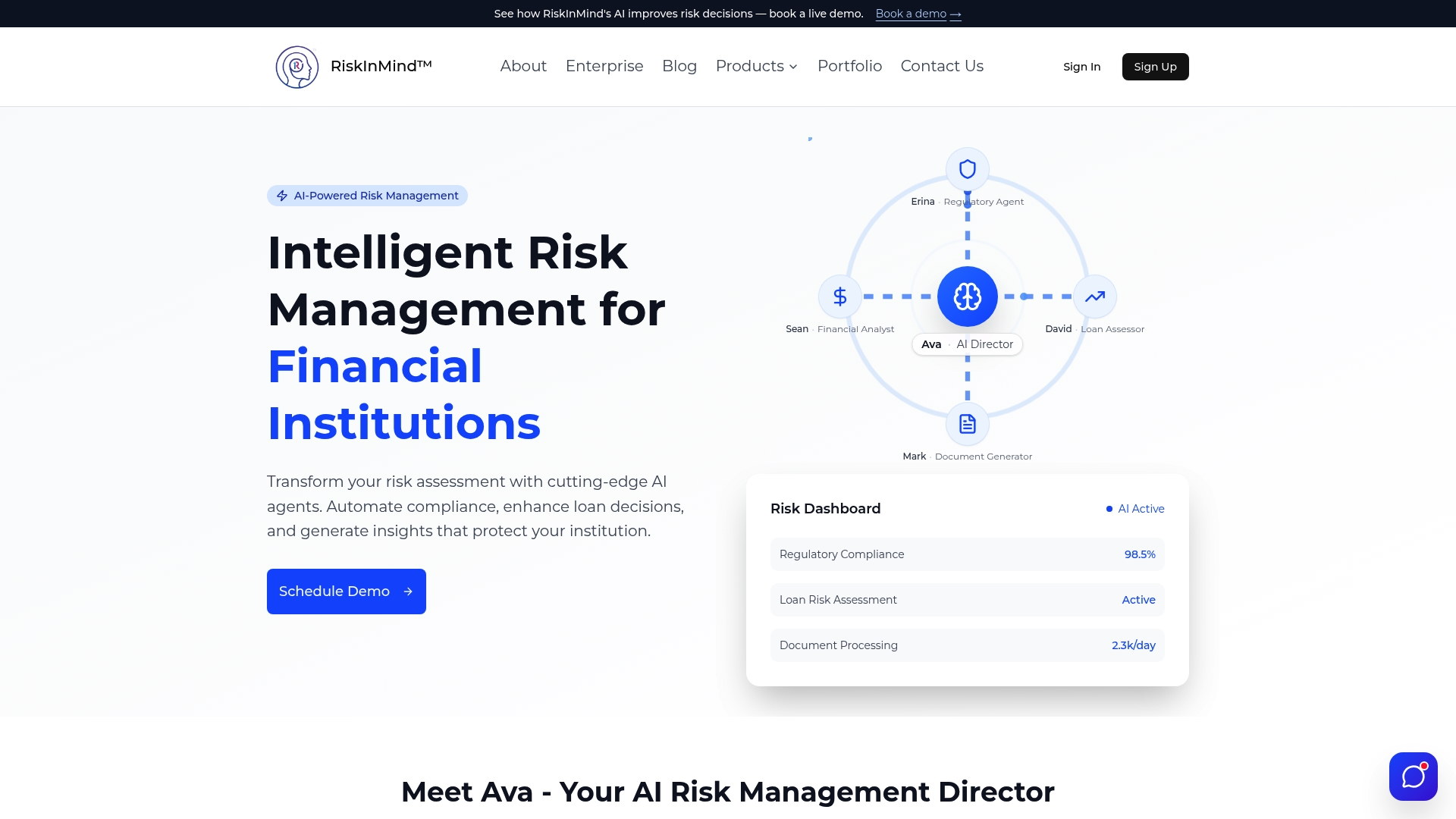
The audit-ready memo output means your guarantor analysis is exam-ready from the moment the analyst signs off, with source documents, adjustment footnotes, stress-test results, and covenant recommendations in a single package. For institutions managing a pipeline of construction and development loans, the CRE Loan Risk Predictor extends that capability to portfolio-level risk scoring. Request a demo to see how a standardized guarantor workflow runs end to end, or explore the loan application platform to see how document capture integrates with the full underwriting process.
Useful sources for guarantor analysis
The sources below are the primary references analysts should read, attach to files, or cite in credit memos when documenting the basis for thresholds and methodology.
-
AHIC Guarantor Analysis Guidelines: The primary industry reference for numeric thresholds (net worth, liquidity, construction liquidity), three-year lookback requirements, and mitigant guidance. Attach the relevant threshold table to any credit memo that applies AHIC minimums.
-
NCUA Examiner's Guide, Financial Analysis and Credit Approval: Governs examiner expectations for global analysis, related-entity evaluation, and guarantor financial condition documentation at credit unions. Essential reading for any analyst whose institution is NCUA-supervised.
-
Pactola, Guarantor Considerations: Practical policy-level guidance on required guarantor financial reporting, FFIEC/NCUA references, and recommended loan policy language. Useful when drafting or updating your institution's guarantor reporting covenants.
-
Leveraged Breakdowns, Underwriting a Construction Loan: Guarantor Analysis: Worked examples for contingent liability classification and narrative language used in construction loan underwriting memos. Particularly useful for analysts new to the realizable/unrealizable classification framework.
-
OnCourse Learning, Guarantor Analysis Course: Training resource covering combined cash-flow calculation, net worth and liquidity measurement from tax returns and PFS, and practical exercises. Recommended for analysts building or refreshing their guarantor analysis skills.
-
Investopedia, What Is a Guarantor?: Accessible definitions of guarantor roles, differences from co-signers, and limited versus unlimited guaranties. Useful as a reference when explaining guarantee structures to non-credit audiences.
-
Corporate Finance Institute, Corporate vs. Personal Guarantees: Covers underwriting distinctions between corporate and personal guarantees, enforcement realities, and collectability considerations. Relevant when analyzing parent or affiliate guarantees.
-
CRE Skills Plugin, Tenant Credit Analyzer: Provides structured ratio examples including the Guaranty Coverage Ratio (Guarantor EBITDA / Guaranteed Annual Debt Service), quality scoring frameworks (Quality A through E), and burn-off handling. Useful for analysts building structured scoring templates.
"A guarantee is only as good as the documentation and the guarantor's real ability to pay. An audit-ready credit memo must explain global financial condition and contingent liabilities so approvers can assess collectability without asking follow-up questions." — NCUA Financial Analysis and Credit Approval guidance
This article provides general informational content for credit professionals and does not constitute legal, accounting, or regulatory advice. Confirm current thresholds, examiner expectations, and legal enforceability with qualified counsel and your primary regulator.