
Secure banking API programs enforce layered authentication and authorization (OAuth2, OpenID Connect), encrypt every connection with current TLS, filter traffic through a hardened API gateway, validate requests against strict schemas, monitor continuously for anomalies, and govern third-party access under documented contracts, all mapped to CFPB, FFIEC, and NIST expectations. Platforms like RiskInMind now help institutions turn these controls into exam-ready evidence.
TL;DR:
- Enforce TLS 1.2 or higher on all API endpoints without fallback to deprecated protocols to prevent insecure connections.
- Implement token-based authentication with proper lifecycle management, rate limiting, and schema validation across all public APIs.
- Use architecture layers like gateways and service meshes to apply coarse- and fine-grained controls, including mutual TLS and request validation, during runtime.
- Maintain continuous, automated evidence collection such as access logs, response metrics, and policy documentation to support exam readiness.
- Prioritize early threat modeling, design validation, and supply chain oversight to address regulatory requirements and reduce late-stage vulnerabilities.
Maintain 100% NCUA & OCC Audit Readiness
Monitor regulatory updates 24/7, check internal credit policies, and generate compliance trails with Erina (AI Regulatory Agent).
Table of Contents
- Priority controls checklist for banking API teams
- Gateways, service mesh, and zero trust architecture
- Securing the API lifecycle from design to runtime
- Managing third-party and supply-chain API risk
- Mapping CFPB, GLBA, and FFIEC expectations to technical controls
- Monitoring, metrics, and incident response cadence
- How an AI-powered risk platform supports exam readiness
- Protecting sensitive data through tokenization
- Fraud detection built on API telemetry
- Scoping authorization with granular permissions
- Securing mobile and web API clients
- Threat modeling tailored to banking API risk
- Perspective: a 90-day plan for boards and CROs
- How RiskInMind supports your compliance-ready API program
- FAQ
- Sources
Priority controls checklist for banking API teams
Most institutions have some API controls but often lack enforcement of the fundamental controls that examiners expect. Before layering on anything sophisticated, confirm the fundamentals are actually enforced, not just documented in a policy binder.
- Enforce TLS 1.2 or higher on every API endpoint, internal and external, with no fallback to deprecated protocols.
- Eliminate credential-sharing and screen-scraping access patterns in favor of token-based developer interfaces.
- Implement OAuth2 and OpenID Connect correctly, including proper scope definitions and redirect URI validation.
- Enforce token lifecycle management: short expirations, mandatory rotation, and immediate revocation on compromise.
- Apply rate limiting and usage quotas to every public-facing API, not just the ones flagged as high risk.
- Enable schema validation so malformed or oversized payloads get rejected before they reach application logic.
- Centralize authorization decisions at the gateway layer rather than scattering them across microservices.
- Instrument telemetry that flags token replay attempts and abnormal resource consumption in near real time.
When examiners ask for evidence, the fastest answers come from documented policies, response-rate logs, and current access-control matrices, exactly the artifacts NIST's API security guidance treats as baseline hygiene rather than advanced practice.
Gateways, service mesh, and zero trust architecture
Architecture decisions determine whether controls actually hold under load or quietly fail during an incident. An edge API gateway should own coarse-grained responsibilities: TLS termination, global rate limiting, and basic authorization checks before traffic ever reaches internal services. Distributed microgateways then apply fine-grained, service-specific policies, letting individual teams tune behavior without waiting on a central platform team for every change. NIST's lifecycle guidance in SP 800-204 frames this split as a deliberate tradeoff between team autonomy and consistent global enforcement, not an either-or choice.
Service mesh technology adds mutual TLS between services, strong service identity, and observability that most gateways cannot provide on their own. Resource-level authorization belongs close to the data it protects, and the ordering matters: authenticate first, authorize second, validate the payload last. Reversing that sequence risks leaking information to unauthenticated requests before access control ever runs.
Resilience patterns matter just as much as access control. Circuit breakers and fail-fast logic stop a single overloaded dependency from cascading into a platform-wide outage, a failure mode that looks identical to a denial-of-service attack from the customer's perspective. Zero trust assumptions, verifying every request regardless of network origin, are no longer optional once APIs span cloud providers, mobile clients, and third-party integrations simultaneously.

Securing the API lifecycle from design to runtime
Defects caught in design cost far less than defects caught in production, and banking APIs carry enough regulatory weight that late fixes often mean re-opening a compliance review as well as a code review.
- Design phase: Build schema-first APIs with formal contracts, run structured threat modeling before a line of code ships, and maintain a current dependency inventory with software composition analysis to catch vulnerable libraries early.
- Build and test phase: Gate every pull request with automated contract tests, static analysis, and both SAST and DAST scans, then fuzz test API endpoints specifically rather than relying on generic web application scanners.
- Runtime phase: Enforce schema validation on every request and response, layer in web application firewall rules and behavioral analytics, deploy bot detection on public endpoints, and trigger adaptive authentication or step-up MFA on high-risk transaction flows.
NIST's updated SP 800-228 guidance treats pre-runtime and runtime controls as complementary layers rather than substitutes. Skipping either one leaves a gap that the other cannot fully close, and institutions that lean entirely on runtime monitoring tend to discover design flaws only after they have already been exploited.
Managing third-party and supply-chain API risk
Banking APIs rarely stay inside a single institution's perimeter. Fintech aggregators, payment processors, and data-sharing partners all touch the same endpoints, and each one introduces a fourth-party dependency that is easy to overlook until an exam asks for it by name.
Start with a complete catalog of third- and fourth-party relationships, ranked by criticality and data sensitivity rather than by contract size. FFIEC guidance on supply chain considerations expects contracts to include audit and certification rights, defined incident notification timelines, and explicit limits on how shared data can be used or re-shared downstream.
Operationally, that means structured onboarding questionnaires before any new integration goes live, periodic re-attestation rather than a one-time review, and penetration tests scheduled on a cadence tied to the vendor's access level. Performance monitoring should connect directly to access caps, so a partner that starts behaving abnormally loses throughput automatically rather than waiting for a quarterly review. Our guide to third-party risk management walks through the assessment and monitoring workflow in more detail.
Mapping CFPB, GLBA, and FFIEC expectations to technical controls
Regulatory language translates into specific engineering work, and the translation is where most compliance gaps actually live.
The CFPB's finalized Personal Financial Data Rights rule requires data providers to offer developer interfaces instead of allowing credential-sharing, to publish standardized machine-readable formats, and to meet minimum response-rate expectations, all under phased compliance dates running from April 1, 2026 through April 1, 2030. Each requirement maps to a build task: a token-based developer portal, documented API schemas, and a monitoring dashboard that tracks response rates by endpoint and client.
GLBA Safeguards and FFIEC's IT Examination Handbook extend this further, treating developer interfaces and third-party oversight as core elements of an information security program rather than a side project owned by engineering alone. Examiners will expect written policy documents, response-rate dashboards, access logs, and vendor risk reports as standing evidence, not materials assembled the week before an exam. Our recent coverage of CFPB rulemaking for consumer credit walks through the broader compliance timeline in context.
Monitoring, metrics, and incident response cadence
A defensible program runs on telemetry that gets reviewed, not just collected. Track token reuse events, schema validation failures, anomalous request patterns by client, and sudden spikes in 4xx or 5xx error rates, since each one tends to precede a larger incident by hours or days rather than appearing without warning.
Set concrete thresholds: mean time to detect, mean time to respond, API response-rate SLAs tied to CFPB expectations, and the percentage of APIs with schema validation actually enforced in production rather than just configured. Combined regulatory guidance from CFPB, NIST, and FFIEC consistently points to rate limiting, circuit breakers, and performance SLAs as the baseline for preventing abuse while meeting response-rate obligations.
Pair that monitoring with a fixed testing cadence: periodic penetration tests, red-team scenarios that explicitly include supply-chain attack paths, and tabletop exercises followed by documented post-incident reviews. Our risk technology integration checklist covers how to connect this telemetry into a broader risk register.
How an AI-powered risk platform supports exam readiness
Evidence preparation consumes a disproportionate share of compliance team time, often more than the underlying control work itself. An AI-powered risk platform that centralizes monitoring, access logs, and policy documentation turns that preparation into a standing capability rather than a pre-exam scramble.
We built our platform around that problem. It processes risk and compliance workflows in real time, with rapid response times, and operates under controls aligned with SOC 2® standards and bank-grade security. Granular audit trails capture the access-control and monitoring evidence examiners ask for, generated continuously rather than assembled retroactively, which reduces the friction of producing documentation on demand during a review.
Protecting sensitive data through tokenization
Banking APIs move account numbers, balances, transaction histories, and authentication credentials, and each of those data types carries a different exposure risk if intercepted or logged improperly. Tokenization replaces sensitive values with non-sensitive substitutes before they travel across any API boundary, so a compromised endpoint or a misconfigured log never exposes the underlying account data.

The practical implementation separates concerns clearly. A dedicated tokenization service, isolated from application logic, issues and resolves tokens, meaning a breach of an API or a downstream service never yields usable account numbers on its own. Field-level encryption complements tokenization for data that must retain some structure, such as partial account identifiers used for customer-facing display.
Data minimization matters just as much as encryption technique. An API endpoint built to confirm account ownership should return a yes or no, not a full account profile, and that principle applies to every response schema, not only the obviously sensitive ones. Logging systems need the same discipline: request and response logs used for debugging should mask or tokenize sensitive fields by default, because a logging pipeline misconfiguration is one of the more common ways supposedly protected data ends up in a place it should never reach.
Retention policy closes the loop. Tokens and encrypted fields should expire or rotate on a defined schedule tied to the underlying relationship, not persist indefinitely because no one revisited the original configuration. NIST's API guidance frames this data handling discipline as inseparable from the authentication and authorization controls covered earlier, since a well-authenticated request that returns unmasked sensitive data has still failed the broader security objective.
Fraud detection built on API telemetry
API traffic generates a dense stream of behavioral signals that fraud teams can use well before a transaction ever completes. Request frequency, device fingerprints, geographic inconsistencies, and timing patterns across related endpoints all carry predictive value, often more immediately actionable than transaction-level data reviewed after the fact.
Velocity checks catch one of the more common fraud patterns directly: a sudden burst of requests against account lookup or balance endpoints from a single credential, or the same device touching multiple accounts in a short window, both signal credential stuffing or account takeover attempts in progress. Correlating authentication telemetry with transaction APIs lets a fraud model flag a login from an unusual location followed immediately by a high-value transfer request, a sequence that looks unremarkable in isolation but highly suspicious combined.
Session and token behavior adds another layer. A token issued in one geographic region suddenly presenting from another, or a token used simultaneously across inconsistent device fingerprints, both indicate likely compromise rather than normal customer behavior. Feeding these signals into adaptive authentication means the system can require step-up verification only when the risk signal actually warrants it, preserving a smooth experience for the overwhelming majority of legitimate requests.
The effectiveness of any fraud model depends entirely on data quality and latency. A detection system reviewing yesterday's logs catches fraud after the money has already moved. Real-time telemetry processing, the same infrastructure that supports schema validation and rate limiting, gives fraud detection the immediacy it needs to intervene before a transaction settles rather than after.
Scoping authorization with granular permissions
Coarse authorization, where a single token grants broad account access, creates unnecessary blast radius when any single credential gets compromised. OAuth2 scopes solve this by letting an institution grant exactly the access a given integration needs: read-only balance visibility for a budgeting app, transaction history for an accounting tool, payment initiation only for a provider that specifically requires it.
Scope design should map directly to actual use cases rather than defaulting to the broadest available grant for convenience. A third-party app that only needs to confirm account ownership should never receive a scope that also exposes full transaction history, even if that scope already exists and seems simpler to assign. Reviewing scope grants periodically matters as much as defining them correctly at the start, since access needs change as partner integrations evolve and old scopes rarely get revoked proactively.
Role-based and attribute-based access control models work together at the API layer: roles handle broad categories of access, while attributes, such as transaction amount thresholds or account type, add conditional logic that a static role assignment cannot capture on its own. Enforcement needs to happen consistently at the gateway or service layer rather than relying on individual microservices to implement authorization checks correctly every time, since inconsistent enforcement is exactly where privilege escalation vulnerabilities tend to surface.
Securing mobile and web API clients
Client-side security determines whether all the backend controls described above actually hold up in practice, since a compromised client can undermine even a well-designed API. Mobile banking apps face particular risk from reverse engineering, so certificate pinning, which ties the app to a specific trusted certificate rather than trusting any valid certificate authority, stops a large class of man-in-the-middle attacks targeting mobile traffic.
Secure local storage matters just as much as transport security. Tokens and sensitive session data belong in platform-provided secure storage, such as the iOS Keychain or Android Keystore, never in plain application storage or shared preferences where other processes could potentially read them. Web clients carry their own risks, particularly around token storage in browser storage mechanisms that remain exposed to cross-site scripting if an application has any other vulnerability.
Both platforms benefit from short-lived access tokens paired with longer-lived refresh tokens, limiting the damage window if a token leaks. Biometric authentication on mobile, layered on top of the underlying OAuth2 flow rather than replacing it, adds a practical usability improvement without weakening the actual access control. Client-side rate limiting and input validation, while never a substitute for server-side enforcement, do catch malformed requests earlier and reduce unnecessary load on backend validation layers.
Threat modeling tailored to banking API risk
Generic threat modeling frameworks miss the specific risk patterns that make banking APIs different from typical web services. A structured approach needs to account for the regulatory exposure, transaction irreversibility, and fraud economics unique to financial services, not just the standard confidentiality, integrity, and availability triad.
Start by mapping data flows for every API endpoint: what sensitive data moves, which third parties can access it, and what happens if that specific endpoint gets compromised or abused. The OWASP API Security Top 10 gives a structured starting point for the vulnerability classes most relevant to this exercise, covering risks like broken object-level authorization and excessive data exposure that show up disproportionately often in banking API incidents compared to general web application vulnerabilities.
Risk scoring should weigh both likelihood and the specific banking impact, since an endpoint that initiates payments carries a different risk profile than one that only displays account nicknames, even if both share similar technical architecture. Revisiting threat models after any significant architecture change, new third-party integration, or regulatory update keeps the exercise current rather than treating it as a one-time compliance checkbox. Our step-by-step risk assessment guide covers how to connect this modeling work into a broader institutional risk register.
Perspective: a 90-day plan for boards and CROs
Approve three things in the next 90 days: eliminate credential-sharing access, enforce gateway-level runtime protections, and lock down third-party API access to documented, contractual terms. Examiners will ask for policy documents, access logs, and response-rate dashboards as proof.
— Raj
How RiskInMind supports your compliance-ready API program
Meeting CFPB, FFIEC, and NIST expectations takes continuous evidence, not a one-time build. We designed RiskInMind to generate that evidence automatically, with real-time dashboards, audit trails, and compliance monitoring built for credit unions and community banks managing exactly these obligations.
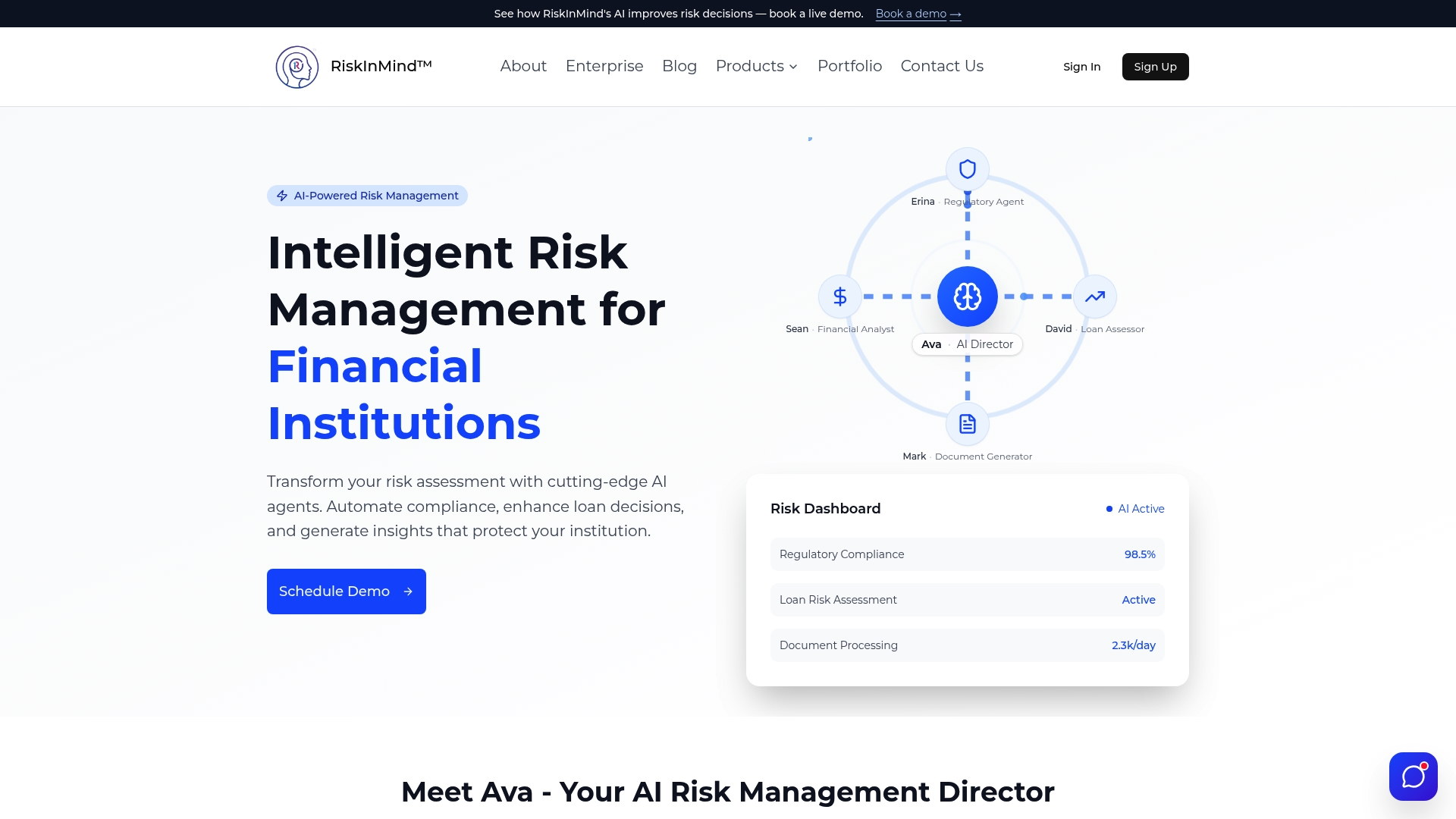
If your team is weighing a technical evaluation, our pricing page outlines the Starter, Professional, and Enterprise plans, and our product overview covers the full platform including Risk Shield and Compliance First.
FAQ
What is an API in banking?
An API in banking is a defined interface that lets a bank's systems share data, such as account balances or transaction history, with authorized third-party applications without exposing underlying infrastructure or customer login credentials directly.
What is API security?
API security is the set of controls, including authentication, encryption, rate limiting, and monitoring, that protect an API from unauthorized access, data leakage, and abuse. For banking specifically, it also means meeting regulatory expectations from bodies like the CFPB and FFIEC.
What is the $3000 rule for banks?
This question does not correspond to a recognized banking API regulation; definitions vary by context, and no CFPB, FFIEC, or NIST source in this guide specifies a rule by that name. Institutions should consult their compliance counsel for any threshold-specific reporting obligation they may have in mind.
Is API banking safe for customers?
Banking APIs built on current TLS encryption, OAuth2 authorization, and tokenized data handling are generally considered safe, and the CFPB's finalized rule specifically pushes the industry away from riskier credential-sharing methods toward standardized developer interfaces. Safety ultimately depends on whether the institution and its third-party partners actually implement these controls correctly.
Sources
- CFPB finalizes personal financial data rights rule
- Security Strategies for Microservices-based Application Systems (NIST SP 800-204)
- FFIEC IT Examination Handbook — Supply chain considerations