
A risk technology integration checklist is a structured, multi-domain evaluation tool that financial institutions use to assess, manage, and document technology risks before adopting new systems or completing mergers and acquisitions. The checklist covers six critical domains: IT governance, data quality, cybersecurity, contract and license transferability, AI and machine learning maturity, and integration cost estimation. For credit union executives, community bank CROs, and compliance officers, this framework is the difference between a controlled technology transition and a costly, audit-triggering failure. Getting the structure right from the start protects both your institution and your regulatory standing.
1. What belongs in a risk technology integration checklist?
A complete technology risk management checklist addresses six core domains, and skipping any one of them creates blind spots that compound over time. 82% of private equity firms conduct structured technology audits before M&A, covering all six domains with a 25-point scoring matrix. That level of rigor reflects how much a missed domain can cost in renegotiations, remediation, and regulatory exposure.
Maintain 100% NCUA & OCC Audit Readiness
Monitor regulatory updates 24/7, check internal credit policies, and generate compliance trails with Erina (AI Regulatory Agent).
The six domains are:
- IT governance: Confirms that ownership, accountability structures, and change management policies are documented and enforceable.
- Data quality: Evaluates data completeness, accuracy, and lineage across source systems before migration begins.
- Cybersecurity posture: Reviews threat detection controls, incident response plans, and access management protocols.
- Contract and license transferability: Identifies change-of-control clauses that could trigger renegotiations or cost increases post-close.
- AI and machine learning maturity: Assesses model documentation, bias testing, and explainability standards for any AI-driven risk tools.
- Integration cost estimation: Prices technology debt, migration labor, and remediation work before commitments are made.
Pro Tip: Prioritize domains based on your institution's risk appetite and the deal scale. A community bank acquiring a fintech vendor needs deeper AI maturity scrutiny than a credit union replacing a core banking module.
2. How to perform an IT integration risk assessment

An IT integration risk assessment follows five defined steps, and the sequence matters. Best practice compliance risk assessment moves through asset mapping, risk point identification, controls evaluation, gap remediation, and continuous monitoring. Skipping asset mapping means you cannot accurately identify what is at risk, and skipping controls evaluation means you cannot measure how protected you already are.
The five steps in practice:
- Asset mapping: Catalog every server, application, API endpoint, and data store in scope. Include cloud-hosted and on-premise assets equally.
- Risk point identification: Flag threat vectors specific to financial services, including third-party data feeds, legacy core systems, and unencrypted data transfers.
- Controls evaluation: Score existing controls against frameworks such as NIST or PCI DSS. Each asset must be mapped to applicable frameworks to identify compliance gaps accurately.
- Gap remediation: Assign owners, timelines, and budget to each identified gap before integration proceeds.
- Continuous monitoring: Establish automated dashboards and real-time risk scores to track control effectiveness post-integration.
Operational readiness guidelines require IT infrastructure audits within 30 days post-close, covering servers, networking, and security. That 30-day window is tight, and institutions that begin asset mapping before close consistently meet it. DORA compliance adds further pressure, requiring institutions to satisfy 95 specific requirements and maintain rapid incident reporting capabilities.
Pro Tip: Build your due diligence manifest before the assessment begins. A one-page tracker listing checklist items, artifact statuses, and waiver decisions dramatically reduces audit preparation time under DORA.
Data portability deserves special attention during the assessment. Auditing API documentation and export mechanisms is critical, since proprietary data formats can block integration entirely even when functional features appear strong. Confirm that the vendor supports structured export formats such as CSV, XML, or direct database access before any contract is signed.
3. Checklist depth by vendor tier and integration complexity
Not every vendor requires the same checklist depth, and applying a 30-item evaluation to commodity software wastes resources without reducing risk. Tier 1 vendors require deep, 30-item checklists covering all six domains, while Tier 3 commodity software needs only five to six items. This tiering keeps due diligence proportionate to actual risk exposure.
| Vendor tier | Checklist depth | Primary risk focus | Scoring model |
|---|---|---|---|
| Tier 1 (core systems, AMS) | 30+ items across all 6 domains | Cybersecurity, data portability, contract terms | 1–5 maturity scale, 25-point matrix |
| Tier 2 (integrated platforms) | 15–20 items across 4 domains | Data quality, API compatibility, cost estimation | Weighted scoring by domain |
| Tier 3 (commodity software) | 5–6 items, focused review | License terms, basic security controls | Pass/fail checklist |
The scoring model matters as much as the item count. A 1–5 maturity scale applied across a 25-point matrix gives compliance teams a defensible, auditable record of how each vendor was evaluated. That record becomes critical when regulators ask how a technology decision was made. Adjust scoring weightings based on deal size: a large core banking platform migration warrants heavier weight on AMS compatibility and cybersecurity posture than a standalone reporting tool replacement.
4. Best practices and common pitfalls in risk technology integration
Technology debt is the largest hidden cost in any integration, and it compounds over time. Firms that price technology debt correctly during due diligence avoid budget overruns and renegotiations. The key is treating accumulated deferred decisions, not just single catastrophic failures, as the real liability. A system that has not been patched in 18 months carries a different cost profile than one with a single known vulnerability.
"Technology debt doesn't announce itself. It shows up six months post-close as unplanned remediation spend and delayed go-live dates."
Leadership governance is equally non-negotiable. IT teams cannot effectively manage integrations without direct leadership support and established budgetary authority. Cybersecurity governance must be set at the executive level before integration work begins, not delegated to IT after the fact. Institutions that establish this accountability structure early consistently outperform those that treat governance as a post-integration task.
The five most common integration mistakes to avoid:
- Conflating compliance and security assessments: Compliance risk assessments focus on regulatory penalties and legal exposure, while security assessments focus on threat detection. Treating them as interchangeable produces gaps in both.
- Underestimating contract change-of-control provisions: These clauses frequently trigger renegotiations or cost increases that were not priced into the deal.
- Skipping AI model documentation review: Any acquired or integrated AI tool must have documented bias testing and explainability records to satisfy regulatory scrutiny.
- Delaying the operational readiness audit: Waiting until post-close to begin infrastructure review consistently causes missed 30-day compliance windows.
- Failing to establish KPI reviews post-integration: Continuous monitoring without defined KPIs produces data without accountability.
For financial institutions managing compliance monitoring best practices, the distinction between security and compliance risk is not academic. Regulators treat them separately, and your checklist should too.
5. How IT risk assessment maturity shapes your checklist
IT risk assessment maturity ranges from ad-hoc processes with no formal documentation to optimized programs driven by AI-powered predictive analytics. Where your institution sits on that spectrum directly determines how sophisticated your integration checklist needs to be. An institution at the ad-hoc level cannot realistically execute a 30-item Tier 1 checklist without first building foundational documentation practices.
Higher maturity institutions use automated dashboards, real-time risk scores, and continuous intelligence feeds to monitor integration health. These tools do not replace the checklist. They extend it into an ongoing operational process. The checklist becomes the baseline, and the monitoring infrastructure tracks drift from that baseline over time.
For institutions building toward higher maturity, the step-by-step risk assessment framework provides a practical path from ad-hoc to structured practice. The goal is not perfection at launch. The goal is a repeatable, auditable process that improves with each integration cycle.
Key takeaways
A complete risk technology integration checklist requires six defined domains, tiered vendor evaluation, and continuous monitoring to protect financial institutions from compliance failures and budget overruns.
| Point | Details |
|---|---|
| Six domains are non-negotiable | IT governance, data quality, cybersecurity, contracts, AI maturity, and cost estimation must all be covered. |
| Tier vendor reviews by risk level | Tier 1 vendors need 30-item evaluations; Tier 3 commodity tools need only five to six items. |
| Price technology debt early | Unpriced technology debt is the leading cause of post-close budget overruns and renegotiations. |
| Separate compliance from security | Compliance assessments target regulatory penalties; security assessments target threats. Treat them as distinct workstreams. |
| Governance must precede integration | Leadership must establish cybersecurity authority and budgetary accountability before IT integration begins. |
My take on checklist discipline in financial institutions
The most common mistake I see risk and compliance teams make is treating the integration checklist as a one-time deliverable. They complete it, file it, and move on. Six months later, the regulatory environment has shifted, a new AI tool has been added to the stack, and the original checklist is already obsolete.
A checklist is only as useful as its last update. Financial institutions operating under DORA, NIST, or FFIEC guidance face evolving requirements that do not pause between integrations. The checklist needs a review cadence tied to regulatory change, not just to deal activity. I recommend quarterly reviews for Tier 1 vendor relationships and annual reviews for everything else.
The other thing I would push back on is the instinct to build the most comprehensive checklist possible. Comprehensiveness without prioritization creates paralysis. A 60-item checklist that nobody completes is worse than a 20-item checklist that gets executed rigorously. Start with the six core domains, score them honestly, and add depth where your institution's specific risk appetite demands it. The checklist is a living document, not a trophy.
— Raj
How Riskinmind supports your integration risk program
Financial institutions that want to move from manual checklists to automated, real-time risk evaluation have a direct path forward with Riskinmind.
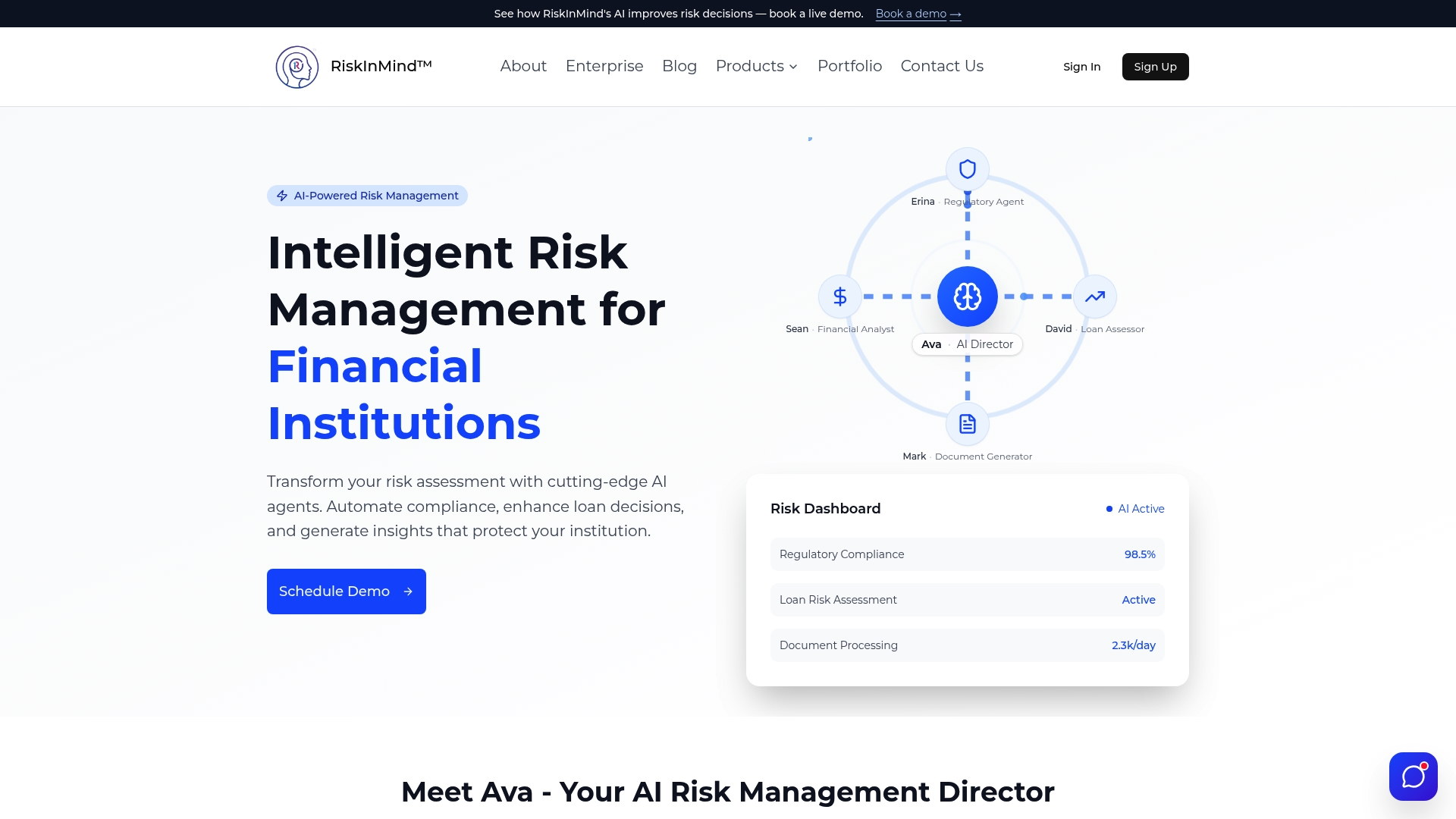
Riskinmind's AI-powered platform, guided by its central AI director Ava, automates core risk processes including loan underwriting, regulatory compliance, and portfolio monitoring. The Loan Application product integrates directly with existing risk workflows, and the CRE Loan Risk Predictor delivers commercial real estate risk analysis aligned with integration compliance needs. Both tools operate under SOC 2® certification with response times under half a second, giving compliance teams the audit-ready documentation that integration checklists demand. Explore Riskinmind's full product suite to see how AI-driven risk management fits your institution's integration program.
FAQ
What is a risk technology integration checklist?
A risk technology integration checklist is a structured evaluation tool covering IT governance, cybersecurity, data portability, contract terms, AI maturity, and cost estimation. Financial institutions use it to manage technology risk during system adoptions or mergers and acquisitions.
How many items should a technology integration checklist include?
Tier 1 vendors require 30-item checklists scored on a 25-point maturity matrix, while Tier 3 commodity software needs only five to six items. Checklist depth should match vendor criticality and deal scale.
What is the difference between a compliance risk assessment and a security risk assessment?
Compliance risk assessments focus on avoiding regulatory penalties and legal exposure under frameworks such as GDPR, HIPAA, or PCI DSS. Security risk assessments focus on identifying and mitigating active threats. Both are required, and neither substitutes for the other.
When should the IT infrastructure audit happen after a technology integration?
Operational readiness guidelines require IT infrastructure audits within 30 days post-close, covering servers, networking, and security controls. Institutions that begin asset mapping before close consistently meet this window.
What is technology debt and why does it matter in integration due diligence?
Technology debt is the accumulated cost of deferred technical decisions, including unpatched systems, outdated architectures, and undocumented processes. Pricing it correctly during due diligence prevents post-close budget overruns and renegotiations.