
Yes: when configured with timely list updates, explainable alerts, and enforced hold-and-review controls, automated OFAC screening reliably supports a bank's sanctions compliance program. The compliance-critical pieces are list coverage, update latency, and documented adjudication of every alert. Automation functions as one internal control inside a broader sanctions compliance program, never as a substitute for it.
TL;DR:
- OFAC screening should include timely list updates, coverage of all relevant sanctions lists, and documented adjudication of every alert for examiner confidence.
- Vendor tools must specify list variants included, fuzzy matching settings, and cover sectoral and foreign sanctions beyond the SDN list to avoid false positives.
- Controls like update SLAs, outage handling, reviewer queues, and audit logs are essential to make automated screening defensible during exams.
- Acceptance testing must measure update latency, detect transliterations, review reviewer reasoning, and verify security documentation before deployment.
- Regular regression testing, mapping every party to screening triggers, and detailed override records are critical to prevent enforcement failures and support ongoing compliance.
Maintain 100% NCUA & OCC Audit Readiness
Monitor regulatory updates 24/7, check internal credit policies, and generate compliance trails with Erina (AI Regulatory Agent).
Table of Contents
- What automated OFAC screening covers inside a sanctions compliance program
- How OFAC's Sanctions List Search and match scoring actually work
- Controls that make automated screening defensible to examiners
- Vendor selection and acceptance testing before you sign
- What FFIEC and OFAC expect from testing and exam readiness
- Implementation pitfalls that keep showing up in enforcement cases
- How an AI-first, SOC 2-aligned platform should approach sanctions screening
- Where RiskInMind fits into your OFAC screening workflow
- Where to verify OFAC and FFIEC guidance directly
- Sources
- FAQ
What automated OFAC screening covers inside a sanctions compliance program
Automated OFAC screening refers to software that compares customer names, transaction parties, and related identifiers against sanctions lists in real time or in scheduled batches, flagging potential matches for human review. Most institutions run a hybrid model: real-time screening at account opening and wire origination, with batch sweeps to catch new designations against the existing customer base.
The OFAC Framework for Compliance Commitments treats screening technology as one internal control sitting alongside management commitment, risk assessment, testing and auditing, and training. Screening alone, without those other four components, does not satisfy examiner expectations.
Prudent practice extends screening beyond the primary account holder to every party with a functional stake in an account or transaction:
- Beneficiaries, trustees, and powers of attorney at account opening and on any information change
- Signatories and joint owners added after the account is active
- Wire beneficiaries and originators on every disbursement
- Existing customers, swept periodically against list updates
How OFAC's Sanctions List Search and match scoring actually work
OFAC's Sanctions List Search applies fuzzy logic to name fields and checks them against the SDN List along with the Non-SDN Consolidated Sanctions List, catching spelling variants, transliterations, and partial matches that an exact-text search would miss. Vendor products are built on the same underlying data, but coverage varies: some screen only the SDN List, others include sectoral and non-SDN consolidated lists, and a few add foreign or supranational lists that go beyond OFAC's scope.
A match score is a triage signal, not a legal conclusion. It tells a reviewer how closely a name resembles a listed party; it does not determine whether the transaction actually involves a sanctioned person.
One documented behavior of OFAC's own tool matters for vendor evaluation: Sanctions List Search is built to surface near-matches deliberately, which means any serious vendor tool should be expected to generate a comparable volume of false positives when the fuzzy-matching sensitivity is set conservatively.
- Ask vendors to name every list and list variant included in their screening index.
- Confirm whether sectoral sanctions and non-SDN consolidated data are covered, not just the SDN List.
- Require documentation of how the fuzzy-matching threshold is set and who controls it.
Controls that make automated screening defensible to examiners
Automation earns examiner confidence through documented controls, not through the vendor's brand name. Five areas carry the most weight.
- Update monitoring and latency SLAs. Require a written service level for how quickly new designations reach the live screening index, plus a log proving the SLA is met.
- Filter and data design. The matching engine should check multiple fields (name, date of birth, country, identifiers such as BIC or SWIFT codes where relevant), and it should handle transliteration variants rather than exact-spelling matches only.
- Outage and timeout behavior. OFAC FAQ 43 confirms there is no requirement to use instantaneous screening software, but institutions must not complete a transaction before sanctions analysis is finished. Build the transaction gate so any unresolved alert, vendor outage, or timeout automatically holds the activity rather than letting it clear by default.
- Reviewer queues and escalation paths. Every alert needs a named reviewer, a documented adjudication window, and an escalation route for ambiguous or high-risk matches.
- Auditability. Retain decision logs, override records, and full evidence packages, including the identifiers and descriptors a reviewer relied on to clear or escalate an alert.
Pro Tip: Run regular regression tests using recently designated names and known transliteration variants to detect update-latency gaps before any examination.
Vendor selection and acceptance testing before you sign
Procurement should treat screening vendors like any other control owner: verify the claims before the contract, not after the first exam finding. Core questions to put in writing include exact list coverage, update cadence with evidence, data retention periods, outage SLAs, API behavior under load, and how the system explains a match to a human reviewer.
Acceptance testing turns those answers into evidence:
- Run an update-timing test against a recent OFAC designation and measure how long it takes to appear as a hit.
- Test detection of transliterated names and known aliases, not just the exact-spelling version.
- Pull a sample of adjudication logs to confirm the system captures reviewer reasoning, not just a disposition code.
- Request a SOC 2 report and incident-response documentation as part of the security review, alongside proof of the vendor's own independent testing.
An AI-driven compliance checklist built around these acceptance criteria gives compliance officers a repeatable procurement standard rather than a one-off vendor pitch.
What FFIEC and OFAC expect from testing and exam readiness
Examiners evaluate outcomes, not vendor reputation. FFIEC examination procedures direct examiners to test update timing, database coverage, detection of recently designated names, filter criteria, and the documentation trail behind every potential match.
Independent testing should be risk-based rather than fixed to a single calendar interval, with more frequent reviews triggered by system changes, vendor migrations, or significant incidents. Guidance on assessing the BSA/AML compliance program directs testers to evaluate the IT sources, systems, and processes supporting screening, not just the front-end alert queue.
- Maintain a written test plan defining scope, sample sizes, and testing frequency tied to institutional risk.
- Keep results and remediation tracking accessible for board or committee reporting.
- Build sample test cases across business lines and transaction types, including wires, new accounts, and periodic sweeps, so coverage can be demonstrated rather than assumed.
Implementation pitfalls that keep showing up in enforcement cases
Enforcement history points to a short list of recurring failures: stale list versions that were never updated after a vendor change, missing identifiers that let an alert engine miss an obvious match, thresholds set too loosely to catch real hits, and escalation decisions made verbally with no record behind them. OFAC enforcement and remediation materials show that firms rebuilding a compliance program after a violation consistently add independent testing and governance review, not just new software.
The fix starts with mapping every party and every event, account opening, information change, periodic sweep, disbursement, to a specific screening trigger, then requiring reviewers to document the identifiers and context behind each cleared or escalated alert. A regression suite that replays new OFAC designations against the live system catches configuration drift before an examiner does.

Pro Tip: Treat every override of an automated hold as its own audit trail: who approved it, what evidence supported the decision, and when it was recorded.
How an AI-first, SOC 2-aligned platform should approach sanctions screening
AI can speed triage and evidence preparation, surfacing the identifiers and transaction context a reviewer needs faster than a manual search. Decision authority has to stay with a qualified human reviewer, backed by SOC 2 controls, real-time processing, and complete audit trails. Before any demo, ask for update-latency test results, sample adjudication logs, and proof the system integrates with your institution's own escalation process.
— Raj
Where RiskInMind fits into your OFAC screening workflow
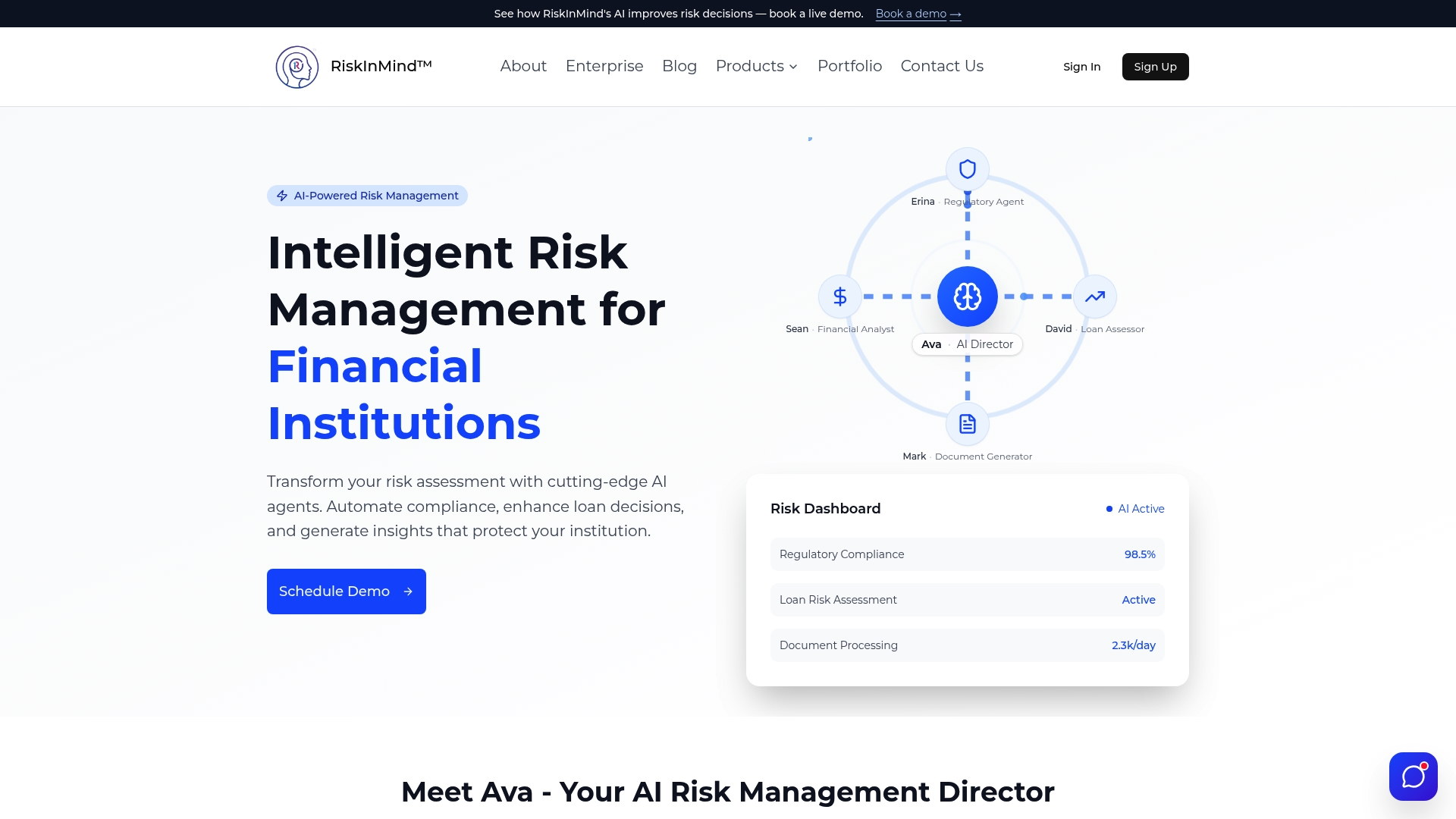
Certain AI-driven risk platforms integrate sanctions screening with SOC 2® aligned controls, sub-second processing, and security features intended for financial institutions. Before you commit to any platform, ask for the same evidence you would demand from any vendor:
- Update-latency test results against recent OFAC designations
- Sample adjudication and override logs showing reviewer reasoning
- A current SOC 2® report and documented incident-response procedures
Review pricing across the Starter, Professional, and Enterprise plans and request a demo to see how RiskInMind's Regulatory Agent and Compliance First modules handle screening evidence end to end.
Where to verify OFAC and FFIEC guidance directly
Bookmark OFAC's Sanctions List Search, the OFAC Framework for Compliance Commitments, FFIEC examination procedures, and OFAC's updated FAQs for exam preparation and vendor validation.
This article is general information, not a substitute for advice from a qualified lawyer. Consult a qualified legal professional about your own circumstances before acting on anything here.
Sources
- FFIEC BSA/AML Office of Foreign Assets Control - Office of Foreign Assets Control
- A Framework for OFAC Compliance Commitments
FAQ
Does OFAC require banks to use screening software?
No. OFAC FAQ 43 confirms there is no legal requirement to use screening software or to obtain an instantaneous result, but institutions must not complete a transaction before sanctions analysis is finished. Manual and automated approaches are both acceptable as long as the hold-before-clearance rule is enforced.
How often do OFAC sanctions lists change?
Sanctions lists can change without a fixed schedule, which is why OFAC's updated FAQs advise checking the source directly rather than relying on a vendor's generic "daily updates" claim. Compliance officers should measure actual update latency through their own regression tests instead of assuming a set cadence.
What should a vendor acceptance test include for OFAC screening?
A solid acceptance test includes an update-timing check against a recent designation, detection tests for transliterated names and aliases, and a review of sample adjudication logs showing reviewer reasoning. Security evidence, including a current SOC 2 report and incident-response documentation, should be part of the same review.
Who should be screened besides the primary account holder?
Beneficiaries, trustees, powers of attorney, and other related parties should be screened at account opening, on information changes, periodically, and at disbursement. OFAC guidance treats this broader screening scope as standard practice rather than an edge case.
How does RiskInMind support OFAC screening automation?
RiskInMind's Regulatory Agent and Compliance First modules apply real-time processing with SOC 2® aligned controls and full audit trails, giving compliance teams documented evidence for exams. Details on plans and pricing are available on RiskInMind's pricing page.