
A compliance officer is the single accountable leader responsible for ensuring a financial institution adheres to laws, regulations, and internal policies to manage risk and protect organizational integrity. The role of compliance officers has grown far beyond administrative oversight. Effective compliance programs can reduce federal fines by 95% compared to organizations without formalized structures. That number reflects just how much financial and legal exposure sits on the compliance officer's desk. In credit unions, community banks, and lenders, this position now sits at the intersection of regulatory knowledge, risk management, and business strategy.
What are the primary responsibilities of compliance officers?
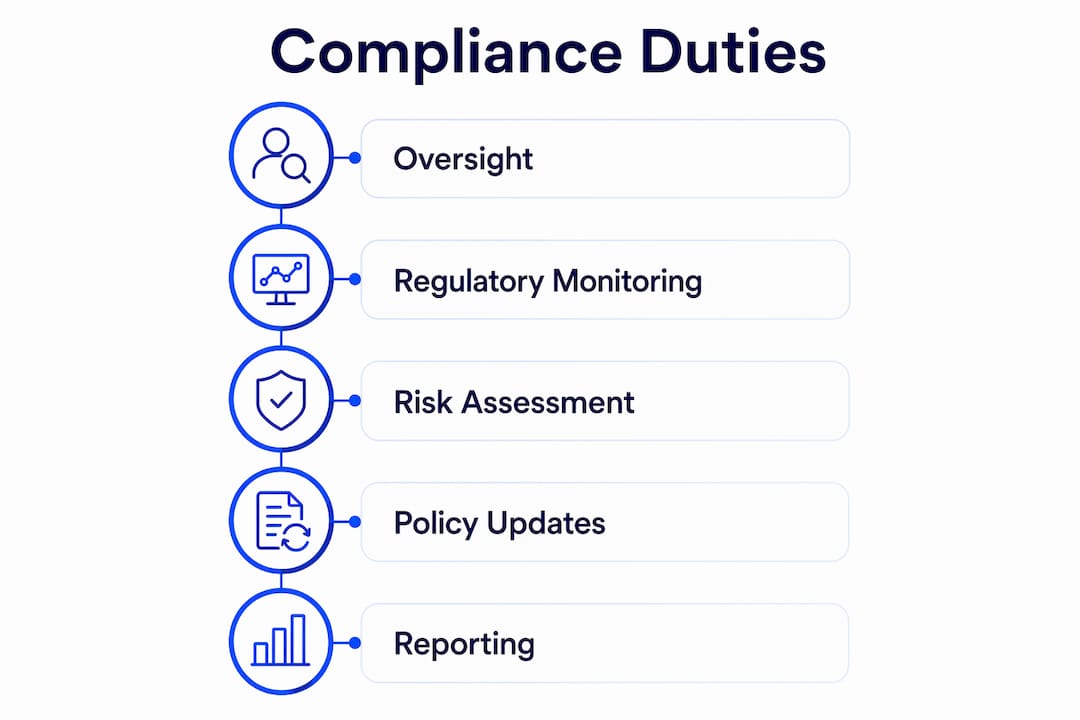
Compliance officer duties fall into three core activity pillars: program oversight, monitoring regulatory changes, and conducting risk assessments. Each pillar feeds the others. A gap in regulatory monitoring creates blind spots in the risk assessment, which then weakens the entire compliance program.
Maintain 100% NCUA & OCC Audit Readiness
Monitor regulatory updates 24/7, check internal credit policies, and generate compliance trails with Erina (AI Regulatory Agent).
The daily work is broader than most compliance officer job descriptions suggest. Compliance officers investigate potential violations, develop internal policies, support audit processes, and deliver staff training across departments. They work closely with HR on employee conduct standards, with IT on data security controls, and with Finance on reporting accuracy.

One structural reality defines the function: compliance officers design frameworks but delegate execution to Engineering, IT, and HR. They are accountable without being the hands-on executor of every control. This distinction matters because it shapes how compliance officers spend their time. Orchestrating cross-functional compliance efforts is the core of the job, not performing every task personally.
Compliance officer duties at a glance:
- Design and maintain the institution's compliance program
- Monitor changes to federal and state regulations, including Bank Secrecy Act and CFPB rules
- Conduct and document risk assessments across business lines
- Investigate complaints, incidents, and potential violations
- Deliver compliance training to staff at all levels
- Report findings and program status directly to leadership and the board
Pro Tip: Build a regulatory calendar that maps every known reporting deadline, examination cycle, and policy review date. Institutions that track these proactively spend less time in reactive mode during audits.
Compliance officers also monitor legal changes, update policies, and report to leadership on a continuous basis. That reporting function is not ceremonial. It gives the board and executive team the visibility they need to make informed decisions about risk tolerance and resource allocation.
How has the compliance officer role evolved into a strategic position?
The Sarbanes-Oxley Act of 2002 fundamentally changed what financial institutions expected from compliance officers. Before Sarbanes-Oxley, the function was largely administrative. After it, compliance officers became central to risk governance and business decision-making.
The shift was not just structural. It changed the profile of the person hired into the role. Institutions began seeking professionals who understood both regulatory frameworks like GDPR and the Bank Secrecy Act and the business operations those frameworks governed. A compliance officer who cannot explain the revenue impact of a new regulation to a CFO is only half as effective as one who can.
Today, the compliance officer role is a strategic position embedded in risk management and business execution. That means compliance officers sit in on product development discussions, advise on new market entry, and weigh in on M&A due diligence. The function now shapes business decisions rather than reacting to them.
"While often viewed as legal enforcers, compliance officers primarily aim to help organizations maintain integrity and transparency." — Purdue Global
The importance of compliance roles in financial institutions extends to protecting customer trust. A single regulatory failure can trigger enforcement actions, reputational damage, and customer attrition simultaneously. Compliance officers are the institutional defense against all three.
Key markers of the strategic compliance officer:
- Advises the C-suite and board on regulatory risk exposure
- Participates in product and service design from the start
- Translates regulatory requirements into operational controls
- Builds relationships with examiners and regulators proactively
What skills and tools do compliance officers need in 2026?
Critical skills for compliance officers include analytical thinking, communication, leadership, and digital literacy. Certifications from organizations like ACAMS or the Society of Corporate Compliance and Ethics add competitive advantage. Regulatory knowledge alone is no longer sufficient.
The technology dimension has grown significantly. Compliance officers now rely on risk assessment frameworks, audit management platforms, and real-time monitoring software to keep pace with regulatory volume. Manual tracking of BSA filings, CRA requirements, and CFPB guidance across a multi-branch institution is no longer practical.
AI-driven compliance tools automate monitoring and risk assessments, increasing both accuracy and efficiency. That automation frees compliance officers to focus on judgment-intensive work: interpreting ambiguous regulations, advising on edge cases, and managing examiner relationships.
| Skill or Tool | Why It Matters |
|---|---|
| Analytical thinking | Identifies patterns in data that signal emerging compliance risk |
| Communication | Translates regulatory requirements into clear guidance for non-legal staff |
| Digital literacy | Enables effective use of compliance monitoring and reporting platforms |
| AI-assisted monitoring | Reduces manual review burden and flags issues in real time |
| Risk assessment frameworks | Provides structured methodology for evaluating exposure across business lines |
| Regulatory certifications (ACAMS, SCCE) | Demonstrates specialized knowledge and builds examiner credibility |
Pro Tip: Compliance officers who invest in understanding AI tools, not just using them, are better positioned to evaluate vendor claims, identify tool limitations, and defend automated outputs to regulators.
The role of AI in regulatory compliance for banks is expanding rapidly. Institutions that equip their compliance teams with the right technology close the gap between regulatory expectations and operational capacity.
What challenges do compliance officers face, and how do they overcome them?
Workload fluctuates based on audit cycles, running intense during active examination periods and lighter during long-term policy drafting phases. That variability makes resource planning difficult. Compliance teams that staff only for average workload find themselves overwhelmed during peak periods.
Personal liability is a real and underappreciated risk. Compliance officers face personal liability if they ignore red flags or fail to implement required controls. This is not a theoretical concern. Regulators have pursued individual enforcement actions against compliance officers at financial institutions where systemic failures occurred. Thorough documentation and consistent policy enforcement are the primary defenses.
Common challenges compliance officers navigate:
- Authority gaps. Compliance officers are accountable for outcomes they do not directly control. Getting Engineering or Finance to prioritize a compliance fix requires influence, not authority.
- Regulatory velocity. Federal and state regulatory changes arrive faster than most institutions can absorb. Staying current requires dedicated monitoring systems, not periodic reviews.
- Leadership buy-in. Compliance programs without executive sponsorship fail. Compliance officers must make the business case for resources and demonstrate ROI through reduced examination findings and avoided fines.
- Cross-department friction. Business units often view compliance requirements as obstacles. Compliance officers who frame controls as risk protection rather than bureaucratic hurdles get faster adoption.
Reviewing top regulatory compliance risks at peer institutions is one of the most effective ways to anticipate where your own program may have gaps. Real enforcement examples carry more weight in leadership conversations than abstract risk descriptions.
Best practices for leading effective compliance programs in financial institutions
Effective compliance programs share a common structure. They are tailored to the institution's specific risk profile, not copied from a generic template. A community bank with a large agricultural lending portfolio faces different compliance exposures than an urban credit union focused on consumer lending.
- Design a risk-based compliance framework. Map your institution's highest-risk activities first. Allocate monitoring resources proportionally to risk, not equally across all business lines.
- Conduct regular training at every level. Front-line staff, managers, and board members each need compliance education calibrated to their role. Annual training is a floor, not a ceiling.
- Implement continuous monitoring technology. Periodic reviews miss issues that develop between cycles. Real-time monitoring catches anomalies as they emerge.
- Establish clear escalation protocols. Every compliance issue needs a defined path to the right decision-maker. Ambiguous escalation paths delay responses and increase exposure.
- Document everything. Regulators evaluate the quality of your documentation as a proxy for the quality of your program. If it is not written down, it did not happen.
| Practice | Outcome |
|---|---|
| Risk-based framework design | Focuses resources on highest-exposure areas |
| Continuous monitoring | Reduces time between issue emergence and detection |
| Regular staff training | Lowers violation rates from human error |
| Clear escalation protocols | Speeds response to emerging compliance issues |
| Thorough documentation | Strengthens examiner credibility and audit defense |
A step-by-step risk assessment process gives compliance officers a repeatable methodology for evaluating exposure across lending, operations, and customer-facing functions. Consistency in methodology also makes year-over-year comparisons more meaningful.
The 2026 financial institution compliance process reflects a regulatory environment that rewards proactive programs. Institutions that treat compliance as a continuous process rather than an annual event consistently outperform peers in examination outcomes.
Key takeaways
The compliance officer role is the institutional backbone of regulatory adherence, risk management, and organizational integrity in financial institutions, requiring strategic leadership, technical skill, and cross-functional authority.
| Point | Details |
|---|---|
| Core activity pillars | Program oversight, regulatory monitoring, and risk assessment define the compliance officer's daily work. |
| Strategic evolution | Post-Sarbanes-Oxley, compliance officers shifted from administrators to risk advisors embedded in business decisions. |
| Personal liability risk | Compliance officers face individual legal exposure if they ignore red flags or fail to implement required controls. |
| Technology adoption | AI-driven monitoring tools increase accuracy and free compliance officers for judgment-intensive regulatory work. |
| Program effectiveness | A formalized compliance program can reduce potential federal fines by as much as 95% compared to unstructured approaches. |
The compliance officer as a business asset, not a gatekeeper
I have spent years watching financial institutions treat compliance as a cost center. The ones that struggle most with examiners are almost always the ones where the compliance officer is excluded from business planning until a problem surfaces. That is the wrong model.
The compliance officers who create the most institutional value are the ones who show up in product meetings, ask the uncomfortable questions early, and translate regulatory risk into financial terms leadership can act on. They do not wait for violations to demonstrate their worth. They prevent violations by being present in the decisions that create them.
The other thing I have seen consistently: compliance officers who invest in continuous learning outperform those who rely on the knowledge they had when they were hired. Regulations change. Technology changes. The compliance officer who understood BSA requirements in 2015 needs a materially different skill set in 2026. The best in this field treat their own development with the same rigor they apply to their institution's compliance program.
Cross-functional relationships are not a soft skill in this role. They are a core competency. A compliance officer who cannot build trust with the CFO, CTO, and head of lending will always be fighting for resources and attention. Build those relationships before you need them.
— Raj
How Riskinmind supports compliance officers in financial institutions
Compliance officers at credit unions, community banks, and lenders need tools that match the pace and complexity of today's regulatory environment.
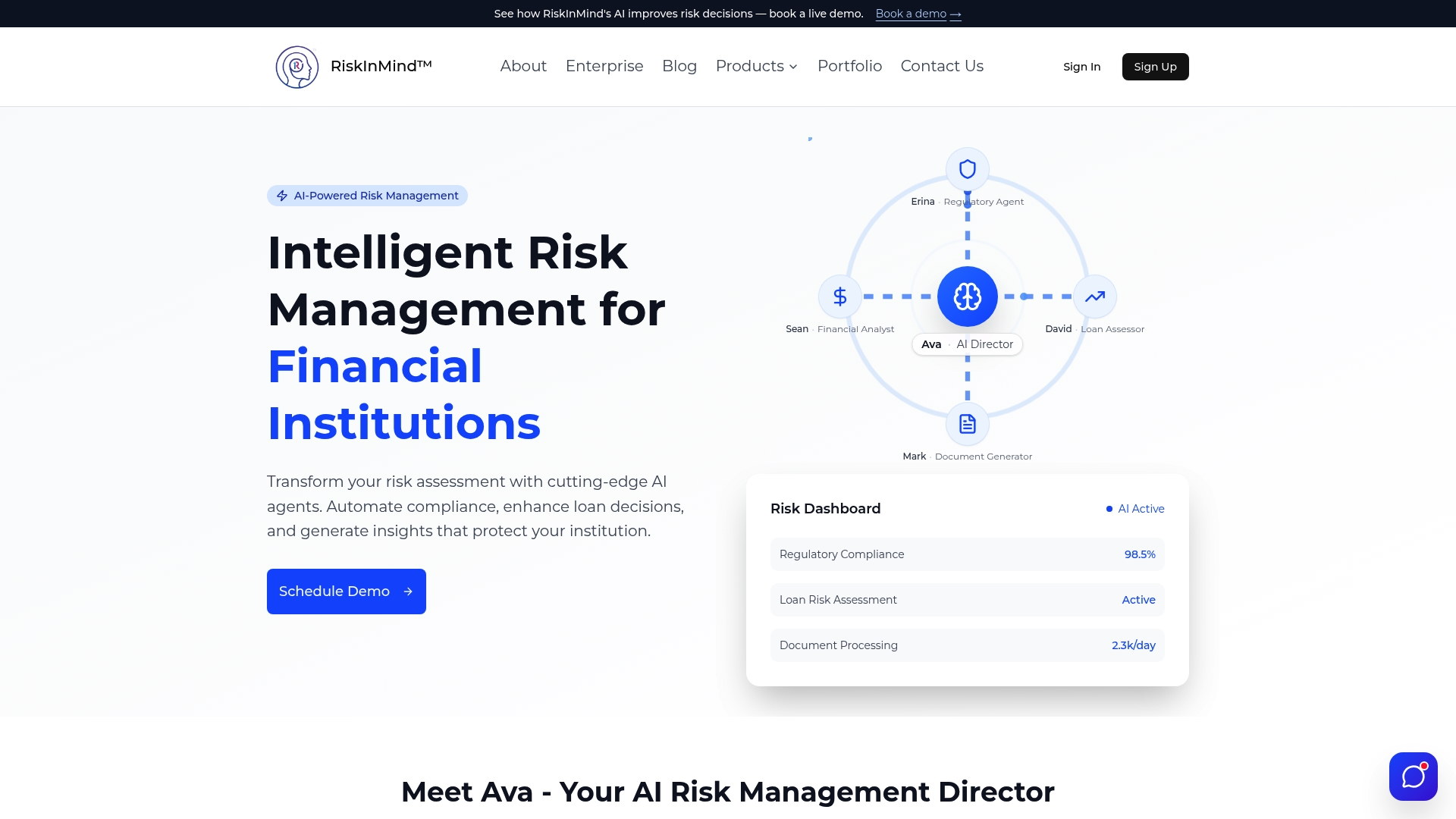
Riskinmind's AI-powered platform gives compliance teams real-time risk monitoring, automated regulatory reporting, and structured risk assessment workflows built specifically for financial institutions. The AI-assisted loan risk analysis tool reduces manual review time and improves the accuracy of compliance-related credit decisions. For institutions benchmarking their risk exposure against peers, Riskinmind's peer benchmarking and risk analysis tool provides comparative data that strengthens both internal reporting and examiner conversations. Compliance officers who want to move from reactive to proactive risk management will find both tools directly relevant to their daily work.
FAQ
What does a compliance officer do in a financial institution?
A compliance officer oversees the institution's compliance program, monitors regulatory changes, conducts risk assessments, and reports findings to leadership and the board. The role covers everything from policy development and staff training to audit support and violation investigations.
What are the three core functions of compliance officers?
The three core functions are program oversight, regulatory monitoring, and risk assessment. These pillars structure how compliance officers allocate their time and resources across the institution.
How do compliance officers reduce legal and financial risk?
Formalized compliance programs can reduce potential federal fines by as much as 95% compared to institutions without structured programs. Compliance officers achieve this by identifying exposure early, implementing controls, and maintaining thorough documentation.
What qualifications do compliance officers need?
Critical skills include analytical thinking, communication, leadership, and digital literacy. Certifications from organizations like ACAMS or the Society of Corporate Compliance and Ethics strengthen both competency and examiner credibility.
Can compliance officers face personal liability?
Compliance officers face personal liability if they ignore red flags or fail to implement required controls. Thorough documentation, consistent policy enforcement, and prompt escalation of known issues are the primary protections against individual enforcement action.