
Compliance reporting optimization is defined as the process of producing consistent, provable, and audit-ready reports through governed data, automation, and full traceability. For compliance professionals and auditors at credit unions, community banks, and lenders, this is not a back-office concern. It is the operational foundation that determines whether your institution can defend its numbers under regulatory scrutiny. Platforms like Bold Reports, SafetyCulture, and Oracle have each documented how governed data and standardized templates eliminate ambiguity and make reports repeatable across every audit cycle.
How to optimize compliance reporting: prerequisites and tools
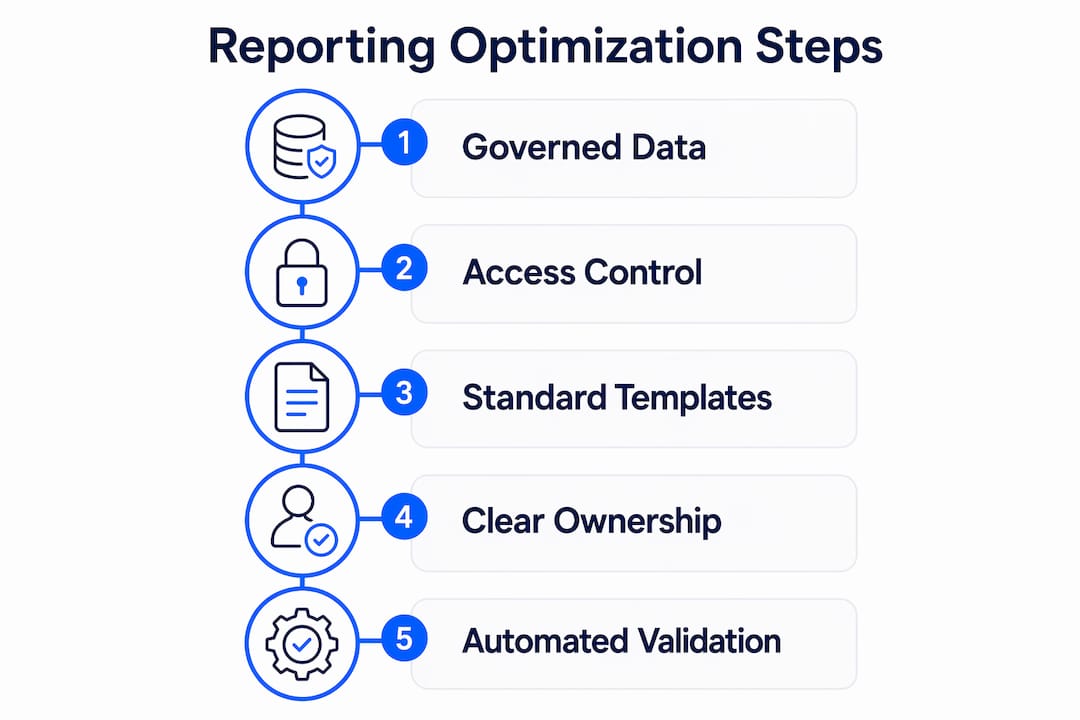
The foundation of any effective compliance reporting process is governed data. Governed data with traceable lineage and controlled access makes reports repeatable and defensible, which is exactly what auditors require. Without it, even well-intentioned reports become difficult to verify and nearly impossible to rerun consistently.
Maintain 100% NCUA & OCC Audit Readiness
Monitor regulatory updates 24/7, check internal credit policies, and generate compliance trails with Erina (AI Regulatory Agent).
Role-based access control (RBAC) and audit logs are the two structural controls that matter most at this stage. RBAC limits who can modify source data, while audit logs capture every change with timestamps and user identifiers. Together, they produce the access record that SOX Section 404 and similar frameworks require. Automated lineage captures change history more reliably than any manual documentation method.

Standardized reporting templates are equally critical. When every report uses the same field definitions, time-period cutoffs, and threshold parameters, you eliminate the version drift that causes cross-cycle discrepancies. The table below outlines the core prerequisites and the tools that address each one.
| Prerequisite | Purpose | Example Tools |
|---|---|---|
| Governed data with lineage | Enables traceable, defensible reports | Atlan, internal data catalogs |
| Automated scheduling and delivery | Reduces cycle time and manual errors | Bold Reports, Oracle reporting modules |
| Role-based access control | Controls who modifies source data | Active Directory, identity management platforms |
| Standardized templates and parameters | Ensures cross-cycle comparability | Bold Reports, internal template libraries |
| Audit logs and version retention | Supports audit comparison and evidence | Oracle, SOX-compliant data platforms |
Assigning clear ownership for each report component is the step most institutions skip. When no individual is accountable for a specific data field or report section, errors surface late and corrections become expensive. Defining roles before automation is implemented prevents that pattern from repeating.
How to implement standardized, repeatable report generation
Standardization begins with locking down four report parameters: scope, time period, thresholds, and output format. Running reports on fixed schedules with consistent parameters improves efficiency and comparability across cycles. Any deviation from those parameters must be documented as an exception, not treated as a routine adjustment.
The step-by-step process for building a repeatable report generation workflow runs as follows:
- Define report scope and cutoff rules. Specify exactly which accounts, portfolios, or transactions fall within each report. Document the cutoff date logic so the same rule applies every cycle.
- Build and lock standardized templates. Create templates with fixed field mappings and formatting. Lock them against ad hoc edits outside a formal change control process.
- Automate scheduling and delivery. Configure reports to run at fixed intervals with automated distribution to defined recipients. Capture run metadata including timestamp, user, and version number.
- Embed lineage references in each output. Each report should reference the source data set, transformation logic applied, and the control version used. This is the evidence layer auditors examine first.
- Retain prior versions for comparison. Store each report output with its metadata intact. Version-to-version comparison is how auditors verify that methodology has not shifted without documentation.
- Conduct a post-run review before submission. A brief structured review after each automated run catches formatting failures, missing fields, or threshold breaches before the report leaves the institution.
Pro Tip: Run your automated reports in parallel with your existing manual process for at least two full cycles before retiring the manual version. This parallel run approach, documented by Infinity Sky, catches mapping subtleties and edge cases that only appear with real production data.
The cycle time reduction from this approach is real. Institutions that move from ad hoc report generation to scheduled, template-driven automation eliminate the last-minute scramble that produces most submission errors. The automation role in compliance is not to replace judgment. It is to remove the manual steps where judgment is least reliable.
What validation and quality control steps ensure accurate reporting?
Data validation is the control layer that sits between data collection and report submission. Automated data validation and reconciliation reduce manual errors and increase consistency across departments. Pushing validation upstream, before data reaches the reporting layer, prevents the costly correction cycles that follow late error discovery.
Oracle's regulatory reporting framework defines a layered validation approach that compliance teams can adapt directly. 143 defined edit checks cover arithmetic integrity, structural consistency, and plausibility validations. Each check type captures a distinct error category that the others miss. Relying on a single validation type leaves entire error classes undetected.
The core validation steps every compliance team should run include:
- Syntax and structural checks. Verify that all required fields are populated and formatted correctly before any calculations run.
- Arithmetic integrity checks. Confirm that totals, subtotals, and cross-field calculations are internally consistent.
- Cross-framework reconciliation. Compare figures that appear in multiple reports to confirm they match. Discrepancies between the call report and the HMDA submission, for example, are a common audit finding.
- Plausibility checks. Flag values that fall outside expected ranges based on historical data or portfolio size. A loan balance that doubles month-over-month without a corresponding origination event warrants review.
- Cross-departmental consistency reviews. Finance, credit, and compliance teams often hold overlapping data. Reconciling those data sets before submission catches errors that internal validation alone misses.
"Recurring data errors often indicate weaknesses in foundational controls and operational consistency rather than isolated mistakes." — FCA Prudential Regulatory Reporting Review
That observation from the FCA carries a direct implication. If your institution sees the same error type across multiple reporting cycles, the fix is not a one-time correction. The fix is a control redesign at the data source. Monitoring error patterns over time is how you distinguish a process weakness from a one-off data anomaly.
How do you measure and continuously improve reporting performance?
Compliance KPIs are the mechanism that converts reporting activity into measurable outcomes. KPIs must be assigned to accountable roles to drive compliance outcomes rather than just track reporting outputs. A KPI with no named owner produces data. A KPI with a named owner produces accountability.
The most effective compliance reporting KPIs share three characteristics. They are numerical and trackable. They are tied to a specific regulatory outcome, not just a process step. And they are reviewed on a fixed schedule by the person responsible for the underlying control.
Practical KPIs for compliance reporting teams include:
- Report submission timeliness rate. The percentage of reports submitted on or before the regulatory deadline each cycle.
- Pre-submission error rate. The number of validation failures caught before submission divided by total reports generated. A declining trend confirms that upstream controls are improving.
- Post-submission correction rate. The number of amended filings per period. This is the metric regulators notice most directly.
- Data reconciliation cycle time. How long it takes to reconcile source data to the report output. Longer cycle times indicate manual bottlenecks that automation can address.
- Audit finding recurrence rate. Whether the same finding appears in consecutive audit cycles. Recurrence signals a control gap, not a data gap.
Pro Tip: Schedule a post-submission review within five business days of each filing. Document what worked, what required manual intervention, and what validation check failed to catch an error. That review log becomes the input for your next process improvement cycle.
Continuous monitoring and post-submission review allow institutions to adapt workflows as regulations and business conditions change. Compliance reporting is not a static process. Regulatory updates, portfolio growth, and system changes all create new edge cases that existing workflows may not handle correctly. Building a formal review cadence into the reporting calendar is how institutions stay ahead of those changes rather than reacting to them.
Key Takeaways
Effective compliance reporting optimization requires governed data, layered validation, and role-assigned KPIs working together to produce audit-ready outputs every cycle.
| Point | Details |
|---|---|
| Govern data before automating | Establish traceable lineage and RBAC before building any automated report workflow. |
| Standardize all report parameters | Lock scope, cutoff rules, and templates to ensure cross-cycle comparability. |
| Validate upstream, not at submission | Run syntax, arithmetic, and plausibility checks before data reaches the reporting layer. |
| Assign KPIs to named owners | Role-specific metrics drive accountability and produce measurable compliance outcomes. |
| Review after every submission | Post-submission reviews catch recurring gaps and feed continuous process improvement. |
What I have learned from years of compliance reporting work
The most common mistake I see compliance teams make is treating audit readiness as a submission-day activity. By the time a report is in the queue for filing, the window to fix a data quality problem has already closed. The institutions that consistently pass audits without findings build their controls at the data source, not at the report output layer.
The second pattern I have seen repeatedly is the big-bang automation rollout. A team replaces its entire manual process overnight, discovers that three field mappings were subtly wrong, and spends the next two cycles filing corrections. Running automated and manual outputs side-by-side through multiple cycles before full cutover is not a sign of caution. It is the professional standard for a reason.
Governance embedded in your data architecture produces better results than governance applied as a review step at the end. When access controls, lineage tracking, and validation rules live inside the data model itself, every downstream report inherits those controls automatically. That architecture is what makes compliance reporting workflows genuinely repeatable rather than dependent on individual vigilance.
— Raj
Riskinmind tools for compliance reporting teams
Compliance professionals at credit unions and community banks need more than a checklist. They need a platform that embeds governance, validation, and audit-ready documentation into the reporting process itself.
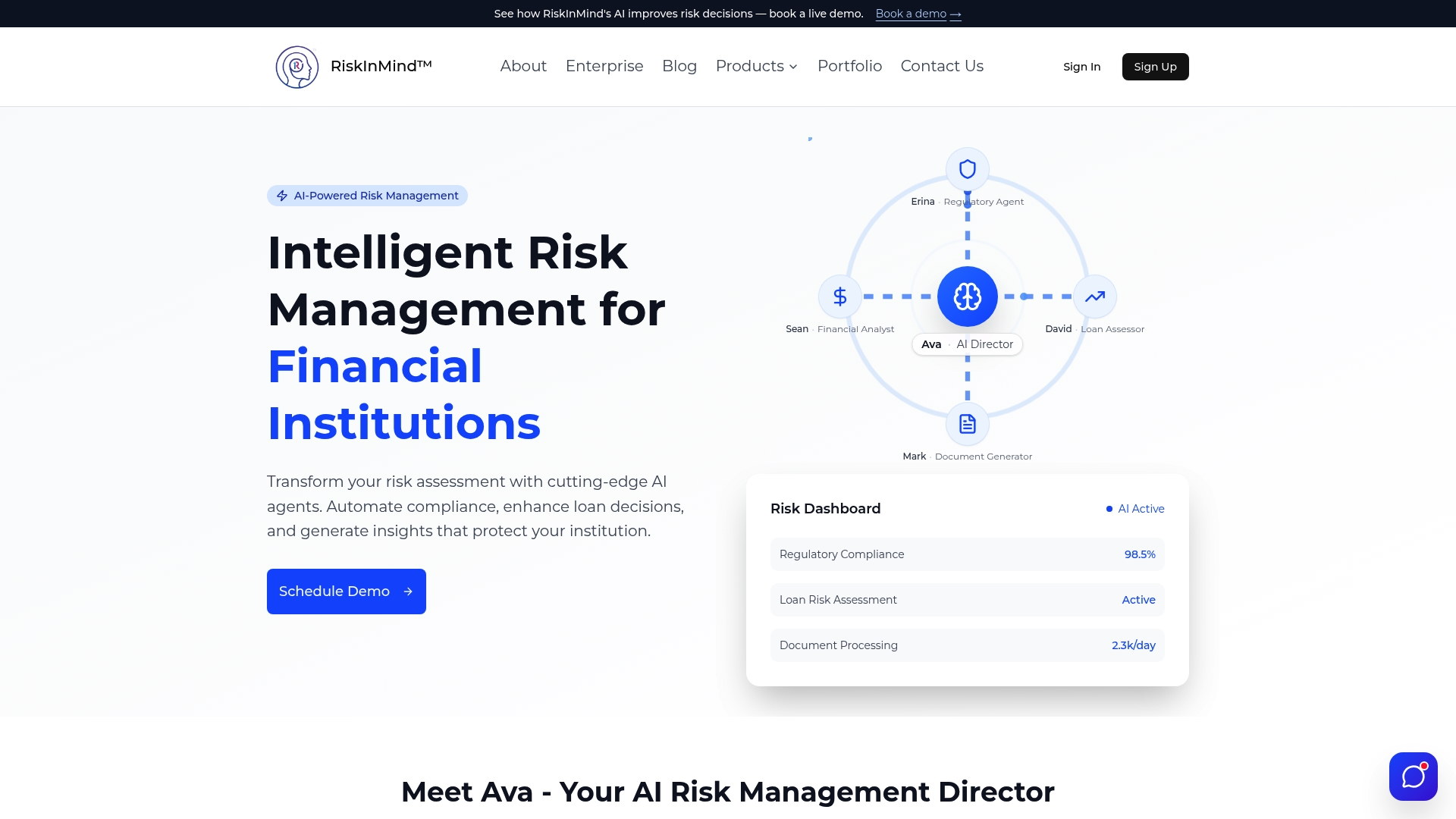
Riskinmind is built specifically for financial institutions managing regulatory compliance under real operational pressure. Its AI-driven platform automates core compliance workflows, captures data lineage, and delivers reports with the traceability that auditors require. The loan application automation module integrates compliance controls directly into the origination workflow, so reporting data is governed from the point of entry. For teams looking to move from manual, cycle-driven reporting to a centralized and repeatable process, Riskinmind provides the infrastructure to do it without the risk of a big-bang cutover.
FAQ
What is compliance reporting optimization?
Compliance reporting optimization is the process of producing audit-ready, repeatable reports through governed data, standardized templates, and automated validation. The goal is defensible outputs that can be rerun consistently across every reporting cycle.
What tools support effective compliance reporting?
Platforms like Bold Reports, Oracle regulatory reporting modules, and Atlan support governed data, automated scheduling, and layered validation. Riskinmind provides an integrated platform built specifically for financial institutions.
How do you ensure data quality in compliance reports?
Run automated validation checks covering syntax, arithmetic integrity, and plausibility before submission, and reconcile data across departments. The FCA notes that recurring errors typically signal foundational control weaknesses, not isolated data problems.
What KPIs should compliance teams track?
Track submission timeliness rate, pre-submission error rate, post-submission correction rate, and audit finding recurrence rate. Each KPI should be assigned to a named owner with a defined review schedule.
How does automation improve compliance reporting accuracy?
Automation removes the manual steps where errors are most likely to occur, including data entry, scheduling, and delivery. Running automated and manual reports in parallel before full rollout, as recommended by Infinity Sky, reduces the risk of systematic misreporting during the transition.