
Automation in financial compliance is defined as the use of AI-driven systems, deterministic workflows, and continuous monitoring tools to execute regulatory tasks with minimal manual intervention. The role of automation in financial compliance has shifted from a back-office efficiency play to a core risk management discipline. Compliance officers at credit unions, community banks, and lenders now face regulatory frameworks that change faster than manual processes can track. Platforms like Riskinmind, along with workflow tools such as Jinba Flow and Nayaka, are redefining how institutions meet their obligations, cut audit prep time, and reduce the operational risk that comes with human error.
How does automation improve compliance workflows and risk management?
Automation removes the manual, repetitive tasks that consume compliance teams and introduce the most error risk. Data entry, evidence collection, and transaction monitoring alerts are the highest-volume, lowest-judgment tasks in any compliance function. Automating them frees your team for the work that actually requires human expertise.
Maintain 100% NCUA & OCC Audit Readiness
Monitor regulatory updates 24/7, check internal credit policies, and generate compliance trails with Erina (AI Regulatory Agent).
The efficiency gains are substantial. AI-driven compliance automation reduces document processing times by 40–60% and audit prep time by 60–80%. That is not a marginal improvement. It means a compliance team that once spent weeks assembling audit evidence can redirect that time to interpreting regulatory changes and advising business units.

Continuous controls monitoring is the structural shift that matters most. Traditional compliance relied on point-in-time checks, typically annual or quarterly. Automated monitoring replaces reactive compliance with proactive risk management, giving you daily visibility into your control environment instead of a snapshot taken once a year. Regulators notice the difference.
Transaction monitoring accuracy also improves materially. AI reduces false positives in transaction monitoring, which means your analysts spend time on genuine alerts rather than chasing noise. Institutions report 30–50% faster response times alongside major reductions in false positive volumes. Fewer false positives also reduce the operational risk of alert fatigue, where analysts begin dismissing flags because the volume is unmanageable.
- Automate evidence collection for recurring controls to eliminate manual document pulls before each audit cycle.
- Use continuous monitoring dashboards to detect control failures in real time rather than discovering them during examination prep.
- Apply AI-assisted triage to transaction monitoring queues to prioritize genuine risk signals over low-probability alerts.
- Embed regulatory reporting logic directly into your systems to prevent last-minute manual corrections that introduce errors.
Pro Tip: Map your highest-frequency compliance tasks first. The controls you execute most often carry the most error risk and deliver the fastest return when automated.
What challenges exist when implementing compliance automation?
Automation does not remove regulatory accountability. It changes where that accountability sits. Regulators require deterministic, human-in-the-loop workflows with traceable logic. Probabilistic AI outputs, where the system produces a result but cannot fully explain how it arrived there, do not satisfy audit defensibility requirements. "Blame the bot" will not cut it in front of examiners.
The distinction between deterministic and probabilistic workflows is critical. A deterministic workflow executes the same rule-based logic every time and produces a reproducible result. An AI model that scores risk probabilistically may be accurate on average but cannot guarantee the same output for the same input. Auditors and regulators require the former for core compliance decisions.
Four implementation challenges compliance officers consistently encounter:
- Treating automation as a staff replacement. Automation handles evidence collection and monitoring. It does not replace the human judgment required to interpret a novel regulatory guidance or manage an examiner relationship.
- Skipping explainability design. Every automated decision in a compliance workflow needs a documented rationale. Build traceability into the system architecture from day one, not as an afterthought.
- Building siloed control environments. Institutions that automate one framework at a time create duplicated effort. A single control can simultaneously evidence compliance across ISO, DORA, NIS2, SOC 2, and Cyber Essentials when mapped correctly.
- Neglecting governance structures. Automation requires its own oversight. Assign ownership for each automated control, schedule regular validation reviews, and document any changes to workflow logic.
Pro Tip: Before deploying any automated compliance workflow, document the human decision points explicitly. Regulators will ask who reviewed the output and what they did with it.
Automated compliance solutions: how do leading tools compare?
The market for financial compliance automation tools has matured considerably. Platforms now differ not just on feature sets but on architectural philosophy, which determines their regulatory defensibility.
| Tool | Core strength | Framework support | Best fit |
|---|---|---|---|
| Jinba Flow | Deterministic workflow architecture with AI-assisted drafting | Multi-framework mapping | Mid-to-large institutions needing audit-grade traceability |
| Nayaka | Continuous controls monitoring with reusable control factories | ISO, DORA, NIS2, SOC 2, Cyber Essentials | Institutions managing multiple regulatory regimes simultaneously |
| Riskinmind | AI-driven risk and compliance with real-time processing under 0.5 seconds | Regulatory reporting, credit risk, portfolio monitoring | Credit unions, community banks, and lenders seeking integrated risk and compliance automation |
Jinba Flow's architecture is notable because it recommends an 80% deterministic workflow structure combined with AI assistance for drafting. That ratio reflects a deliberate design choice: keep the audit-defensible logic deterministic while using AI to accelerate the work that does not require reproducibility. Nayaka's reusable control factory model addresses the siloed compliance problem directly by mapping a single control across multiple frameworks from the start.
Riskinmind's approach integrates compliance automation within a broader risk management platform. Its AI agents, coordinated by a central director named Ava, cover regulatory compliance, credit risk assessment, and market analysis in a unified environment. SOC 2® certification and bank-grade security make it a credible choice for institutions with strict vendor risk requirements. For compliance officers evaluating regulatory compliance tools, the right choice depends on whether you need a standalone compliance platform or an integrated risk and compliance environment.
Practical steps for financial institutions to adopt automation effectively
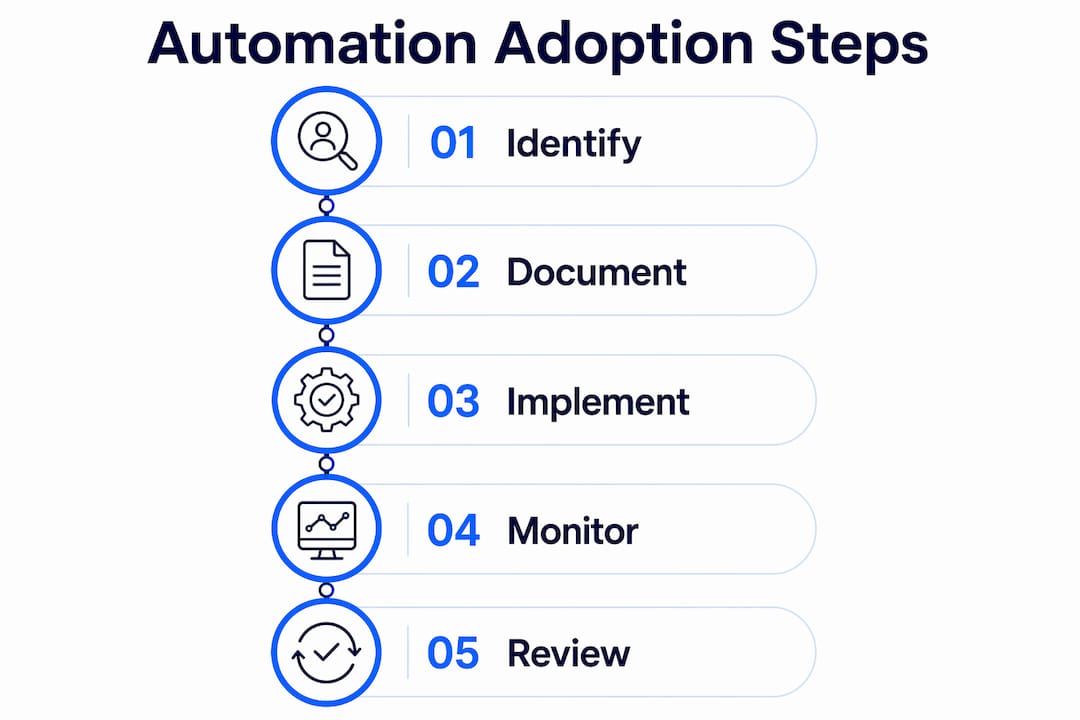
Successful automation starts with scope discipline. Institutions that try to automate everything simultaneously create governance gaps and implementation failures. Start with the compliance tasks that are high-frequency, rules-heavy, and well-documented.
KYC alert triage is the most common and productive starting point. The logic is already defined, the volume is high, and the cost of manual processing is measurable. Once you automate triage, you have a working model for how your institution manages automated decisions, which you can then apply to other controls.
- Define your control inventory first. Map every existing compliance control, its frequency, its evidence requirements, and the regulatory frameworks it satisfies. This inventory becomes the foundation for your automation architecture.
- Build reusable control factories. Design controls that satisfy multiple frameworks simultaneously rather than building separate workflows for each regulation. This is the single most effective way to reduce duplicated compliance effort.
- Embed human checkpoints at key decision nodes. Automated systems handle data collection and monitoring. Human reviewers must sign off on risk classifications, exception approvals, and any output that feeds a regulatory report.
- Plan for regulatory change management. Automated workflows need update protocols. When a regulation changes, you need a defined process for identifying affected controls, updating the logic, and validating the change before it goes live.
- Monitor your automation continuously. An automated control that fails silently is worse than a manual process. Build validation checks into every workflow and review control performance on a scheduled basis.
Compliance monitoring best practices consistently show that institutions with documented automation governance frameworks perform better in examinations than those that automate without oversight structures. The AI-driven compliance checklist Riskinmind publishes is a practical starting point for institutions building that governance layer.
Automation also addresses a risk that compliance officers rarely discuss openly: institutional memory loss from staff turnover. When regulatory logic lives in a person's head rather than a documented workflow, every departure creates a gap. Embedding regulatory logic directly into automated systems means your compliance program does not degrade when your most experienced analyst leaves.
Key Takeaways
Automation in financial compliance delivers its greatest value when deterministic workflows, continuous monitoring, and documented human oversight operate together as a system.
| Point | Details |
|---|---|
| Automation cuts audit prep time | AI-driven tools reduce audit preparation time by 60–80%, freeing compliance staff for higher-judgment work. |
| Continuous monitoring replaces point-in-time checks | Daily control visibility catches failures before examiners do, shifting compliance from reactive to proactive. |
| Deterministic workflows are non-negotiable | Regulators require reproducible, rule-based logic with human sign-off. Probabilistic AI outputs alone fail audit defensibility tests. |
| Multi-framework control design reduces duplication | A single control mapped across ISO, DORA, SOC 2, and NIS2 eliminates the cost of building separate workflows per regulation. |
| Automation protects against staff turnover risk | Embedding regulatory logic into systems prevents compliance gaps when experienced personnel leave. |
Automation elevates the compliance function, not just the process
The compliance officers I respect most are not the ones who resist automation. They are the ones who understand exactly what it should and should not do. Automation handles the evidence. Humans handle the judgment. That division is not a limitation. It is the design.
What I find most significant about where compliance automation is heading is the shift in professional identity it demands. Automation transforms compliance professionals from evidence hunters into strategic advisors. That is a better job. It is also a harder one, because strategic advising requires you to have a genuine point of view on risk, not just a completed checklist.
The institutions that will struggle are the ones that automate their compliance tasks but do not change how their compliance teams operate. You cannot hand a risk analyst an automated dashboard and expect them to suddenly advise the board on credit risk appetite. The tool change has to come with a role change.
Continuous assurance also changes the conversation at the board level. When compliance is a real-time function rather than an annual event, it becomes a source of competitive advantage. Deals close faster when your compliance posture is documented and current. Examiners spend less time in your institution when your evidence is already organized and traceable. That is not a soft benefit. It shows up in your cost structure and your examiner relationships.
The compliance function is becoming a strategic risk management architecture. Automation is what makes that architecture possible. But the architect still has to be human.
— Raj
How Riskinmind supports compliance automation for financial institutions
Riskinmind builds AI-powered risk and compliance tools specifically for credit unions, community banks, and lenders. Its platform automates the workflows that consume the most compliance time, from loan application processing to regulatory reporting, while keeping human oversight at every critical decision point.
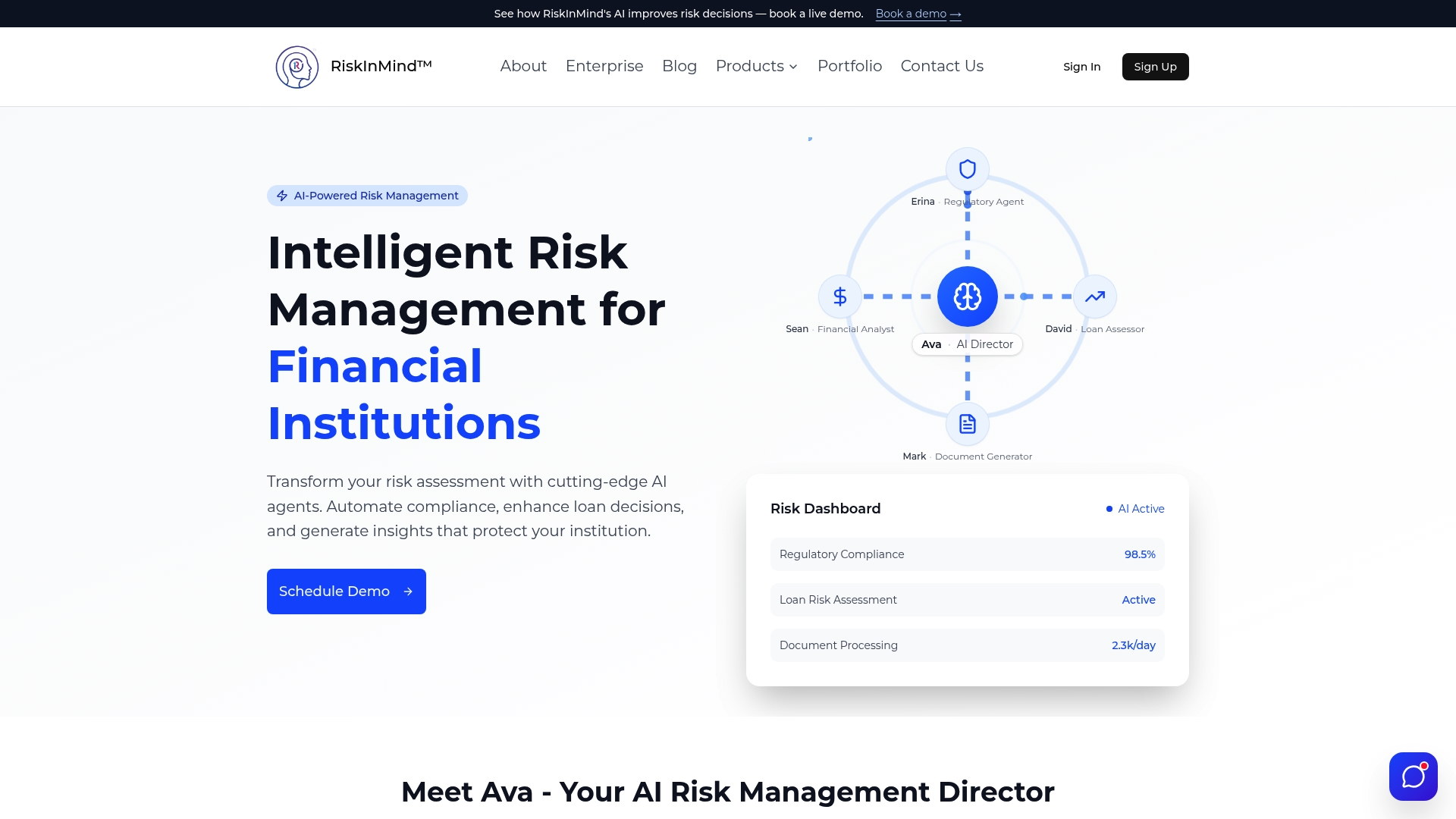
The Loan Application product automates compliance checks within the underwriting workflow, reducing manual review time and improving audit readiness for each application. The Peer Benchmarking tool gives compliance and risk teams a data-driven view of how their institution's risk profile compares to peers, which supports both internal governance and examiner conversations. Both products operate within Riskinmind's SOC 2® certified environment with real-time processing under half a second. If you are building or refining your compliance automation program, Riskinmind offers a practical starting point grounded in the realities of community financial institution regulation.
FAQ
What is the role of automation in financial compliance?
Automation in financial compliance executes regulatory tasks, including evidence collection, transaction monitoring, and audit reporting, through rule-based and AI-assisted workflows. Its primary role is to reduce manual effort, improve accuracy, and maintain continuous compliance visibility rather than relying on periodic reviews.
How does automation improve compliance without replacing human judgment?
Automation handles data collection and monitoring while humans retain responsibility for interpreting regulations, approving exceptions, and signing off on risk classifications. Regulators require this human-in-the-loop structure for audit defensibility.
What are the biggest risks of automating compliance workflows?
The two most significant risks are deploying probabilistic AI outputs without deterministic oversight and building siloed control environments that duplicate effort across frameworks. Both create audit defensibility gaps and increase operational risk rather than reducing it.
Which compliance tasks should financial institutions automate first?
KYC alert triage, evidence collection for recurring controls, and regulatory reporting logic are the highest-priority candidates. These tasks are high-frequency, rules-heavy, and well-defined, which makes them the most reliable starting points for automation.
How does automation affect audit readiness for financial institutions?
Continuous controls monitoring means audit evidence is collected and validated in real time rather than assembled manually before each examination. This reduces last-minute corrections, shortens examiner timelines, and produces a more defensible compliance record.