
Risk reporting frequency best practices define how often financial institutions should communicate risk status to each stakeholder level, calibrated to how quickly risks evolve rather than when governance meetings happen to fall. A credit union's board needs monthly or quarterly summaries comparing net risk scores against appetite thresholds. Its operational risk owners need daily or weekly Key Risk Indicator updates. Getting that calibration wrong produces one of two failures: stale data that reaches decision-makers too late to act, or report fatigue that causes critical signals to be ignored entirely. The practices below resolve both problems with a structured, dynamic approach.
1. risk reporting frequency best practices: match cadence to risk pace
Reporting cadence should be determined by the pace of risk materialization, not a fixed governance calendar. A credit risk that can move from acceptable to critical within 48 hours demands weekly or even daily monitoring. A strategic risk tied to a multi-year regulatory shift can tolerate monthly review without meaningful information loss.
Maintain 100% NCUA & OCC Audit Readiness
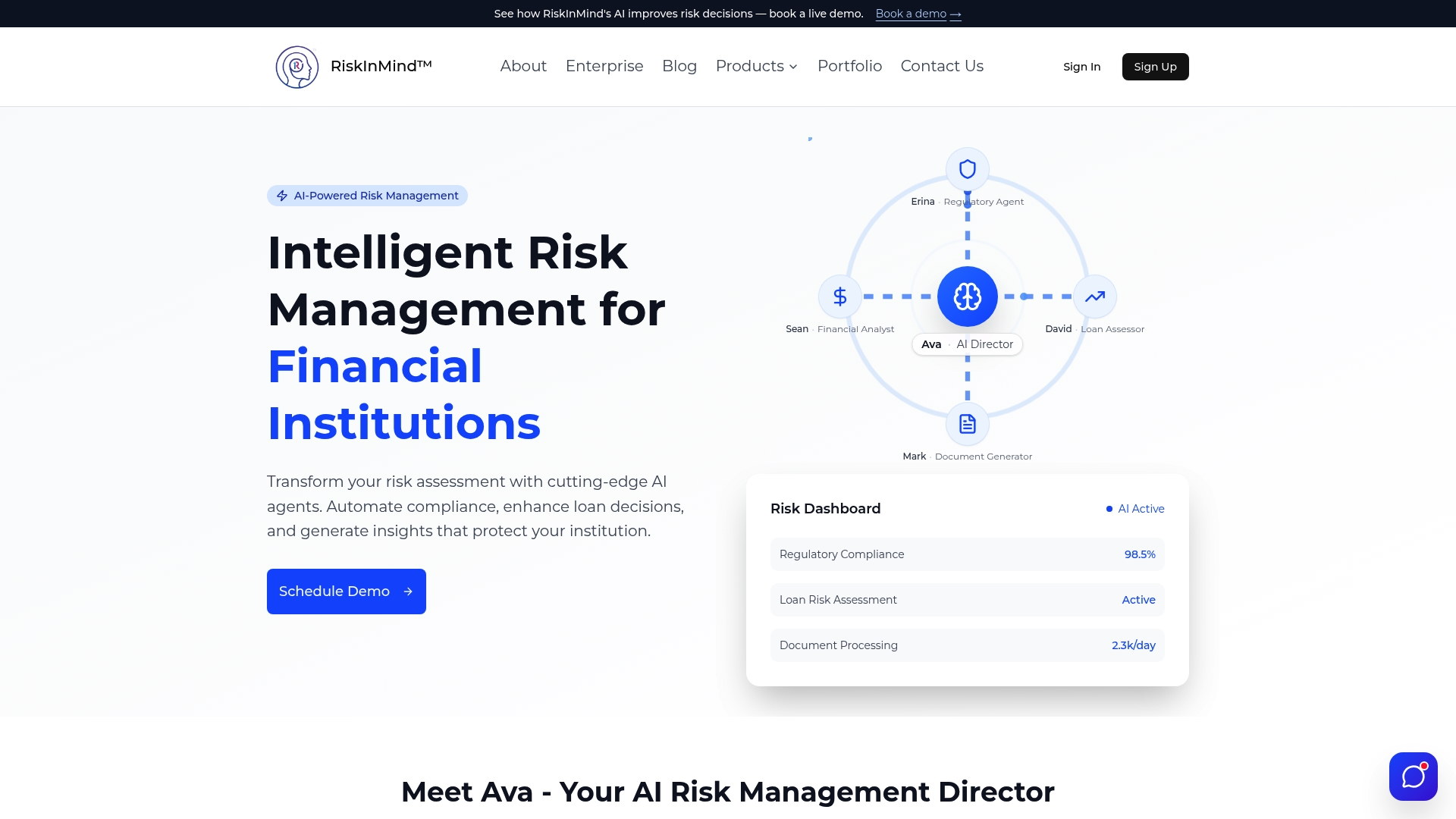
Monitor regulatory updates 24/7, check internal credit policies, and generate compliance trails with Erina (AI Regulatory Agent).
The practical test is simple: ask how much damage could occur between two reporting cycles if a risk moved outside appetite. If the answer is significant, shorten the cycle. If the answer is negligible, lengthen it and redirect that reporting effort toward faster-moving exposures.

2. differentiate frequency by stakeholder level
Operational risk owners and active project teams require daily or weekly updates because they are the first line of defense and need current data to make real-time decisions. Senior leadership, including Chief Risk Officers and executive committees, typically operates on monthly summaries. Boards and audit committees receive quarterly or semi-annual formal reports that compare aggregate risk positions against approved appetite thresholds.
This tiered structure is not arbitrary. Boards prioritize assurance that risk appetite is actively monitored, not raw data receipt. Flooding a board with weekly operational metrics produces the opposite of assurance. It produces noise that obscures the decisions that actually require board-level judgment.
Pro Tip: Build a one-page executive summary that distills weekly operational KRI movements into a single traffic-light view for senior leadership. This gives executives the signal without the volume.
3. incorporate event-triggered ad-hoc reporting
Scheduled reports are the backbone of governance, but they are insufficient on their own. Ad-hoc reporting for risks moving outside appetite thresholds or for stalled treatment plans is non-negotiable governance practice. Waiting for the next scheduled cycle when a control has failed is not a reporting delay. It is a governance failure.
Scenarios that demand immediate escalation include: a Key Risk Indicator breaching its red threshold, a regulatory change that materially alters the institution's compliance posture, a significant operational loss event, or a credit concentration moving beyond policy limits. Each of these warrants a same-day or next-day communication to the relevant decision-maker, regardless of where the institution sits in its reporting calendar.
Pro Tip: Document your escalation triggers in your risk framework so that ad-hoc reporting is a defined process, not a judgment call made under pressure. Pre-agreed thresholds remove ambiguity and speed response time.
4. align report timing with governance decision windows
A risk report delivered two days after a board meeting has missed its decision window by two days. Effective risk management reporting aligns report delivery with the moments when decisions will actually be made. This means mapping your reporting calendar against your governance calendar at the start of each year and working backward from decision dates to set data collection and report preparation deadlines.
For community banks and credit unions, this often means aligning credit risk summaries with loan committee meetings, aligning operational risk updates with management committee cycles, and aligning strategic risk reviews with annual planning sessions. The report that arrives at the right moment with the right level of detail is worth ten reports that arrive on a fixed schedule regardless of context.
5. reporting cadence across stakeholder levels and project phases
Different organizational levels and project states require distinct reporting rhythms. The table below summarizes the standard cadences used by financial institutions with mature risk programs.
| Audience | Frequency | Report Purpose | Content Focus |
|---|---|---|---|
| Operational risk owners | Daily or weekly | Real-time risk monitoring | KRI movements, control status, open issues |
| Project delivery teams | Weekly or fortnightly | Active risk management | Risk register updates, treatment progress |
| Management committees | Monthly | Aggregate risk oversight | Portfolio risk trends, appetite comparison |
| Executive leadership | Monthly or quarterly | Strategic risk decisions | Top risks, emerging threats, remediation status |
| Board or audit committee | Quarterly or semi-annual | Governance assurance | Net risk vs. appetite, policy exceptions, attestations |
During high-risk project phases, such as a core banking system migration or a major regulatory implementation, weekly reporting replaces fortnightly cycles for project teams. The rationale is straightforward: risk velocity increases during change, so reporting frequency must increase proportionally. Once the project moves into steady-state delivery, cadence can revert to standard cycles.
6. why event-driven reporting completes the governance picture
Scheduled reporting creates predictability. Event-driven reporting creates responsiveness. Neither works without the other. Timely escalation is a fundamental of effective risk practice. Waiting for cycle-end reports allows risk to materialize unmitigated, which is precisely the outcome governance structures exist to prevent.
The practical mechanics of event-driven reporting require three things: clear escalation triggers defined in policy, a communication channel that reaches the right decision-maker within hours rather than days, and a brief standardized format so that the recipient can act without needing to request additional context. A one-page escalation note covering the risk description, current status, appetite breach detail, and recommended action is sufficient for most scenarios.
Institutions that integrate ad-hoc escalation protocols with their formal reporting calendar achieve balanced alertness without overwhelming their governance structures. The formal cycle handles routine oversight. The escalation protocol handles exceptions. Together, they cover the full spectrum of risk communication needs.
7. common pitfalls in setting risk reporting frequency
The most damaging errors in risk reporting frequency are structural, not technical. They reflect how institutions think about the purpose of reporting rather than how they execute it.
- Defaulting to the governance calendar. When reporting frequency is set by when meetings occur rather than when risks move, reports arrive on schedule but carry stale information. Aligning cadence to decision windows is the correction.
- Under-reporting fast-moving risks. Credit delinquency trends and liquidity positions can shift materially within a week. Monthly reporting on these exposures creates a systematic blind spot.
- Over-reporting stable risks. Reporting unchanged strategic risks every week consumes analyst capacity and trains recipients to skim rather than read. Reserve high-frequency reporting for high-velocity risks.
- Inconsistent timing. Reports that arrive at irregular intervals cause recipients to lose confidence in the data and miss the connection between report content and pending decisions.
- Register dumps instead of focused reports. Boards require clear risk appetite comparison and decision support, not exhaustive lists of every identified risk. A 40-row risk register extract is not a board report.
Each of these pitfalls has a direct cost. Under-reporting delays response. Over-reporting creates fatigue. Register dumps erode board engagement. Correcting them requires deliberate design of both content and cadence.
8. how to tailor frequency to your institution's environment
No two financial institutions have identical risk environments, governance structures, or technology capabilities. Tailoring optimal risk monitoring frequency to your specific context requires an honest assessment of four factors.
First, assess risk velocity in your portfolio. A lender with significant variable-rate exposure faces faster-moving interest rate risk than a fixed-rate community bank. That difference should show up in reporting frequency. Second, map your governance structure. An institution with a monthly board cycle needs reports that feed that cycle, not reports designed for a quarterly board that no longer exists. Third, evaluate your technology capability. KRI dashboards and automated alerts from platforms like Riskinmind enable real-time monitoring that reduces the need for high-frequency manual reports. Fourth, gather stakeholder feedback. Risk reporting is a continuous organizational conversation, not a last-minute quarterly writing task. Regular feedback from report recipients tells you whether frequency and content are calibrated correctly.
A practical approach is to conduct a brief annual review of your reporting calendar, asking each stakeholder group whether they are receiving the right information at the right time. The answers will surface both over-reporting and under-reporting problems that are otherwise invisible to the reporting team.
Pro Tip: Embed a standing five-minute risk update into weekly team meetings rather than relying solely on formal reports. This creates a continuous communication channel that catches emerging issues before they require escalation.
Key takeaways
Effective risk reporting frequency aligns each reporting cycle to the pace of risk materialization and the timing of governance decisions, not to fixed calendar dates.
| Point | Details |
|---|---|
| Match cadence to risk velocity | Fast-moving risks like credit delinquencies need weekly reporting; stable strategic risks tolerate monthly cycles. |
| Tier frequency by audience | Operational teams need daily or weekly updates; boards need quarterly summaries comparing risk against appetite. |
| Mandate event-driven escalation | Risks breaching appetite thresholds require same-day communication regardless of the scheduled reporting cycle. |
| Align reports to decision windows | Deliver reports before governance meetings, not after, so decision-makers have current data when they need it. |
| Avoid register dumps | Board reports must focus on risk movement, appetite comparison, and remediation status, not exhaustive risk lists. |
The translation layer most institutions are missing
Most risk management professionals I work with have solved the scheduling problem. They know that operational teams need weekly updates and boards need quarterly summaries. What they have not solved is the translation problem: how do you take 50 sprint-level risk data points from an active project team and turn them into three sentences that a board member can act on?
In hybrid Agile-traditional environments, a translation layer aggregates sprint-level risk data into strategic summaries for governance. This is not a technology problem. It is an analytical judgment problem. Someone on your risk team needs to own the synthesis function: reading the operational detail, identifying the two or three signals that matter at the strategic level, and presenting those signals in the language of risk appetite rather than the language of project delivery.
The institutions that do this well treat their risk reporting calendar as a nested structure. Daily operational data feeds weekly team reviews. Weekly reviews feed monthly management summaries. Monthly summaries feed quarterly board reports. Each layer filters and translates rather than simply aggregating. The result is that every audience receives exactly the level of detail their decisions require, and nothing more.
The institutions that do this poorly send the same report to everyone, or send nothing until the quarterly cycle forces the issue. Both approaches produce the same outcome: decision-makers who are either overwhelmed or uninformed, and a risk function that has failed its primary purpose.
— Raj
See how Riskinmind supports dynamic risk reporting
Riskinmind is built for financial institutions that need more than a static reporting calendar. The platform's loan application risk reporting tools automate KRI tracking and generate real-time alerts when credit risk positions move outside defined thresholds, eliminating the lag between risk movement and decision-maker awareness.
The Business Loan Qualifier accelerates credit decisions by surfacing risk signals at the point of application rather than after the fact. For institutions looking to benchmark their risk positions against peers, Riskinmind's Peer Benchmarking and Risk Analysis service provides comparative metrics that sharpen both reporting thresholds and frequency decisions. If your institution is ready to move from fixed-schedule reporting to a dynamic, event-driven cadence, Riskinmind provides the infrastructure to make that transition practical.
FAQ
What is the optimal frequency for board-level risk reporting?
Boards at financial institutions typically receive formal risk reports on a quarterly or semi-annual basis, focusing on net risk scores compared against approved appetite thresholds. Monthly summaries are appropriate when the institution is navigating elevated risk conditions or significant regulatory change.
How often should operational risk owners report?
Operational risk owners should report daily or weekly, depending on the velocity of the risks they manage. Credit and liquidity risk positions that can shift materially within days require weekly reporting at minimum.
When does ad-hoc risk reporting become necessary?
Ad-hoc reporting is required whenever a Key Risk Indicator breaches its threshold, a control fails, or a regulatory change materially alters the institution's risk posture. Waiting for the next scheduled report in these scenarios is a governance failure, not a scheduling convenience.
How do you avoid risk report fatigue at the executive level?
Focus executive reports on risk movement, appetite comparison, and remediation status rather than comprehensive risk registers. A one-page traffic-light summary covering the top five to eight risks delivers more decision support than a 40-row register extract.
How often should a risk assessment be reviewed?
A minimum annual review is required, with event-triggered updates after workplace changes, process modifications, accidents, or regulatory shifts. Treating the annual review as the only review converts a governance tool into a compliance checkbox.