
Risk data governance is the set of board-level policies, ownership rules, and controls that make risk data accurate, traceable, and reportable under stress, reducing exposure from bad data, privacy gaps, and late reporting. The first move: assign board-level oversight of risk-data aggregation and reporting, anchored in ISO/IEC 38505-1:2026, BCBS's aggregation principles, and newer dynamic-governance research like DRADG.
- Risk data governance should include dynamic, risk-adaptive controls that automatically tighten or loosen based on contextual risk scoring during stress periods.
- Establishing clear ownership, continuous lineage validation, and automation of reconciliation helps prevent failures due to drift or outdated controls during critical stress events.
- Supervisory guidance from BCBS mandates increasing reporting frequency during periods of heightened risk, requiring governance frameworks to support adaptable, timely data delivery.
- Adopting recognized standards like ISO/IEC 38505-1:2026, BCBS 239, and NIST RBAC ensures governance policies are auditable, technically sound, and aligned with regulatory expectations.
- Building governance programs in logical sequence—charter, taxonomy, controls, automation—avoids costly rework and enhances response speed during stress testing and audits.
Maintain 100% NCUA & OCC Audit Readiness
Monitor regulatory updates 24/7, check internal credit policies, and generate compliance trails with Erina (AI Regulatory Agent).
Table of Contents
- What Risk Data Governance Actually Covers
- The Data Risks That Governance Exists to Catch
- Anchoring the Program in Recognized Standards
- Dynamic, Risk-Adaptive Governance: What DRADG Changes
- A Practitioner's Checklist for Building the Program
- Metrics and Evidence Boards and Auditors Actually Ask For
- Who Owns What: Roles and Escalation Paths
- Where Governance Programs Actually Break
- Where Automation Actually Moves the Needle
- A More Automated Path to Audit-Ready Governance
- Standards and Toolkits Worth Keeping on File
- Sources
What Risk Data Governance Actually Covers
Governance and management get confused constantly, and that confusion is where programs stall. Governance is the board and senior management deciding what "good" looks like: risk appetite for data quality, who is accountable when a report is wrong, what ethical limits apply to model inputs. Management is the operational layer that executes those decisions: access provisioning, validation rules, remediation tickets. ISO/IEC 38505-1:2026 draws this line explicitly, framing governance of data as a board-level responsibility distinct from day-to-day management, with principles built around direction, oversight, and accountability rather than technical execution.
A working data governance framework rests on a small set of principles that show up in every mature program:
- Stewardship — named individuals accountable for specific data domains, not a shared inbox.
- Accountability — decision rights are documented, so nobody can point upstream when a number is wrong.
- Data quality — completeness, accuracy, and timeliness are measured, not assumed.
- Privacy and security — access and handling rules follow the sensitivity of the data, not convenience.
- Transparency — lineage and assumptions are visible to auditors and examiners on request.
These principles feed directly into enterprise risk management. Risk appetite statements, stress-testing assumptions, and regulatory filings are only as good as the data governance strategies feeding them. A credit union that treats governance as a compliance checkbox usually discovers the gap the first time an examiner asks for lineage on a CECL input, not before.
The Data Risks That Governance Exists to Catch
Not every data risk carries the same weight, and treating them identically wastes remediation budget on the wrong problems. Five categories deserve separate attention:
- Security risks — breaches, misconfigured cloud buckets, and informal file sharing that puts sensitive risk data outside controlled systems.
- Data quality risks — missing fields, duplicate records, or stale values that quietly distort credit scoring and stress-test outputs.
- Privacy and compliance risks — cross-border transfers and PII exposure that trigger regulatory compliance risks under multiple, sometimes conflicting, jurisdictions.
- Model and algorithmic risks — bias baked into training data and drift that goes undetected between recalibration cycles.
- Aggregation and timeliness risks — figures that reconcile at the business-line level but break when rolled up for senior management.
That last category is the one boards underestimate most. BCBS supervisory guidance is explicit that risk reports must be accurate, complete, and timely enough to support decisions during stress, not just during calm quarters. A reconciliation process that works fine monthly can fail exactly when a board needs it most, during a liquidity event or a sudden portfolio deterioration, because volume and volatility spike together.
Statistic Callout: BCBS principles tie report frequency directly to risk volatility, meaning institutions are expected to increase reporting cadence during stress rather than wait for the next scheduled cycle. A governance program that only reports monthly, regardless of conditions, is already out of step with supervisory expectations.
Anchoring the Program in Recognized Standards
Picking a framework off a vendor's slide deck is how governance programs end up disconnected from what examiners actually expect. Three references carry real weight, and each solves a different part of the problem.
ISO/IEC 38505-1:2026 gives governing bodies a vocabulary for direction, monitoring, and accountability that boards can use in charter language and meeting minutes. It defines what the board is responsible for signing off on, and how to document that oversight in a way that survives an audit.
NIST's role-based access control guidance fills the operational gap. Once the board has set direction, someone has to translate "least privilege" into actual permission structures. NIST's RBAC definitions and control patterns give technical teams a shared vocabulary for roles, entitlements, and segregation of duties, which matters enormously when auditors ask why a loan officer has write access to the model that scores their own applications.
BCBS 239 principles matter most for institutions that report risk data up to supervisors. The priority sequence, based on what examiners check first, tends to run:
- Governance and data architecture that a board can actually explain in plain language.
- Accuracy and completeness controls on the critical data elements feeding regulatory reports.
- Timeliness and reconciliation processes that hold up under stress-period reporting frequency.
- Comprehensive reporting that adapts content and cadence to the recipient, whether that is a business unit or the full board.
Rights-based governance frameworks add a fourth dimension worth borrowing even outside regulated banking: enforceable partner obligations and grievance mechanisms whenever risk data crosses organizational boundaries, a point emphasized in the Broadband Commission's governance toolkit. Third-party data sharing agreements rarely get this level of scrutiny, and that is usually where the weakest link sits.
Dynamic, Risk-Adaptive Governance: What DRADG Changes
Static policies assume risk stays roughly constant between review cycles. That assumption breaks down fast in environments with frequent cloud reconfiguration, rolling AI model retraining, or cross-border data flows that shift with every new vendor contract. Research on Dynamic Risk-Adaptive Data Governance, published as the DRADG framework, proposes replacing fixed rule sets with a feedback loop: contextual risk scoring feeds governance controls that tighten or loosen automatically as conditions change.
The core mechanism, sometimes called a RACE loop in the underlying research, works through continuous reassessment rather than periodic review: risk is scored contextually, controls adapt to that score, enforcement happens automatically, and the outcome feeds back into the next scoring pass. DRADG's findings suggest this approach reduces exposure to compliance risks compared with static models, particularly where data sensitivity shifts quickly.
Static governance still works fine for stable, low-change environments, a core general ledger feed that rarely changes shape, for instance. Dynamic enforcement earns its complexity where sensitivity and threat profiles move often: AI model retraining windows, cross-border data sharing arrangements, and rapid cloud reconfiguration events are the scenarios where DRADG's adaptive scoring shows the clearest advantage.
Translating this into practice means three automation patterns:
- Policy-as-code that encodes governance rules directly into pipelines rather than PDF policy documents nobody rereads.
- Metadata and lineage-driven triggers that automatically escalate a data element when its classification or usage changes.
- Immutable audit trails for every automated enforcement decision, so an examiner can reconstruct why a control fired.
Pro Tip: Map every automated control back to a specific regulatory article or internal policy clause before you deploy it. DRADG's own authors flag this mapping as essential; an unmapped dynamic control is nearly impossible to defend during an audit, however well it performs operationally.
Explainability is not optional here. A dynamic control that nobody can explain in plain language to a board committee will not survive its first serious challenge, regardless of how well it performs technically.
A Practitioner's Checklist for Building the Program
Most programs fail not from lack of ambition but from skipping the sequencing. Building risk data governance in the wrong order, tools before ownership, dashboards before lineage, creates expensive rework. Follow this rough sequence instead.
- Start with a charter. Get the board or a designated risk committee to formally approve a governance charter identifying critical data elements (CDEs), the specific fields that feed regulatory reports, credit models, and capital calculations. Assign named owners to each CDE before touching any tooling.
- Build the taxonomy and lineage. Classify data by sensitivity and criticality, then map lineage from source system to final report. A single source of truth for each CDE eliminates the "which spreadsheet is correct" argument that derails most reconciliation efforts.
- Protect what you've mapped. Apply access controls scaled to sensitivity, encrypt data in transit and at rest, and set up monitoring that flags anomalous access patterns rather than just logging them for later review.
- Measure continuously. Define KPIs for completeness, accuracy, and timeliness before you need them for an audit. Build reconciliation processes with clear service-level agreements for how fast discrepancies get resolved.
- Scale through automation. Once manual processes are stable, convert repeatable checks into policy-as-code and stand up a recurring cross-functional governance forum, risk, compliance, IT, and business-line owners in the same room, not separate silos reporting past each other.
Pro Tip: Resist the urge to buy a data catalog before you've named CDE owners. Tooling accelerates a program that already knows what it's governing; it does nothing for a program that hasn't decided who's accountable.
Institutions building this out for the first time often benefit from a structured step-by-step risk assessment approach before layering automation on top, since sequencing errors here are expensive to unwind later.
Metrics and Evidence Boards and Auditors Actually Ask For
Boards do not need every metric a data team can generate. They need the handful that map directly to decision quality and regulatory expectations. Five KPIs cover most of it:
- Completeness — the percentage of required fields populated across critical data elements.
- Accuracy — error rates against a validated reference source, not self-reported confidence.
- Timeliness — how long data takes to move from source system to finished report.
- Lineage coverage — the share of CDEs with fully documented, traceable lineage.
- Reconciliation error rate — discrepancies caught between source and reported figures, and how fast they close.
Statistic Callout: Supervisory guidance from BCBS makes reporting frequency conditional on risk volatility rather than fixed on a calendar, which means reporting cadence itself becomes a governance decision, not just a scheduling one. Institutions are expected to shorten reporting intervals as conditions deteriorate.
Cadence should match audience, not convenience. Operational teams need daily or weekly visibility into raw data quality. Middle management typically works on a weekly or monthly cycle for trend analysis. Boards generally need quarterly reporting, with an explicit trigger to accelerate that cadence the moment stress indicators move. A risk reporting optimization approach that builds this tiered cadence in from the start avoids the scramble of retrofitting escalation paths mid-crisis.
Auditors do not accept assertions; they want artifacts. Keep immutable logs of every data change and access event, remediation tickets showing how quality issues were resolved and by whom, and reconciliation records demonstrating that source and reported figures were actually compared, not just assumed to match.
Who Owns What: Roles and Escalation Paths
Governance without clear decision rights turns into a blame exercise the first time a number is wrong. The board and executive leadership set risk appetite for data quality and approve the governance charter, but they should never be the ones resolving a broken reconciliation, that's an operational job.
Below the board level, four roles need distinct, documented responsibility:
- Data owners — accountable for the accuracy and appropriate use of a specific data domain, typically a business-line executive.
- Data stewards — the operational hands-on-keyboard role, resolving quality issues and maintaining metadata day to day.
- Risk managers — responsible for assessing how data issues translate into risk exposure and reporting that upward.
- IT and platform teams — responsible for the technical controls, access provisioning, and infrastructure that stewards and owners depend on.
Change control deserves its own escalation path, separate from routine data quality tickets. Any change to a critical data element's definition, source, or calculation logic should require sign-off from the data owner and notification to risk management before it ships, not after. Third-party data sharing arrangements need the same rigor: a named individual responsible for the relationship, and a documented incident path if the third party mishandles shared data. A clear risk governance framework makes these escalation paths explicit rather than assumed.
Where Governance Programs Actually Break
The failure patterns repeat across institutions of every size, which is useful, because it means the fixes are known too.
Siloed governance, where risk, compliance, and IT each run their own version of "governance" without a shared charter, is the most common failure. The fix is a cross-functional charter with shared KPIs that all three groups report against, so nobody can claim a metric belongs to someone else's dashboard.
Manual, spreadsheet-driven processes are the second-biggest risk. They work until volume grows past what one analyst can double-check by eye. The remediation is automated validation rules and reconciliation checks that run on every data load, not on a quarterly audit schedule.
Missing lineage is the quiet killer. Practitioners consistently find that treating lineage as a static diagram, drawn once and filed away, undermines model verification exactly when stress-testing needs it most. Lineage has to run as an active, continuously validated control tied to every model run and reporting cycle, not a document someone updates once a year.
- Small teams: start with CDE ownership and manual reconciliation before automating anything.
- Enterprise rollouts: invest in metadata management and lineage tooling early, since manual lineage tracking does not scale past a handful of critical reports.
Pro Tip: If your lineage diagram hasn't changed in six months, that's not stability. It's usually a sign nobody's validating it against what's actually running in production.
Where Automation Actually Moves the Needle
Governance frameworks give you the rules. What determines whether those rules hold up under pressure is how fast your team can act on them, and that's where combining strong governance with automation earns its keep. In our experience advising risk and compliance teams, the biggest measurable gains show up in reconciliation speed and report timeliness, precisely the areas BCBS supervisory guidance treats as make-or-break during stress periods.
Static governance documents rarely fail because they're wrong. They fail because nobody notices a control has drifted until an examiner asks a pointed question. Automated lineage tracking and policy-as-code enforcement close that gap by catching drift in near real time rather than at the next scheduled review. That shift, from periodic audit to continuous validation, is the single biggest lever most institutions haven't pulled yet.
— Raj
A More Automated Path to Audit-Ready Governance
Building the governance charter, taxonomy, and reconciliation workflows described above takes real effort, and most institutions still run large parts of it manually, which is exactly where response time suffers most during stress. One approach uses AI agents under a central director to keep lineage, reconciliation, and reporting continuously current rather than refreshed on a quarterly cycle.
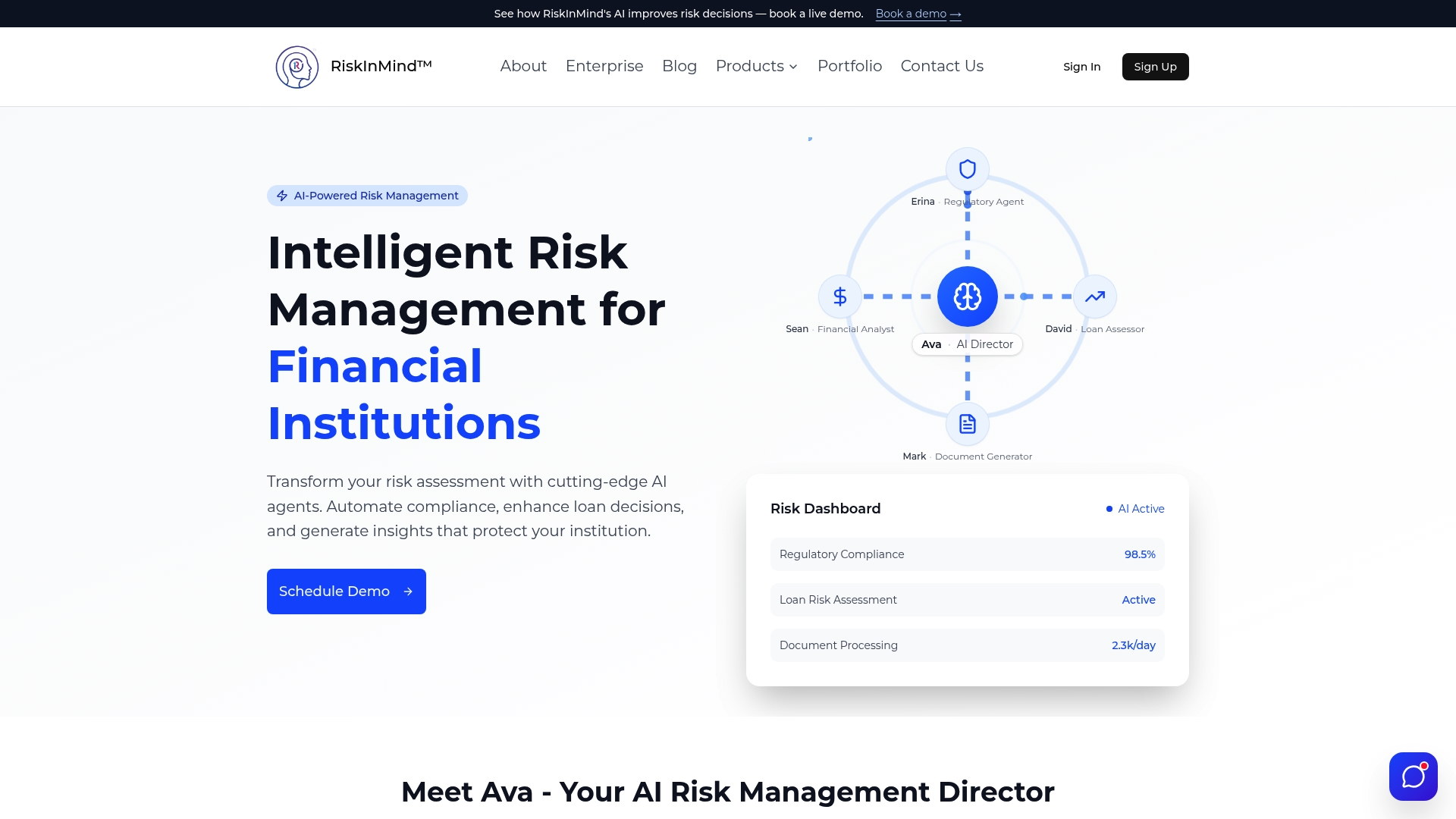
Some AI risk management platforms run on bank-grade security with SOC 2® certification and process updates very quickly, which matters when a board needs a stress-period report faster than the standard monthly cycle allows. Its portfolio monitoring and risk dashboard tools give risk and compliance leads real-time visibility instead of the lagging snapshot a manual reconciliation process typically produces, and its loan application automation extends the same audit trail discipline to underwriting data specifically. Teams considering building dynamic, DRADG-style enforcement in house or adopting an AI risk management platform may request demos to evaluate reporting cadence and reconciliation evidence against current audit requirements.
Standards and Toolkits Worth Keeping on File
Board briefings and policy drafts get stronger when they cite primary sources instead of secondhand summaries. Keep these on hand:
- ISO/IEC 38505-1:2026 — the reference for board-level data governance principles and the governance-versus-management distinction.
- BCBS 239 principles — the standard for risk data aggregation, accuracy, and reporting frequency in regulated institutions.
- DRADG (MDPI) — the research basis for dynamic, risk-adaptive governance and policy-as-code automation patterns.
- NIST RBAC glossary — practical control definitions for operationalizing access management.
- Broadband Commission Data Governance Toolkit — a rights-based lens for third-party data sharing and cross-border governance obligations.
Each addresses a different gap: board language, supervisory expectations, adaptive controls, technical access patterns, and partner accountability.
Sources
- ISO/IEC 38505-1:2026 — Information technology — Governance of data — Part 1
- Risk data aggregation and risk reporting | Bank for International Settlements
- NIST — Role-based access control (RBAC)