
Compliance reporting automation is defined as the use of software, AI, and integrated workflows to automatically collect, validate, and deliver regulatory compliance reports. For compliance officers and financial professionals, this shift replaces error-prone manual processes with technology that monitors controls continuously, generates audit trails in real time, and maps obligations directly to evidence. The industry term most commonly used alongside this concept is regulatory compliance automation, and both phrases describe the same core discipline. Manual financial consolidation increases misstatement risk by 25% and costs firms over $5 million annually. Automation addresses both problems at once, making defining compliance reporting automation one of the most consequential decisions a compliance team can make in 2026.
What is compliance reporting automation?
Compliance reporting automation is the systematic replacement of manual data gathering, report drafting, and evidence packaging with technology-driven workflows. The process covers the full reporting lifecycle: pulling data from source systems, validating it against regulatory standards, mapping it to specific controls, and producing audit-ready outputs. Frameworks like SOC 2, Basel III, and the Bank Secrecy Act each require recurring evidence packages. Automation handles the recurring mechanics so compliance officers can focus on interpretation and judgment.
Maintain 100% NCUA & OCC Audit Readiness
Monitor regulatory updates 24/7, check internal credit policies, and generate compliance trails with Erina (AI Regulatory Agent).
The distinction between what is reporting automation in a general sense and compliance-specific automation matters here. General reporting automation produces dashboards and business intelligence outputs. Compliance automation produces defensible, regulator-facing documentation with traceable data lineage. That traceability is what separates a useful dashboard from an audit-ready report.

How does compliance reporting automation work?
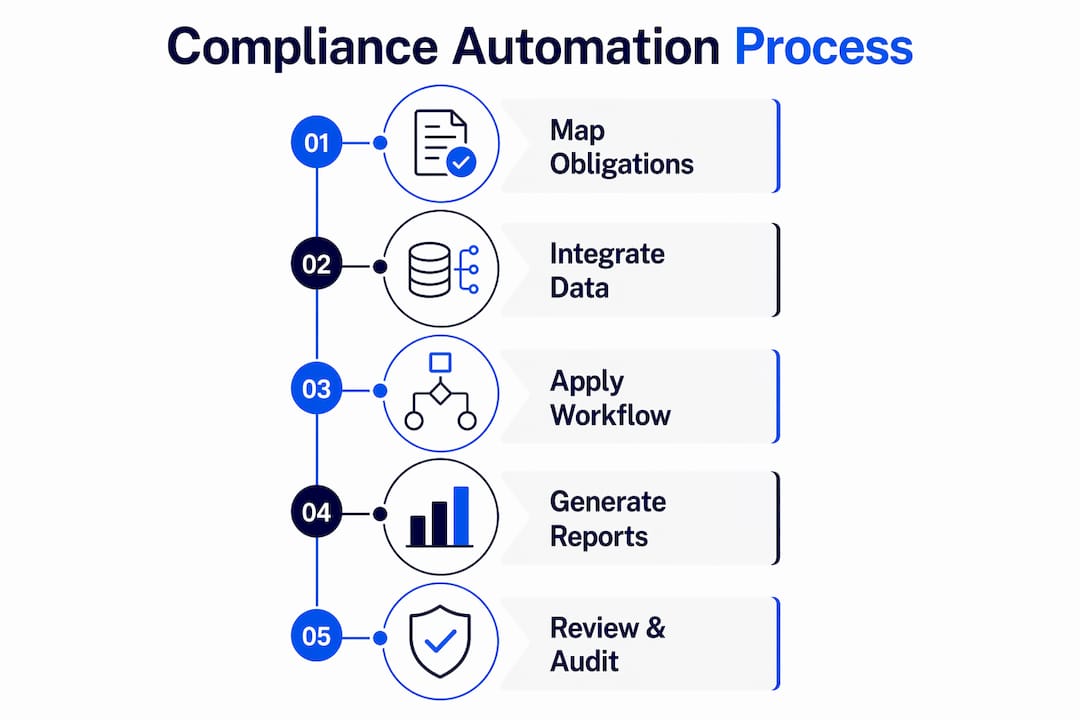
Automation in compliance reporting runs on three interconnected layers: data integration, workflow logic, and output generation.
The data integration layer uses APIs to pull information from identity and access management (IAM) systems, enterprise resource planning (ERP) platforms, cloud infrastructure logs, and HR systems. API-first integration is critical because siloed solutions fail to provide a complete risk and compliance view. A standalone dashboard that cannot read access logs from your cloud provider or payroll changes from your HR system will always produce incomplete evidence packages.
The workflow logic layer applies deterministic rules to the data. AI can suggest control mappings and flag anomalies, but final compliance rules are locked into deterministic workflows approved by humans for audit. This design keeps compliance decisions consistent and defensible under regulatory scrutiny. It also means the system behaves predictably: the same input always produces the same output, which is exactly what auditors require.
The output generation layer assembles validated data into formatted reports, attaches evidence artifacts, and routes documents through review and sign-off workflows. Automated evidence collection from cloud platforms and policy distribution with acknowledgment tracking are the highest-impact areas within this layer. APIs pull access logs and configuration snapshots automatically, while policy distribution tracks recipients and escalates non-respondents without manual follow-up.
- Evidence collection: APIs automatically pull access logs, configuration snapshots, and transaction records from source systems.
- Continuous monitoring: The system checks controls against defined thresholds on a scheduled or real-time basis.
- Policy distribution: Automated workflows send policy documents, track acknowledgment, and escalate non-compliance.
- Report generation: Validated data assembles into formatted, regulator-facing outputs with full audit trails.
- Change management: Regulatory feed intake, impact assessment, and sign-off routing happen within the same workflow.
Pro Tip: Map every compliance obligation to a specific data source before selecting an automation platform. If the platform cannot reach that source via API, the automation will be incomplete and the manual gap will remain.
What are the benefits of compliance automation?
The benefits of compliance automation fall into three categories: time savings, error reduction, and risk mitigation.
On time, automated reporting workflows save teams 2–6 hours weekly on reporting tasks. Across a compliance team of five, that compounds to meaningful capacity freed for analysis and regulatory interpretation rather than spreadsheet management. Automated platforms can reduce reporting production time from 20–40 manual hours per month to near zero.
On error reduction, the numbers are direct. Manual consolidation processes increase misstatement risk by 25%. Automated AI validation catches data inconsistencies before they reach a regulator. For community banks and credit unions operating under tight staffing constraints, that error reduction is not a convenience. It is a risk control.
Automation eliminates 60–75% of evidence collection and monitoring tasks, reducing compliance staff hours by 60–70% and generating $21,000–$42,000 in annual labor savings. That is not a marginal efficiency gain. It is a structural shift in how compliance teams allocate their time.
The third benefit, risk mitigation, is the one most compliance officers undervalue until they experience it. Continuous controls monitoring detects control failures and risks weeks before quarterly manual reviews. Point-in-time audits catch problems after they have already occurred. Continuous monitoring catches them while there is still time to remediate without a regulatory finding.
The workload shift matters as much as the time savings. When evidence collection runs automatically, compliance officers spend their hours on regulatory interpretation, control design, and risk analysis. Those are the tasks that require professional judgment and cannot be automated. Freeing capacity for them is the real return on investment.
What compliance tasks can and cannot be automated?
Automation handles high-volume, rule-based tasks with precision. It struggles with tasks that require contextual judgment, regulatory interpretation, or stakeholder negotiation.
High automation potential
The following tasks are well-suited to automation because they follow defined rules and produce verifiable outputs:
- Pulling and validating evidence from cloud platforms, ERP systems, and IAM tools
- Tracking policy acknowledgment and escalating non-respondents
- Monitoring controls against defined thresholds on a continuous basis
- Generating formatted compliance reports with attached evidence
- Routing regulatory change assessments through human-approved sign-off workflows
Low automation potential
These tasks require human judgment and should not be delegated to automated systems without meaningful oversight:
- Interpreting ambiguous regulatory language and applying it to novel fact patterns
- Assessing the materiality of a control failure in context
- Negotiating remediation timelines with regulators
- Designing new controls in response to emerging risks
- Making final decisions on risk acceptance or escalation
The common pitfall in over-automation is treating AI output as a final compliance decision. Regulatory change management automation monitors updates, assesses impact on controls, and routes changes through human-approved workflows. The human approval step is not optional. Removing it to save time creates audit exposure that costs far more than the hours saved.
Pro Tip: Audit your automation outputs quarterly. Run a sample of automated evidence packages against the original source data to confirm the pipeline is pulling correctly. Automation errors compound silently until an auditor finds them.
Best practices for implementing compliance reporting automation
Successful deployment follows a sequence. Skipping steps creates gaps that surface during audits.
-
Map compliance obligations to controls. Before selecting any platform, document every regulatory requirement your institution faces, from BSA/AML to state-level lending regulations, and identify the specific control that addresses each one. This mapping becomes the foundation for automation logic.
-
Adopt an API-first integration strategy. Connect the automation platform to every system that generates compliance-relevant data: your core banking system, IAM tools, HR platform, and cloud infrastructure. Siloed data produces siloed compliance views.
-
Lock governance logic into deterministic workflows. AI can suggest control mappings and flag anomalies, but compliance decisions must run through auditable, human-approved logic. This is the design principle that makes automation defensible to regulators.
-
Build continuous monitoring into the workflow from day one. Do not treat monitoring as a feature to add later. Configure control thresholds and alert routing before go-live. Continuous monitoring is what converts automation from a reporting tool into a genuine risk control.
-
Define key performance indicators before launch. Measure hours saved per reporting cycle, error rates in evidence packages, time to remediate flagged controls, and audit finding rates. Without baseline metrics, you cannot demonstrate the value of automation to leadership or identify where the system needs adjustment.
-
Plan for regulatory change. Regulations change. Your automation platform must include a workflow for ingesting regulatory updates, assessing their impact on existing controls, and routing required changes through review and sign-off. Static automation becomes a liability when the regulatory environment shifts.
Compliance officers at financial institutions should treat automation implementation as a compliance project in its own right. It requires documentation, testing, and sign-off just like any other control change. The role of automation in financial compliance extends beyond efficiency. It changes how your institution demonstrates control effectiveness to regulators.
Key Takeaways
Compliance reporting automation delivers its greatest value when AI-driven data collection is paired with deterministic, human-approved governance logic that produces defensible, audit-ready outputs.
| Point | Details |
|---|---|
| Define before you deploy | Map every compliance obligation to a specific control and data source before selecting a platform. |
| API-first integration is non-negotiable | Siloed platforms produce incomplete evidence and fail under regulatory scrutiny. |
| Automation reduces risk, not just hours | Continuous monitoring catches control failures weeks before manual quarterly reviews would. |
| Human judgment stays in the loop | Final compliance decisions must run through auditable, human-approved workflows, not AI alone. |
| Measure from day one | Track error rates, hours saved, and audit findings to prove and improve automation value. |
Where compliance automation is heading, and what it means for your team
The compliance officers I see getting the most from automation are not the ones who deployed the most features. They are the ones who were most disciplined about what they did not automate. There is a real temptation, especially when a platform promises end-to-end automation, to hand over regulatory interpretation to the system. That is where teams get into trouble.
The governance principle matters more than the technology. AI that suggests control mappings is genuinely useful. AI that makes final compliance decisions without a human sign-off step is an audit risk dressed up as efficiency. The best implementations I have observed pair AI's analytical speed with explicit, auditable workflows that a regulator can follow from input to output without ambiguity.
The other shift worth noting is what automation does to team composition over time. When evidence collection and report generation run automatically, compliance teams need fewer people doing data work and more people doing regulatory analysis. That is a skills shift, not just a headcount shift. Teams that recognize this early and invest in analytical capability alongside automation technology will be better positioned when regulators ask hard questions that no system can answer alone.
For compliance officers at community banks and credit unions, the practical advice is to start with the highest-volume, most rule-based tasks: evidence collection, policy acknowledgment tracking, and control monitoring. Get those right before touching anything that requires regulatory interpretation. Build the governance layer before you scale the automation layer. And measure everything from the first reporting cycle.
The future of compliance reporting is not fully automated. It is precisely automated, with human judgment applied exactly where it adds value and technology handling everything it can do more reliably than a person. That balance is what optimizing compliance reporting for auditors actually looks like in practice.
— Raj
Riskinmind's AI compliance platform for financial institutions
Riskinmind is built specifically for compliance officers and risk professionals at credit unions, community banks, and lenders who need more than a reporting dashboard.
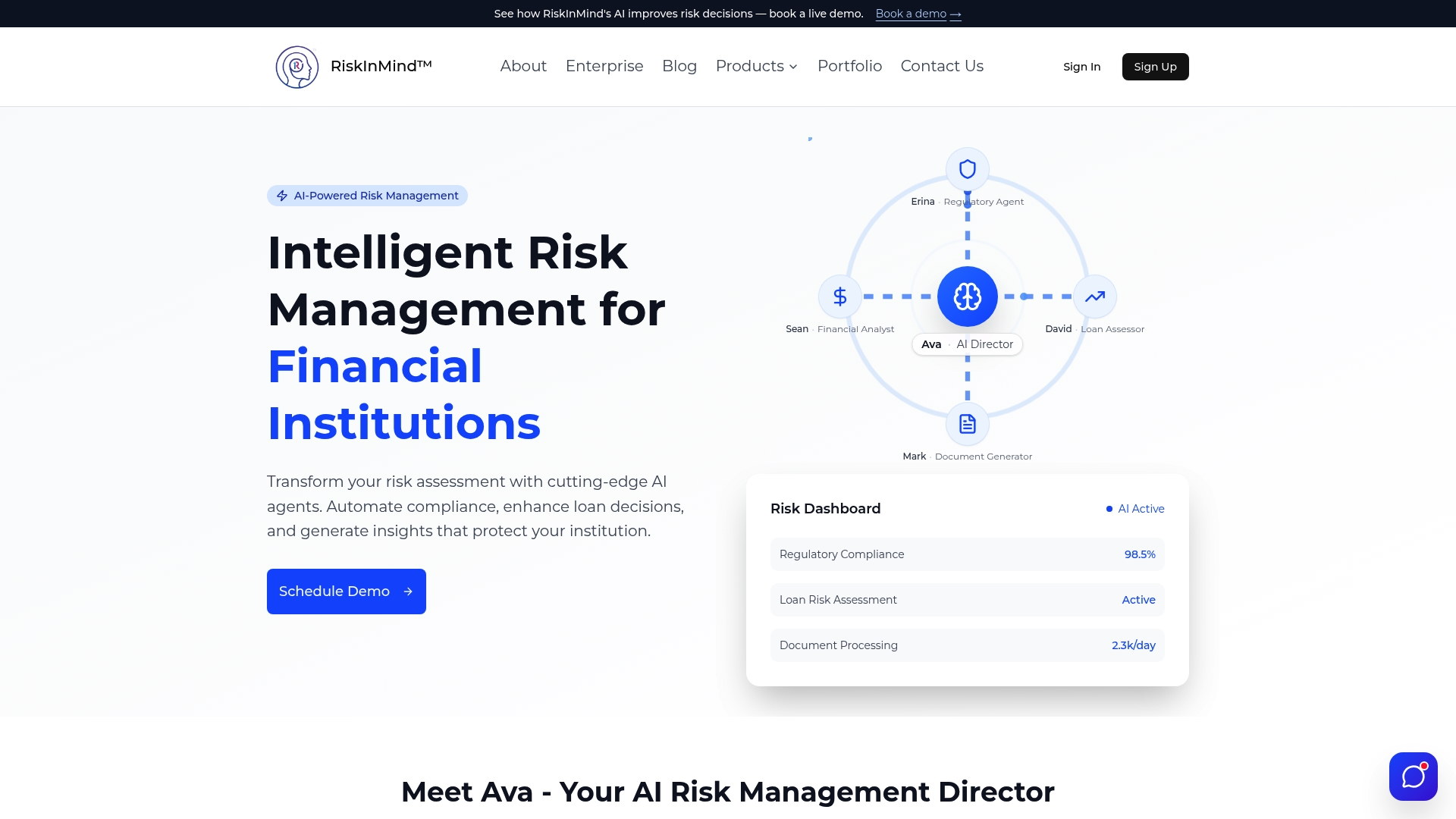
The platform's AI agents handle regulatory evidence collection, control monitoring, and audit trail generation in real time, with response times under half a second. Governance logic runs through deterministic, auditable workflows so every compliance decision is traceable and defensible. SOC 2® certification and bank-grade security mean the platform meets the same standards it helps you report against. For compliance officers ready to move from manual spreadsheet cycles to continuous audit readiness, Riskinmind's compliance solutions are designed for exactly that transition.
FAQ
What is compliance reporting automation?
Compliance reporting automation is the use of software and AI to automatically collect evidence, validate data, and generate regulatory compliance reports. It replaces manual spreadsheet-based processes with continuous, auditable workflows.
What are the main benefits of compliance automation?
Automation reduces manual misstatement risk, saves 2–6 hours weekly per team member, and enables continuous control monitoring that catches failures weeks before manual reviews would.
Can AI make final compliance decisions automatically?
No. Effective compliance automation pairs AI analysis with deterministic, human-approved governance logic. Final compliance decisions must run through auditable workflows with human sign-off to remain defensible under regulatory scrutiny.
What tasks should not be automated in compliance reporting?
Regulatory interpretation, materiality assessments, control design for novel risks, and final risk acceptance decisions all require human judgment and should not be delegated to automated systems without meaningful oversight.
How do financial institutions measure compliance automation success?
Key metrics include hours saved per reporting cycle, error rates in evidence packages, time to remediate flagged controls, and the rate of audit findings before and after automation deployment.