
CECL model validation is a required, independent assessment confirming your allowance model's conceptual soundness, data integrity, and ongoing performance. It is not optional for material models, and it cannot be performed by the people who built or run the model. The immediate step: confirm who will validate, define scope against materiality thresholds, and assemble your data artifacts, guided by FASB ASC 326, the Interagency Policy Statement, and SR 11-7.
TL;DR:
- Validation must confirm that the model's methodology fits the specific loan portfolio and risk profile through replication, sensitivity testing, and scenario analysis.
- Examiners prioritize thorough documentation, governance evidence, testing rigor, and remediation tracking in validation processes.
- Validation should evaluate input accuracy and data integrity, including reconciliation of loan balances, charge-offs, and line of business data to prevent silent mismatches.
- Continuous backtesting, benchmarking, and monitoring are required to detect model drift and ensure ongoing appropriateness of allowance estimates.
- Independent validators can be internal risk teams, audit functions, supervisory committees, or third-party providers, provided they maintain clear separation from model development.
Automate Regulatory Model Risk Governance
Examine models against 32 qualitative criteria and resolve risk Tiers with pre-deployment checklists per OCC 2011-12 guidelines.
Table of Contents
- What CECL Model Validation Covers Under U.S. Rules
- Regulatory Expectations and Key U.S. Standards
- Step-By-Step CECL Model Validation Process
- Data Validation and Input Testing for CECL
- Backtesting, Benchmarking, and Ongoing Monitoring
- Common Validation Findings and Practical Fixes
- Governance, Independence, and Acceptable Validators
- Documentation and Exam Preparedness
- How RiskInMind Supports CECL Validation and Audit Readiness
- What Years of CECL Validation Work Actually Teach You
- Get Audit-Ready CECL Workflows Before Your Next Exam
- Sources
What CECL Model Validation Covers Under U.S. Rules
Validation is an independent test of whether your allowance for credit loss estimate holds up. It applies to the loan portfolio, but also to leases, held-to-maturity securities, and unfunded commitments where your institution books an ACL. A validator answers three questions examiners actually care about: Is the methodology conceptually sound? Are the inputs and outputs reliable? Does the model perform as intended over time?
That is a different exercise than an internal audit review, which typically checks process adherence and control design rather than model math. It is also distinct from a vendor's SOC report, which speaks to the vendor's internal controls, not whether your institution applied the model correctly to your own loan-level data.
A completed validation should produce:
- An independent conclusion on conceptual soundness, including whether segmentation and loss methods fit your portfolio composition
- Confirmation that inputs, outputs, and code perform the calculations as designed
- Evidence the model tracks actual charge-off performance within a reasonable margin
Regulatory Expectations and Key U.S. Standards
Four sources define what a defensible CECL validation looks like, and skipping any of them tends to show up in exam findings.
FASB ASC Topic 326 sets the accounting objective: lifetime expected credit losses estimated from historical experience, current conditions, and reasonable, supportable forecasts. It does not mandate a single method, which is exactly why validators must judge whether the method chosen fits the portfolio.
The Interagency Policy Statement on Allowances for Credit Losses, revised in April 2023 and formalized in the Federal Register, mandates independent validation for material estimation models. SR 11-7 supplies the model risk management framework: documentation, independent review, and ongoing monitoring. OCC Bulletin 2011-12 reinforces the same expectations for national banks.
Examiners typically focus on four things:
- Documentation depth, from methodology memos to workpapers
- Governance evidence, including board and committee reporting
- Testing rigor, meaning replication and sensitivity analysis, not just narrative review
- Remediation tracking, showing prior findings were actually closed
Step-By-Step CECL Model Validation Process
A validation engagement generally moves through seven stages, whether performed internally or by a third party.
- Define scope and materiality. Decide which segments, portfolios, and reporting periods the validation covers, and set explicit pass/fail criteria before testing starts.
- Replicate the calculations. Rebuild the model's math, in full or in a representative sample, using your institution's actual data rather than vendor-supplied test cases.
- Review conceptual soundness. Assess whether the forecasting method, segmentation scheme, and qualitative adjustments logically fit your loan mix and risk profile.
- Run sensitivity and scenario tests. Push key assumptions to their reasonable boundaries and confirm the reasonable and supportable forecast period does not produce implausible swings in reserve levels.
- Benchmark and backtest. Compare model output against actual charge-offs and, where useful, peer or index data using cross-validation techniques that guard against overfitting on thin historical data.
- Review controls. Trace data lineage from source system to model input, confirm change management logs are intact, and reconcile totals at each handoff.
- Draft the report and remediation plan. Document findings by severity, propose fixes, and assign owners and deadlines.
Pro Tip: Scope the replication step before you scope anything else. Institutions that start with governance interviews and leave replication for last routinely discover data problems too late to fix before the reporting deadline.
Data Validation and Input Testing for CECL
Most validation findings trace back to data, not methodology. Before a model's math can be trusted, its inputs need to hold up under direct reconciliation.
- Reconcile loan balances, historical charge-off amounts, and vintage-level data against the general ledger and loan-level source systems
- Verify every mapping and transformation between origination systems, the data warehouse, and the model itself, since silent field mismatches are a common source of understatement
- Where loss history is thin, particularly for new products or growing segments, document when and how peer data or qualitative overlays fill the gap rather than leaving it unaddressed
- Maintain data lineage, version control, and retention records so a validator two years from now can trace exactly which dataset produced which result
Institutions using a platform like RiskInMind's CECL estimation tools get a head start here, since automated lineage tracking removes much of the manual reconciliation burden validators otherwise have to redo by hand.
Backtesting, Benchmarking, and Ongoing Monitoring
A model that looked sound at implementation can still drift. Backtesting is how you catch that drift before an examiner does.
- Design vintage-based backtests comparing expected losses to actual charge-offs by origination cohort, not just in aggregate
- Benchmark against peer studies, published loss indices, or internal cohort comparisons to sanity-check whether your assumptions are outliers
- Set predefined triggers, specific variance thresholds, that automatically require revalidation or a methodology update rather than waiting for the next scheduled cycle
- Keep monitoring results in a format an examiner can review without translation, since raw output tables rarely satisfy that request
Framing backtests as ongoing evidence the model remains fit for purpose, rather than a one-time exercise, cuts down on examiner findings tied to stale validation at the next cycle.
Institutions that document trigger-based review cycles alongside their backtesting results tend to face fewer repeat findings across consecutive exam cycles, according to FDIC guidance.
Common Validation Findings and Practical Fixes
Certain findings show up across nearly every peer group, and most have a straightforward fix.
- Poorly justified qualitative adjustments. Examiners flag Q-factor overlays with no measurable anchor. Fix it with sensitivity tables showing the dollar impact of each adjustment and a documented rationale tied to observable conditions.
- Data mapping and completeness errors. These surface when field-level totals do not tie to source systems. Fix it with reconciliation scripts run at each data handoff and automated unit tests on model inputs.
- Overreliance on vendor attestations. A vendor's own testing does not substitute for institution-specific validation. Fix it with independent replication using your own loan-level data, not the vendor's sample set.
- Insufficient monitoring or backtesting cadence. Ad hoc backtesting draws scrutiny. Fix it with a scheduled testing calendar and documented variance thresholds tied to your policy.
Pro Tip: If your last exam cited "qualitative adjustments lack support," don't just add narrative. Build a table showing what the reserve would be with the adjustment removed, and defend the delta with a specific data point.
Governance, Independence, and Acceptable Validators
Who can actually perform a CECL validation depends on your institution's size and structure, but independence from model development is non-negotiable.
- Acceptable validators include internal audit, an independent risk function, a supervisory committee, or a qualified third party
- NCUA examiner guidance explicitly permits credit unions without a dedicated internal audit function to use a supervisory committee or staff with no lending responsibility, or to engage a third party
- Document separation of duties and any potential conflicts of interest in writing, not just verbally at the audit committee
- Report validation results to the board or a designated committee on a set cadence, and distinguish clearly between vendor controls and independent institution-level testing in that reporting
Smaller community banks and credit unions can meet these expectations without building complex in-house modeling capability, provided the rationale for method choices and validator independence is documented clearly.
Documentation and Exam Preparedness
The validation report itself needs to stand on its own for an examiner who was not in the room for any of the testing.
- Write the report to cover scope, methods used, replication results, findings by severity, conclusions, and a remediation plan with owners and dates.
- Retain workpapers, including reconciliations, code excerpts, sensitivity outputs, and monitoring logs, in a format that supports the report's conclusions.
- Use a standard management response template for every finding, tracking status from "open" through "remediated and verified."
- Apply a documented retention policy so validation artifacts and audit trails survive staff turnover and system migrations.
How RiskInMind Supports CECL Validation and Audit Readiness
Validators spend most of their time chasing data, not analyzing it. RiskInMind's platform narrows that gap with audit-ready reporting, automated data lineage tracking, CECL calculators, and backtesting dashboards, backed by SOC 2® certified, bank-grade security.
- Replication reports that map directly to a validator's testing workpapers
- Monitoring dashboards showing expected versus actual performance without manual assembly
- Management-ready validation summaries formatted for board and committee review
- Model risk management tooling aligned to SR 11-7 documentation expectations
What Years of CECL Validation Work Actually Teach You
Reproducibility beats elegance. A validation that a second reviewer cannot rebuild from your workpapers is worthless, no matter how sophisticated the underlying model. Data readiness and early scoping matter more than most institutions expect going in, and timing validation to land ahead of your exam cycle and board review, not scrambling after a request letter arrives, saves weeks. The recurring lesson: institutions that treat validation as a compliance chore rather than a governance asset end up redoing the same work every cycle.
— Raj
Get Audit-Ready CECL Workflows Before Your Next Exam
RiskInMind gives your team what a validator actually needs on day one: audit-ready CECL workflows, automated backtesting, and reporting that doesn't require weeks of manual assembly before an exam.
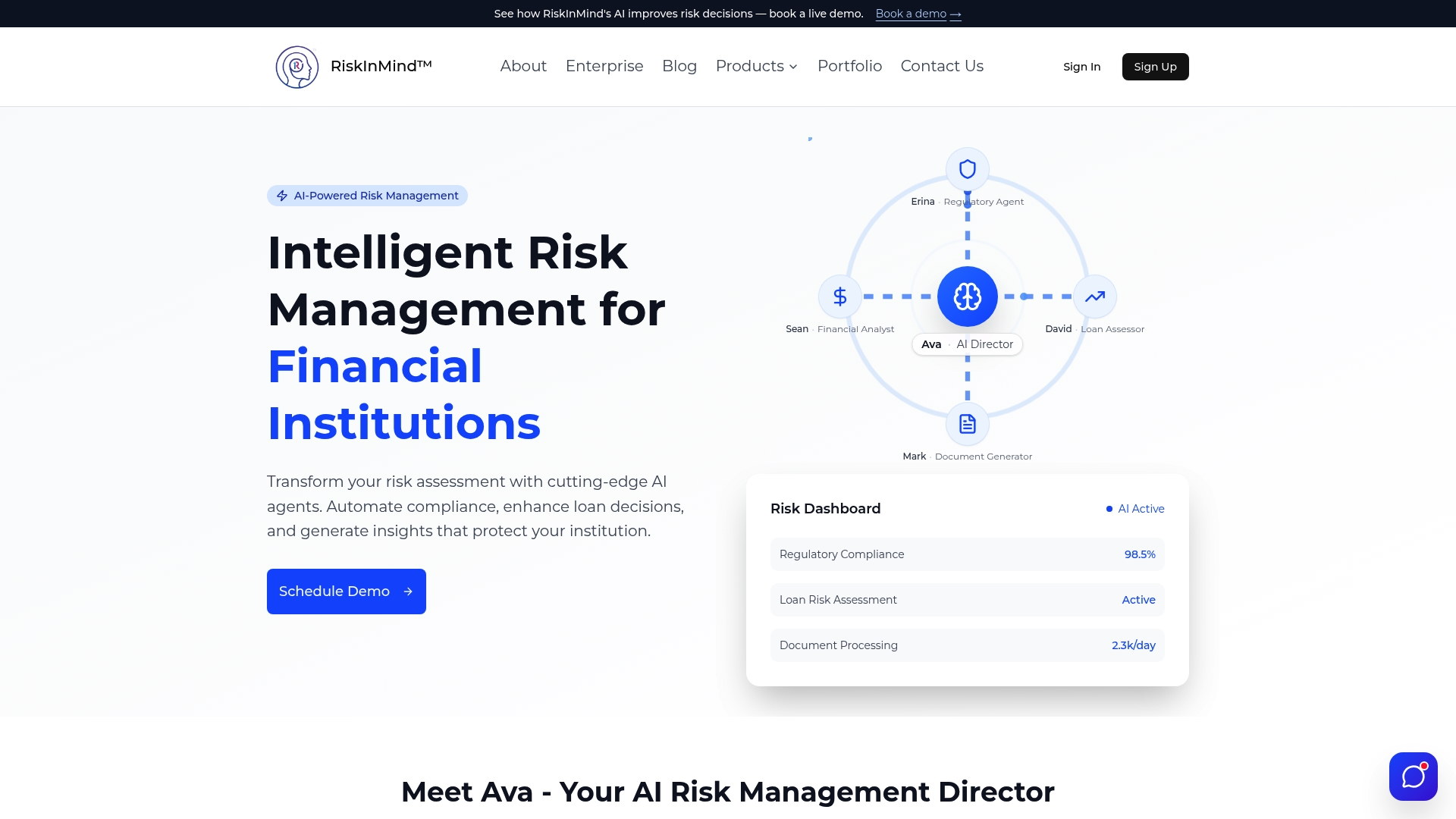
Instead of rebuilding reconciliations by hand every cycle, or waiting on a vendor to produce evidence in a format your examiner will accept, RiskInMind's loan application and CECL tooling keeps data lineage, calculation replication, and monitoring output ready for review at any point in the year. Pair it with peer benchmarking to strengthen your backtesting evidence against comparable institutions. If your validation calendar is coming up, request a demo and see how much of the documentation burden your team can hand off before the next exam cycle starts.
Sources
- Interagency Policy Statement on Allowances for Credit Losses
- ASU 2016-13 (FASB) — Topic 326
- Current Expected Credit Losses (CECL) | FDIC
- Methodology Validation | NCUA examiner guide