
Banking API integration is the practice of connecting a bank's core systems to third-party applications through secure, standardized interfaces that exchange data and trigger transactions in real time. For financial institutions and fintech engineering teams, the payoff is direct: instant account balances, programmatic payment initiation, and risk signals that update as conditions change rather than overnight. Institutions that treat this as an operating-model decision, not a one-off IT project, unlock faster underwriting, tighter reconciliation, and fewer manual touchpoints across the lending lifecycle.
- Banking APIs enable real-time, bidirectional data exchange, improving cash visibility, underwriting accuracy, and reducing manual reconciliation efforts.
- Most implementations follow OAuth 2.0 authentication with token refreshes and use webhooks for asynchronous event notifications, requiring proactive certificate and token management.
- API types vary from account data and payment initiation to reconciliation and risk data, with control over build choices based on control needs and deployment speed.
- Security standards mandate strict onboarding, consent, encryption, and compliance with regulations like PSD2, Open Banking, GDPR, and GLBA, with continuous monitoring for vulnerabilities.
- Handling errors involves idempotency keys, exponential backoff retries, and clear incident protocols, while performance relies on caching strategies, connection pooling, and load management.
Maintain 100% NCUA & OCC Audit Readiness
Monitor regulatory updates 24/7, check internal credit policies, and generate compliance trails with Erina (AI Regulatory Agent).
Table of Contents
- What Banking API Integration Means for Your Business
- How Banking APIs Work: Architecture, Protocols, and Auth
- Types of Banking APIs and What They're Used For
- Choosing an Integration Pattern: Direct, Aggregator, or Middleware
- Security, Standards, and Compliance You Can't Skip
- Building a Governance Model That Scales
- Rollout Checklist: From Discovery to Production
- How Real-Time API Feeds Power Better Risk Decisions
- Regulatory Compliance Beyond PSD2 and Open Banking
- Handling Errors, Retries, and Incidents Without Losing Trust
- Making Banking API Integrations Fast and Reliable at Scale
- Protecting Customer Data Across the Integration Chain
- Pragmatic Lessons From the Trenches
- RiskInMind Turns API Feeds Into Underwriting Decisions
- Where to Start: Portals and Standards Worth Bookmarking
- Sources
What Banking API Integration Means for Your Business
Banking API integration replaces the old FTP-and-batch-file model, where account data arrived once a night in a flat file, with a live, bidirectional connection. Instead of waiting until 6 a.m. to learn what happened in an account yesterday, a lender or treasury team can query balances, transactions, and payment status the moment they occur.
That shift changes what's operationally possible. Financial API integrations connect a bank's core to outside applications so balances, transaction history, and payment initiation become queryable on demand rather than reconstructed from yesterday's export, according to Plaid's overview of the connected finance ecosystem.
The business and technical outcomes compound quickly:
- Cash visibility improves from once-daily snapshots to continuous, queryable state.
- Underwriting teams get current transaction behavior instead of a 30-day-old bank statement.
- Reconciliation shifts from manual matching to event-driven workflows triggered by webhooks.
- Manual data entry and file-transfer troubleshooting drop substantially, freeing engineering time for higher-value work.
- Observability improves because API calls generate structured logs, unlike opaque batch jobs.
None of this is theoretical. Institutions running underwriting models on batch data are, by definition, making decisions on information that's already stale by the time it lands in the model.
How Banking APIs Work: Architecture, Protocols, and Auth
A typical banking API stack has three layers: an API gateway that handles routing, rate limiting, and authentication; core banking adapters that translate gateway requests into the bank's internal protocols; and, often, a middleware or iPaaS layer that handles orchestration, data transformation, and retries between the bank and your systems. Oracle's banking API suite packages more than 2,100 ready-to-deploy RESTful endpoints along with built-in consent, entitlement, and SCA support, which shows the scale enterprise-grade programs now operate at.
Most modern implementations follow this request flow:
- The client application authenticates using OAuth 2.0, typically via client credentials for server-to-server calls or authorization code flow when a customer must consent.
- The API gateway validates the token, applies rate limits, and routes the request to the correct core adapter.
- The adapter returns a JSON payload, structured around REST conventions, with pagination and idempotency keys for anything that writes data (payments, in particular).
- Webhooks push asynchronous events, like a completed payment or an updated balance, back to your listening endpoint rather than forcing you to poll.
- Tokens expire and must refresh automatically; certificates (often QWAC or eIDAS style) need rotation on a schedule your team owns, not the bank's.
Pro Tip: Build automated certificate rotation and token health checks before you go live, not after your first outage. Expired refresh tokens and forgotten certificate renewals are among the most common causes of production failures in live banking integrations.
Types of Banking APIs and What They're Used For
Not every banking API serves the same purpose, and mapping the category to the business problem is the fastest way to prioritize a build.
- Account and transaction data APIs (AIS) pull balances and transaction history for aggregation, budgeting tools, and underwriting inputs.
- Payment initiation APIs (PIS) let an authorized application trigger a transfer directly, replacing manual ACH file uploads.
- Confirmation of funds APIs verify, in real time, whether an account holds enough balance before a transaction clears, which is critical for lending disbursements.
- Balance and cash management APIs, including virtual account structures, give treasury teams a consolidated view across multiple accounts and entities.
- Reconciliation and ledger APIs match incoming payments against invoices or loan schedules automatically instead of through spreadsheet review.
- Lending and underwriting data endpoints feed transaction-level cash flow directly into credit models, a use case detailed in RiskInMind's enterprise risk platform overview.
Choosing an Integration Pattern: Direct, Aggregator, or Middleware
Four practical paths exist, and the right one depends on how much control you need versus how fast you need to ship.
- Direct bank integration gives you full control over the connection and the cleanest audit trail, but you own every certificate renewal, version migration, and bank-specific quirk yourself.
- Aggregators and connector networks get you to production faster because someone else has already mapped the bank's quirks, though you inherit their uptime and pricing terms.
- iPaaS and middleware platforms sit between your systems and the bank, handling transformation, retries, and observability. Vendors like PortX advertise pre-built connectors and rules engines specifically to reduce this integration burden for financial services teams.
- Open-source platforms like the Open Bank Project provide a RESTful, OAuth2/OpenID Connect compatible layer that abstracts differences across core banking systems, which is useful when you need to support several banks without rebuilding adapters for each.
Whichever path you choose, invest in a developer portal with sandbox credentials and SDKs early. CI/CD pipelines that run contract tests against the sandbox catch breaking changes before they hit production.
Security, Standards, and Compliance You Can't Skip
Every credible banking API program runs on OAuth 2.0 and OpenID Connect for authentication, with client certificates and short-lived tokens replacing static API keys. Consent and entitlement models determine exactly what data a third party can request and for how long, and Strong Customer Authentication (SCA) adds a verification layer whenever a customer, not just a system, initiates the request.
Beyond auth, hardening means rate limits per client, mandatory idempotency keys on write operations, encryption in transit and at rest, and structured logging that satisfies SOC 2 audit expectations. Open Banking and PSD2 remain the clearest standards references architects lean on, even outside their originating jurisdictions, because they define consent flows and API shapes other regulators have since echoed.
Pro Tip: Log every token issuance and refresh event with a timestamp and client ID. When something breaks at 2 a.m., that log is the difference between a five-minute fix and a two-hour investigation.
Token and certificate lifecycle failures remain a persistent root cause of banking API outages, which is why Oracle's security guidance treats automated credential rotation as a baseline requirement, not an optional hardening step.
Building a Governance Model That Scales
Treating your API program as a product, not a project, changes how it survives past the first launch. That means dedicated API product ownership with real documentation, a working sandbox, and support SLAs developers can actually rely on.
- Define a clear onboarding process for new third-party providers, including entitlement and access review.
- Set a versioning policy up front (URL-based or header-based) so breaking changes never surprise a downstream consumer.
- Monitor latency, error rates, and webhook delivery failures continuously, not just during incidents.
- Assign organizational ownership to a cross-functional team spanning security, integration engineering, and compliance, not to a single developer who happens to know the system.
Institutions that skip this step tend to rebuild the same adapter logic three times because nobody owned the roadmap the first time.
Rollout Checklist: From Discovery to Production
A realistic banking API project moves through five phases, and skipping one almost always costs more time later than it saves upfront.
- Discovery and stakeholder alignment: pull in security, legal, treasury, and integration engineering before writing a line of code.
- Sandbox testing: validate auth flows, payload structures, and error responses against the bank's sandbox environment.
- Conformance and security review: confirm SCA flows, certificate handling, and consent scopes meet both the bank's and your own compliance bar.
- Pilot with limited production traffic: run parallel with your legacy process before full cutover.
- Production cutover with a rollback plan: never flip the switch without a tested path back to the previous system.
| Phase | Typical Duration | Primary Cost Driver |
|---|---|---|
| Discovery and design | 2 to 4 weeks | Stakeholder time, architecture decisions |
| Sandbox development | 4 weeks | Engineering hours, adapter build |
| Conformance and security review | 2 to 4 weeks | Compliance and security review cycles |
| Pilot | 4 to 6 weeks | Parallel-run infrastructure |
| Production cutover | 1 to 2 weeks | Monitoring setup, rollback tooling |
Costs scale with the number of banks you connect to and whether you build adapters in house or license a middleware layer. A risk technology integration checklist can help structure the internal review before you commit engineering resources.
How Real-Time API Feeds Power Better Risk Decisions
A risk platform consuming bank APIs needs account balances, transaction histories, and payment status feeds updating continuously, not batch snapshots. RiskInMind processes those feeds with sub-second response times and SOC 2 controls, routing data through specialized AI agents coordinated by a central director. Integration requires clean field mapping, observability hooks on every call, and audit-ready logs. That combination is what makes real-time risk assessment possible instead of aspirational.

Regulatory Compliance Beyond PSD2 and Open Banking
PSD2 and Open Banking receive most of the attention in API compliance discussions, but they represent only part of the picture for institutions operating in the United States or handling data across jurisdictions. The Gramm-Leach-Bliley Act governs how financial institutions handle nonpublic personal information domestically, and it applies regardless of whether your integration touches European rails at all. If any counterparty or customer data crosses into the European Economic Area, GDPR's consent, data minimization, and breach notification requirements layer on top of whatever U.S. framework already applies, and the two don't always align cleanly on retention periods.
State-level banking laws add another dimension. Money transmitter licensing requirements vary by state, and a payment initiation API that works cleanly in one jurisdiction can trigger a different regulatory obligation in another depending on how funds flow through your platform.
Data residency matters too. Some institutions require that transaction data touching their core never leaves a specific region's infrastructure, which affects where your middleware or iPaaS layer can physically run. Build compliance review into your architecture decisions early, because retrofitting data residency controls after a system is live is far more expensive than designing for it from the start.
Vendor risk management is a separate compliance obligation many teams underweight. Any third party touching customer financial data, including an aggregator or iPaaS vendor, needs its own risk assessment, contractual data handling terms, and periodic re-review. Regulators increasingly expect institutions to demonstrate oversight of these vendors, not just their own internal controls.
Handling Errors, Retries, and Incidents Without Losing Trust
Banking APIs fail in predictable ways: timeouts during peak load, expired tokens, malformed payloads from an unexpected core system update, and rate-limit rejections during traffic spikes. The teams that handle this well design for failure from day one instead of treating it as an edge case.
Idempotency keys on every write operation, particularly payment initiation, prevent duplicate transactions when a retry fires after a timeout that the original request actually succeeded on. Without that key, a network blip can turn one payment into two, and that's a support ticket nobody wants to explain to a customer.

Retry logic needs exponential backoff, not immediate re-attempts, and a maximum retry ceiling that escalates to a human rather than looping silently. A payment stuck in retry limbo for six hours because nobody set an escalation threshold is a governance failure, not a technical one.
Separating the connector layer from the orchestration layer helps here. Connectors speak the bank's specific protocol, while orchestration handles retries, enrichment, and reconciliation, which keeps failures contained and auditable rather than scattered across your codebase, an approach PortX's integration architecture is built around.
Incident management needs a clear severity framework: a single failed transaction is not the same emergency as a systemic token failure affecting every downstream call. Build runbooks before you need them, and make sure whoever's on call knows exactly which bank contact to escalate to when the sandbox environment itself is down.
Making Banking API Integrations Fast and Reliable at Scale
Latency compounds fast in a banking integration chain. A call that takes 200 milliseconds at the bank's gateway, plus 100 milliseconds through your middleware, plus another round trip for token validation, adds up to a response time that feels sluggish to whoever's waiting on the other end, whether that's a loan officer or an automated underwriting model.
Caching helps, but only for data that doesn't need to be truly live. Account metadata, institution details, and product catalogs cache well. Balances and transaction status do not, and caching them risks decisions made on stale numbers.
Connection pooling and persistent HTTPS connections reduce the overhead of repeated TLS handshakes, which matters more than most teams expect when you're making thousands of calls per hour across multiple bank connections. Rate limits imposed by the bank, not just your own infrastructure, are usually the real ceiling on throughput, so design your call patterns to stay well under published limits rather than bursting against them.
Horizontal scaling on your gateway and middleware layers handles traffic growth better than vertical scaling, particularly because bank API traffic tends to spike predictably around business hours and month-end processing. Plan capacity around those known peaks instead of average daily volume.
Monitoring latency percentiles, not just averages, catches the problem that a simple average hides: a handful of slow calls dragging down the experience for everyone downstream, even when the median response time looks fine.
Protecting Customer Data Across the Integration Chain
Every hop a piece of financial data takes, from the bank's core through your gateway, middleware, and application layer, is a point where it could be exposed, logged improperly, or retained longer than necessary. Data privacy in banking API integration isn't a single control; it's a chain of decisions that each need to hold.
Encryption in transit is table stakes; encryption at rest for anything cached or logged is where teams cut corners under deadline pressure. Field-level encryption for sensitive identifiers, like account numbers, adds a layer that protects data even if a database is compromised elsewhere in the stack.
Data minimization matters more than most engineering teams initially plan for. Pulling a customer's full transaction history when your use case only needs the last 30 days of balance data isn't just wasteful, it's an unnecessary privacy exposure and, under GDPR's principles, a defensible finding for a regulator to flag.
Logging is a frequent, quiet privacy leak. Debug logs that capture full request payloads, including account numbers or personal identifiers, in plaintext are a common finding in security reviews. Redact or tokenize sensitive fields before they ever hit a log file, and set retention policies that delete logs automatically rather than relying on someone remembering to clean them up.
Access control needs to follow least privilege at every layer, not just at the API gateway. A developer with broad database access to debug a production issue is a privacy risk even if they never intend to misuse it. Time-boxed, audited access requests close that gap without slowing down legitimate troubleshooting.
Pragmatic Lessons From the Trenches
The three pitfalls that catch teams off guard most often: token and certificate lifecycle failures, bank-specific quirks that no documentation mentions, and observability bolted on after launch instead of built in. Invest first in monitoring and automated credential rotation. Everything else is easier once you can see what's actually happening.
— Raj
RiskInMind Turns API Feeds Into Underwriting Decisions
Banking API integration only pays off when something on the other end actually uses the data well, and that's the gap RiskInMind closes for lenders and credit unions. Instead of building custom pipelines to turn raw transaction feeds into underwriting signals, RiskInMind's AI agents consume that data directly and return credit risk assessments, CECL modeling, and portfolio monitoring in real time, with SOC 2 controls and sub-second processing behind every call.
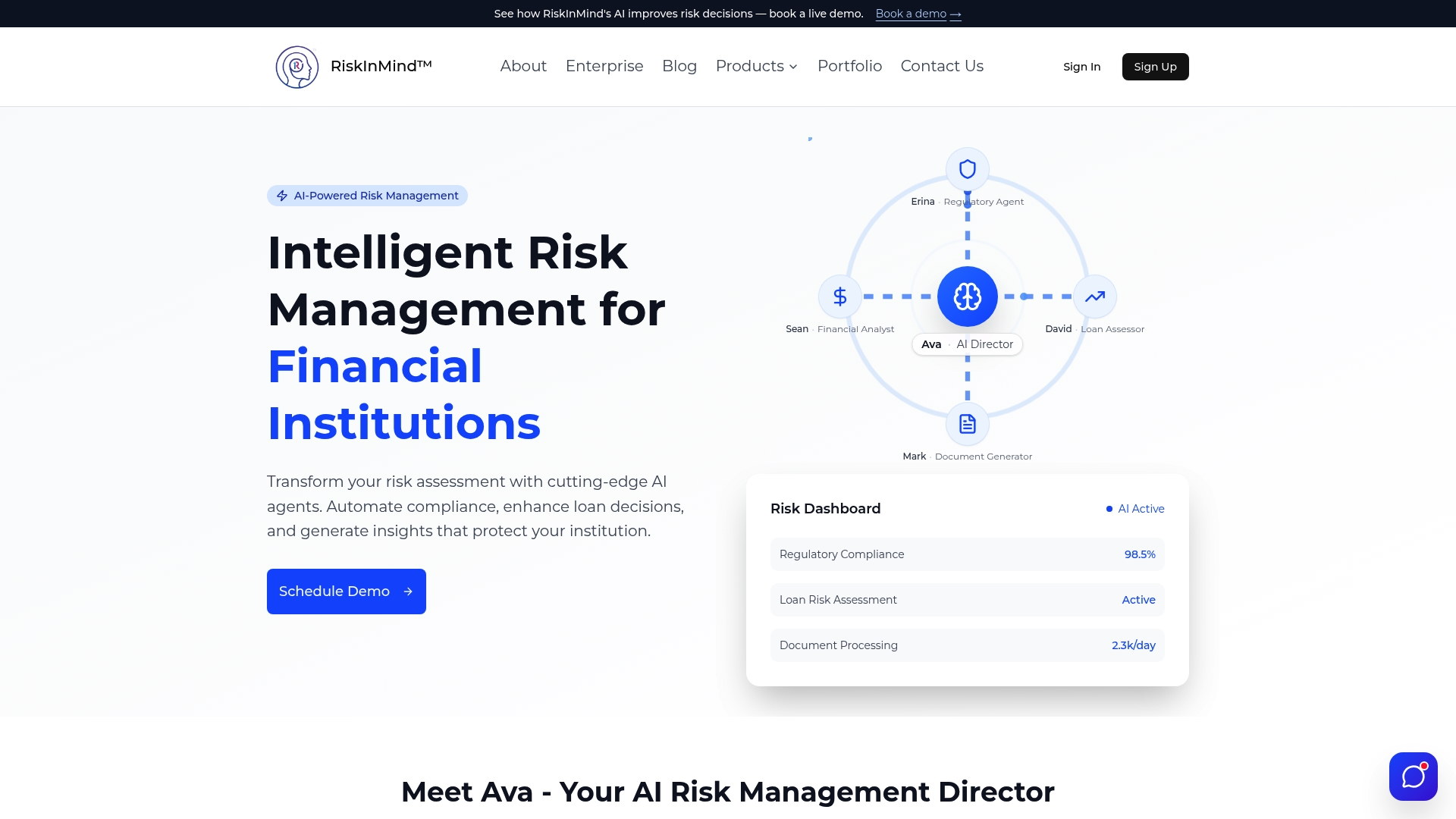
If your team is evaluating how bank API feeds should flow into loan decisions, RiskInMind's loan application solution shows how that pipeline works end to end, from raw account data to a credit memo. Portfolio and lending directors comparing institutions across markets can also see how live data feeds support ongoing peer benchmarking and risk analysis. Request a demo to see how your existing bank API connections could plug directly into automated underwriting within weeks, not quarters.
Where to Start: Portals and Standards Worth Bookmarking
Start with Oracle's banking API documentation, the Open Bank Project source, and the Wells Fargo developer portal for sandbox access.
Sources
- Oracle Banking APIs Cloud Service | Oracle
- OpenBankProject/OBP-API (GitHub)
- Open Banking APIs - Payments and Data | Wells Fargo Developer Portal